*Press Release - For Immediate Circulation*
Date: December 15, 2007
Issued by: Adam Jones, Ph.D.
Associate Professor, Political Science
University of British Columbia Okanagan
adam.jones@ubc.ca
In a groundbreaking move, the International Association of Genocide Scholars (IAGS) has voted overwhelmingly to recognize the genocides inflicted on Assyrian and Greek populations of the Ottoman Empire between 1914 and 1923.
The resolution passed with the support of fully 83 percent of IAGS members who voted. The resolution (text below) declares that "it is the conviction of the International Association of Genocide Scholars that the Ottoman campaign against Christian minorities of the Empire between 1914 and 1923 constituted a genocide against Armenians, Assyrians, and Pontian and Anatolian Greeks." It "calls upon the government of Turkey to acknowledge the genocides against these populations, to issue a formal apology, and to take prompt and meaningful steps toward restitution."
In 1997, the IAGS officially recognized the Armenian genocide. The current resolution notes that while activist and scholarly efforts have resulted in widespread acceptance of the Armenian genocide, there has been "little recognition of the qualitatively similar genocides against other Christian minorities of the Ottoman Empire." Assyrians, along with Pontian and Anatolian Greeks, were killed on a scale equivalent in per capita terms to the catastrophe inflicted on the Armenian population of the empire -- and by much the same methods, including mass executions, death marches, and starvation.
IAGS member Adam Jones drafted the resolution, and lobbied for it along with fellow member Thea Halo, whose mother Sano survived the Pontian Greek genocide. In an address to the membership at the IAGS conference in Sarajevo, Bosnia, in July 2007, Jones paid tribute to the efforts of "representatives of the Greek and Assyrian communities ... to publicize and call on the present Turkish government to acknowledge the genocides inflicted on their populations," which had made Asia Minor their home for millennia. The umbrella term "Assyrians" includes Chaldeans, Nestorians, Syriacs, Aramaens, Eastern Orthodox Syrians, and Jacobites.
"The overwhelming backing given to this resolution by the world's leading genocide scholars organization will help to raise consciousness about the Assyrian and Greek genocides," Jones said on December 15. "It will also act as a powerful counter to those, especially in present-day Turkey, who still ignore or deny outright the genocides of the Ottoman Christian minorities."
The resolution stated that "the denial of genocide is widely recognized as the final stage of genocide, enshrining impunity for the perpetrators of genocide, and demonstrably paving the way for future genocides." The Assyrian population of Iraq, for example, remains highly vulnerable to genocidal attack. Since 2003, Iraqi Assyrians have been exposed to severe persecution and "ethnic cleansing"; it is believed that up to half the Assyrian population has fled the country.
Extensive supporting documentation for the Assyrian and Greek genocides was circulated to IAGS members in the months prior to the vote, and is available at http://www.genocidetext.net/iags_resolution_supporting_documentation.htm. IAGS President Gregory Stanton may be contacted at iagspresident@aol.com.
FULL TEXT OF THE IAGS RESOLUTION:
WHEREAS the denial of genocide is widely recognized as the final stage of genocide, enshrining impunity for the perpetrators of genocide, and demonstrably paving the way for future genocides;
WHEREAS the Ottoman genocide against minority populations during and following the First World War is usually depicted as a genocide against Armenians alone, with little recognition of the qualitatively similar genocides against other Christian minorities of the Ottoman Empire;
BE IT RESOLVED that it is the conviction of the International Association of Genocide Scholars that the Ottoman campaign against Christian minorities of the Empire between 1914 and 1923 constituted a genocide against Armenians, Assyrians, and Pontian and Anatolian Greeks.
BE IT FURTHER RESOLVED that the Association calls upon the government of Turkey to acknowledge the genocides against these populations, to issue a formal apology, and to take prompt and meaningful steps toward restitution.
Saturday, December 15, 2007


Monday, December 10, 2007
What Can the Holocaust Memorial Museum Be Thinking?
By Gerald Caplan
[n.b. I am pleased to post this article by one of Canada's noted human rights voices, and a regular reader of the Genocide Studies Mailing List.]The decision last March by the International Court of Justice, that Serbia had violated its obligations to prevent genocide, has direct implications for the Permanent Five members of the Security Council. At least twice, over Rwanda in 1994 and over Darfur for the past three years, China, Russia, France, Britain and the US have been guilty of exactly the same behavior as Serbia in 1995.
The World Court (as the ICJ is commonly known) was ruling on Serbia's role in the Bosnian city of Srebrenica in 1995. While finding that the massacre of 8,000 Bosnian Muslim men and boys constituted a genocide, the court decided that since Serbia didn't control the perpetrators of the crime, it wasn't guilty of genocide. But Serbia could have foreseen the slaughter, and therefore could have prevented or stopped it. Accordingly, the Court ruled, Serbia had "violated the obligation to prevent genocide under the [1948 United Nations] Convention on the Prevention and Punishment of the Crime of Genocide ..."
If Serbia in 1995, what about the United States the previous year? Led aggressively by Madeleine Albright, Bill Clinton's Ambassador to the United Nations, the Security Council ensured that the repeated pleas of General Roméo Dallaire to reinforce his puny UN mission to Rwanda went unheeded. On the contrary, two weeks into the genocide, with tens of thousands of Tutsi being massacred each day, Albright led the Security Council in voting to slash Dallaire's forces by 90%. For the remainder of the 100 days of the Rwandan genocide, no reinforcements reached Dallaire. He watched helplessly as some 800,000 Tutsi were slaughtered -- although most of the murders, it is nearly universally agreed, could have been prevented with about 5,000 good soldiers.
Did Slobodan Milosevic do worse than this? If Serbia violated the Genocide Convention by failing to prevent or stop the genocide at Srebrenica, what can one say about Madeleine Albright and her colleagues? Who will take them to court for their passive complicity in genocide?
Well, as it happens, Ms. Albright is too busy to stand trial. She's just been appointed by (among others) the prestigious Holocaust Memorial Museum in Washington, DC, as co-chair of a new Genocide Prevention Task Force. As she told a press conference, apparently with a straight face and no apparent shame in her heart: "We have a duty to find the answer [to genocide] before the vow of ‘never again' is once again betrayed."
Ms. Albright's co-chair is to be Clinton's former Secretary of Defense, William Cohen. The two worked together in Clinton's cabinet after she was promoted for her performance at the UN to Secretary of State -- the first American woman to hold the most influential post in the American government after the President.
Curiously enough, Albright and Cohen have something else in common. Only weeks ago, the two signed letters calling on Congress not to recognize the Armenian genocide. At an unusually hostile press conference, the two co-chairs explained that this was not an appropriate moment to alienate America's Turkish allies, who refuse to accept that Turkey was responsible for a genocide against the Armenian people in 1915. Nor were they prepared to describe the 1915 massacres as a genocide, which the overwhelming majority of genocide scholars have concluded it was.
Another reporter took them on: "It sounds as if you are both saying -- if our friends do it, it is not genocide. And if our enemies do it, it is genocide. Secretary Cohen, you say -- we can't say that about Turkey and the Armenian genocide because our boys and girls are in harm's way [in Iraq]. If you are going to define genocide by who does it, not by what it is, your task force is in trouble."
Indeed. This is a Task Force that should never have been created. It begins with its moral authority not just compromised, but totally undermined. It is possible there was a worst choice for co-chair than the woman who kept almost a million Tutsi from being saved, but it's not easy to see who it might be. Perhaps Henry Kissinger, with his record in Cambodia, Chile, and Indonesia. Perhaps George Bush and the neocons responsible for the invasion of Iraq and its aftermath. And there are thousands upon thousands of preeminent Americans who support a resolution to blame Turkey for the Armenian genocide. But the Holocaust Memorial Museum, perhaps the most influential of America's countless Holocaust institutions, chose Albright and Cohen.
Genocide prevention through the ages has been one of humankind's less successful enterprises, as the record of our own era shows. Nonetheless, the struggle to suppress and marginalize genocide in our world continues apace. You have to wonder why an institution like the Holocaust Memorial Museum would actively seek to mock that effort.
[Gerald Caplan is the author of Rwanda: The Preventable Genocide and has written and spoken widely on the failures of the "international community" to prevent genocide. He has frequently demanded that the leaders of the Permanent Five members of the Security Council be tried for their crimes of commission or omission in the genocides of our time.]
Thursday, December 06, 2007
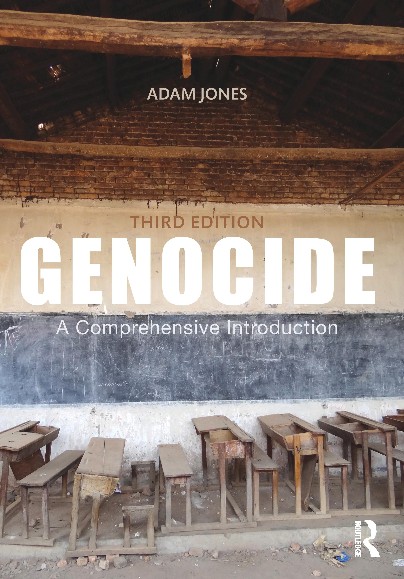
 NOW AVAILABLE: Genocide: A Comprehensive Introduction, by Adam Jones (Routledge, 2006; 430 pp., US $33.95 pbk). See www.genocidetext.net. "The best introductory text available to students of genocide studies ... likely to become the gold standard by which all subsequent introductions to this enormously important subject will be measured" (Kenneth J. Campbell).
Genocide Studies Media File
November 26 - December 6, 2007
A compendium of news stories, features, and human rights reports pertaining to genocide and crimes against humanity. Compiled by Adam Jones. Please send links and feedback to adamj_jones@hotmail.com.
Consider inviting colleagues and friends to subscribe to Genocide_Studies and the G_S Media File. All it takes is an email to genocide_studies-subscribe@topica.com.
ARGENTINA
"Justice Still Delayed in Argentina"
By Uki Goni
Time.com, 28 November 2007
"In August 2003, Ana Careaga was jubilant. Argentina had just overturned two amnesty laws protecting military officers from prosecution for human rights crimes committed during its bloody 1976-83 dictatorship. 'I thought justice would be done at last,' says Careaga, a survivor of the Atletico death camp, where in 1977, at the age of 16, she was tortured at the hands of the military. Careaga wasn't looking for justice for herself but for her mother Esther, who had been a founder of the Mothers of Plaza de Mayo, a group of women who in 1977 started marching every Thursday in front of the the presidential palace in downtown Buenos Aires, to demand news of their missing children. A captive of another death camp, Esther Careaga perished in a 'death flight,' thrown alive from a military plane into the waters of the South Atlantic, the preferred method of disposal of its enemies by the dictatorship. But the hope of seeing sentences for such crimes handed down anytime soon is fading fast for Careaga and many other relatives of the over 20,000 people who 'disappeared' during those dark years. Over four years after the repeal of the laws, only a handful of the 850 suspects protected by them have been convicted, as trials remain bogged down in endless pre-trial hearings and insistent appeals by defense lawyers. 'This is a continuation of the amnesty laws by other means,' says Careaga. 'The delays are inadmissible. If normal judges can't do the job, they should set up special courts to try crimes against humanity in Argentina.' Careaga adds, 'The crimes have been proven, the witnesses have testified over and over again' referring to years of pre-trial hearings. [...]"
AUSTRIA/HOLOCAUST DENIAL
"Holocaust Denier to Do Prison Time in Austria"
Associated Press dispatch on MSNBC.com, 3 December 2007
"A right-wing Austrian writer who fled to Spain after being convicted of Holocaust denial charges 15 years ago must serve his 18-month sentence, Vienna's highest court said Monday. Gerd Honsik, 67, must serve out the sentence handed down in 1992, the court said, rejecting his plea for leniency because of his age and an unspecified illness. However, the court also turned down a prosecution request to make the former fugitive serve even more time. Honsik was captured in southern Spain in August and extradited in October. He fled after being convicted of denying the existence of the Holocaust and claiming the Nazis never used gas chambers -- grounds for criminal prosecution in Austria. The charges stemmed from writings that defended Adolf Hitler's Third Reich. Between 1986 and 1989, Honsik published writings disputing that the Nazis killed 6 million Jews during World War II. Among his books is one titled 'Acquittal for Hitler?' Austria's law making it a crime to deny the Holocaust applies to 'whoever denies, grossly plays down, approves or tries to excuse the National Socialist genocide or other National Socialist crimes against humanity in a print publication, in broadcast or other media.' The crime is punishable by up to 10 years in prison. British author David Irving was convicted under the law in February 2006 and sentenced to three years in prison. He served 13 months and was released in December 2006 on probation."
[n.b. This is the complete text of the dispatch.]
BANGLADESH
"Bangladesh Looks for Evidence of 1971 Genocide"
EarthTimes.org, 6 December 2007
"Intelligence agencies and police in Bangladesh on Thursday were looking for evidence of genocide allegedly committed by Islamic extremists after a private citizen filed a sedition case overnight against three prominent Islamists, judicial officials said. Former minister and secretary general of the Jamaat-e-Islami group, Ali Ahsan Mohammed Mujahid, senior cleric Kader Mullah and retired government minister Shah Abdul Hannan were also accused of murder, rape and looting in a petition to put the three men on trial for war crimes. Fazlur Rahman, a former independence fighter, filed the three separate cases in the court of chief metropolitan magistrate Emran Hossian Chowdhury, decrying their role in the 1971 war of independence from Pakistan. In his petition Rahman said the three had opposed the independence of Bangladesh from Pakistan and were involved in creating militia groups to try to help the then Pakistani authorities win the war. The three men were also blamed for organizing al-Badr and al-Shams death squads from among Pakistani collaborators who were involved in the massacre of Bangladeshi civilians. Bangladeshi records say about three million civilians died in the nine-month war which also involved India after nearly ten million refugees fled the country. [...]"
CHINA/JAPAN
"China Names Massacre Victims on 70th Anniversary"
Reuters dispatch, 4 December 2007
"China has published an eight-volume list of 13,000 victims of the Nanjing massacre in which it says invading Japanese troops killed 300,000 civilians, state media said on Tuesday. The Chinese publications, released to mark the 70th anniversary of the start of the massacre, also known as the 'Rape of Nanking,' include the names, ages, sex, occupations and residential addresses of the victims, which Japanese army unit was responsible and how the victims were killed. 'The books are the most complete name lists of the known victims of the slaughter to date,' the China Daily said. 'The publication of name lists is just a start. We will continue collecting information about the victims,' the newspaper quoted Zhang Xianwen, editor-in-chief of the compilation, as saying. The lists are part of a 27-volume series of historical materials on the massacre and were released before December 13, the day in 1937 when Japanese troops took over the city, then known as Nanking and the capital of Nationalist China. China, where many people still harbor deep resentment over Japanese wartime atrocities, says Japanese troops killed 300,000 men, women and children, many of the victims raped or otherwise tortured. An allied tribunal put the death toll at about 142,000. Some Japanese historians say the numbers are exaggerated, estimating as few as 20,000 soldiers and civilians were killed. Japan does not present any figure, although it acknowledges that many civilians were killed by invading Japanese troops."
[n.b. This is the complete text of the dispatch.]
GERMANY/ISRAEL/JEWISH HOLOCAUST
"Accord to Open Nazi Archive to Public"
Associated Press dispatch in The Globe and Mail, 28 November 2007
"The 11 countries that oversee a vast archive in Germany of Nazi documents and concentration camp records have completed ratification of an accord to open its doors to the public, ending more than 60 years of secrecy, the Red Cross said Wednesday. Greece was the last of the 11 to formally file its ratification papers with the German Foreign Ministry, clearing the way for Holocaust survivors and researchers to access some 50 million pages of wartime documents. The archive in Bad Arolsen, Germany, is administered by the International Tracing Service, an arm of the International Committee of the Red Cross, and has been used exclusively to trace missing persons, reunite families and provide documentation to victims of Nazi persecution to support compensation claims. 'The ratification process is complete,' Reto Meister, director of the Tracing Service, said by telephone from the Buchenwald concentration camp memorial. Mr. Meister said a long list of academics and research organizations already have applied to begin work in the archive, which includes untapped documents of communications among Nazi officials, camp registrations, transportation lists, slave labour files and death lists that detail the mechanics of the Nazi torment. 'I am pleased that the archive of the International Tracing Service can now be opened for research,' said Guenter Gloser, Germany's deputy foreign minister responsible for Europe. 'I would like to invite all researchers to make use of this, and work through this dark chapter of German history.'"
[n.b. This is the complete text of the dispatch.]
"Israeli Migration Agents Target German Jews"
By Kate Connolly
The Guardian, 28 November 2007
"An Israeli intelligence organisation is to send agents to Germany in an effort to persuade tens of thousands of Jews from the former Soviet Union to settle in Israel. Representatives of the organisation Nativ are soon to operate on the approval of the Israeli government to 'counter the dangerous assimilation of former Soviet Jews in Germany,' according to the wording of a decision recently passed by the cabinet of prime minister Ehud Olmert. Around 200,000 Jews from the former Soviet Union, about 70% of the total community, are currently living in Germany having begun arriving at the invitation of the government in the early 1990s. But their assimilation into what is now the fastest growing Jewish community in the world has been problematic, largely due to linguistic and cultural differences, including varying approaches to defining Jewishness and even sometimes a lack of knowledge about the Holocaust. ... The Central Council of Jews, the organisation representing Jews in Germany, has expressed its fury that Israel is trying to effectively steal its members. In a recent letter to Mr Olmert, the council described the decision as a 'sign of mistrust which we find personally offensive.' Stephan Kramer, the council's general secretary said that it gave the impression that the 'connection to Israel' and 'imparting Jewish values' was not important to Jewish community leaders, when it in fact belonged to the 'foundations of Jewish existence.' He added: 'If you read the cabinet decision, you get the impression that Jewish Germans need to be evacuated. That sends a fatal signal.' The German government has joined the row, insisting that it should be up to individuals to decide where they live. ... The council has said it fears the existence of Nativ will further deepen the rift between the older community and the former Soviet Jews, at a time when the revival of Jewish life in Germany is being widely celebrated. New synagogues are being built and old ones painstakingly renovated around the country, such as the Ryke Strasse synagogue in Berlin. [...]"
INDIA
"Explosive Report by Indian Magazine Exposes Those Responsible for 2002 Gujarat Massacre"
Democracy Now, 5 December 2007
"An explosive report by the Indian magazine Tehelka reveals new information about those responsible for the massacre of 2,500 Muslims in the western Indian state of Gujarat in March of 2002. The brutal violence against Muslims took place over a span of three days, followed an attack on a train carrying rightwing Hindu activists. Fifty-eight people on the train were burned to death when it stopped in the town of Godhra. Mainstream analyses have explained the statewide violence against Muslims as a 'spontaneous' reaction to the attack on the train. However, Tehelka's extensive exposé challenges this understanding of what happened in Gujarat five-and-a-half years ago and demonstrates that the anti-Muslim violence was highly organized and premeditated. The exposé was published in late October after a reporter infiltrated a rightwing Hindu organization for six months. It includes spycam video footage of Hindu activists bragging about killing Muslims and detailing the support they received from the highest levels of the state government. With state elections in Gujarat beginning next week, the exposé could have a significant political impact. Narendra Modi, who was Chief Minister during the 2002 massacre, never lost his position. He remains one of the leading contenders. Modi is from the BJP [Bharatiya Janata Party], which is tied to a network of rightwing Hindu organizations. Many of the activists interviewed by Tehelka say the anti-Muslim violence could not have happened without Modi's tacit support. [...]"
[n.b. Thanks to Fara McLaren for bringing this source to my attention.]
IRAN/UNITED STATES/NUCLEARISM
"Nuclear Meltdown"
By Fred Kaplan
Slate.com, 3 December 2007
"If there was ever a possibility that President George W. Bush would drop bombs on Iran, the chances have now shrunk to nearly zero. In one of the most dramatic National Intelligence Estimates ever, the 16 agencies of the U.S. intelligence community concluded today 'with high confidence' that Iran 'halted its nuclear weapons' four years ago, in the fall of 2003. ... A little context is necessary to understand this report's full significance. For the past two years, various factions in the Bush administration have engaged in internecine skirmishes over how to deal with the anticipation of an Iranian atom bomb. Cheney and his associates are the prominent hawks, in favor of stepping up the pressure and, if the time comes, attacking Iran's nuclear facilities, perhaps pre-emptively. President Bush has sometimes seemed to take this side, at least rhetorically, as when he said recently that failure to keep Iran from gaining the ability to build A-bombs could trigger 'World War III.' Opposing this faction is ... well, nearly every other agency and high-ranking official that deals with national-security policy. And ever since Robert Gates replaced Donald Rumsfeld as secretary of defense one year ago, the pro-diplomacy wing has grown increasingly outspoken. ... And now, with today's NIE, we see the entire U.S. intelligence community not only, in effect, coming down on the side of the doves but concluding that the threat animating the hawks doesn't even exist. ... Skeptics of war have rarely been so legitimized. Vice President Cheney has never been so isolated. If Bush were to order an attack under these circumstances, he would risk a major eruption in the chain of command, even a constitutional crisis, among many other crises. It seems extremely unlikely that even he would do that."
ISRAEL/PALESTINE
"Israel Risks Apartheid-Like Struggle if Two-State Solution Fails, Says Olmert"
By Rory McCarthy
The Guardian, 30 November 2007
"Israel's prime minister issued a rare warning yesterday that his nation risked being compared to apartheid-era South Africa if it failed to agree an independent state for the Palestinians. In an interview with the Israeli newspaper Ha'aretz, Ehud Olmert said Israel was 'finished' if it forced the Palestinians into a struggle for equal rights. If the two-state solution collapsed, he said, Israel would 'face a South African-style struggle for equal voting rights, and as soon as that happens, the state of Israel is finished.' Israel's supporters abroad would quickly turn against such a state, he said. 'The Jewish organisations, which were our power base in America, will be the first to come out against us because they will say they cannot support a state that does not support democracy and equal voting rights for all its residents,' he said. The Israeli government is usually bitterly resentful of any comparison to the apartheid regime but Olmert's remarks looked like an effort to galvanise support from a sceptical Israeli public for a return to peace negotiations with the Palestinians in the days after the Annapolis conference. Israel has a 20% Arab minority who are citizens and can vote, although they are frequently discriminated against and are described by some as a 'demographic threat.' Within a few years the number of Arabs in Israel and the Palestinian territories is expected to equal, and then exceed, the number of Jews in Israel and the settlements. Some Palestinians argue that they should campaign for a so-called one-state solution: equal voting and citizenship rights within a larger country that includes Israel and the occupied territories and in which Palestinians will soon have a majority. It is not the first time that Olmert has risked the South African comparison. Four years ago, in another interview with Ha'aretz, he gave a similar warning. But that was a time when, as deputy to the then prime minister Ariel Sharon, he argued that Israel should unilaterally draw up a border with the Palestinians, withdrawing from Gaza and holding on to the major Jewish settlement blocs in the West Bank. [...]"
"An Excursion through the West Bank is a Trip to Disbelief"
By Dan Lieberman
Online Journal, 26 November 2007
"[...] Entering Bethlehem means being greeted by the separation wall which runs close to homes. The former popular Bethlehem has shrunk in size and economy. Israel decided to incorporate 22 percent of Bethlehem's land into Jerusalem. The government also routed the wall so that it cuts across the Jerusalem/Bethlehem highway and closes the previously used road to Bethlehem. This road brought tourists past the souvenir shops, which are now mostly closed. Hotels are only 10 percent occupied. The livelihoods of many Bethlehem citizens have disappeared. To obtain employment, laborers line up at 3 a.m. at checkpoints they must pass through in order to go to Jerusalem and work. The checkpoint funnels persons through a small fenced area, similar to a stockyard, bringing them to a turnstile and to security control. The once busy and proud Bethlehem is now a decaying town; empty shops, empty homes, empty tourist attractions. If the Christian Lord could rise again, he would be alone. The UN claims decaying Bethlehem water pipelines lose 25 percent of the water. The former Palestine Authority intelligence headquarters, bombed by Israeli jets on March 5, 2002, remains a bombed out group of senseless buildings. At a hilltop site in Gush Etzion, (Bloc of the Tree), the famous Zionist settlements, which were destroyed and abandoned under Jordanian rule, but have returned to grow to 40,000 settlers since Israel's occupation after the 1967 war, Israel's modification of the land is apparent. Israeli setlements dot the landscape. Several temporary vans with antennae are in view on the top of the hill. Two Israelis come jogging from the incipient settlement. An old Palestinan village is obvious in the near distance. We are told that its cisterns have been dampened and the village is static -- building of new homes is not permitted, except for special circumstances. A new narrow road winds its way in the distance. The direct road which led to the main road has been blocked, bypassed, reblocked and on and on. [...]"
[n.b. A stark account of "urbicide," to use the term recently deployed in the genocide-studies literature. See also Stephen Graham's fine essay, "'Clean Territory': Urbicide in the West Bank," available online; and a useful Wikipedia entry on the subject.]
JAPAN/CANADA/"COMFORT WOMEN"
"'Comfort Women' Want Canada's Help, Japan Apology"
Ctv.ca, 27 November 2007
"They were kidnapped from homes across Asia and raped repeatedly by Japanese soldiers during the Second World War. Now in their eighties, the women -- referred to as 'comfort women' by their Japanese captors -- are fighting back against the atrocities that were inflicted on them seven decades ago. On Tuesday, four of the women were in Ottawa hoping to get federal politicians on board as they demanded a formal apology from the Japanese government. Japan insists that the government has said sorry and offered money long ago to the 200,000 women and girls -- some as young as 12 -- who were used as sex slaves by the military from 1932 to 1945. The U.S. Congress recently asked for a formal apology from Japan's parliament, and now MPs here in Canada are backing a similar resolution. 'Sexual slavery is a crime against humanity and I just think we have the moral responsibility to speak out,' New Democrat MP Olivia Chow told CTV News. The Japanese, though, are lobbying hard against a formal apology. Ten days ago, their prime minister even called Prime Minister Stephen Harper to argue that his country has already done enough. But the women maintain that Japan has not done enough to satisfy the victims, and pleaded with MPs not to let the issue die. The women -- who traveled to Canada from China, Korea, the Philippines, and the Netherlands -- told politicians in Ottawa that the matter has not been settled. They said their injuries from war haven't healed and recalled the horrific events they endured during the war. One of the women said she was only 14 when she was impregnated by one of the soldiers who raped her. The fact that she was carrying a baby didn't stop the rapes from occurring repeatedly. Ellen van der Ploeg was living in Java when the Japanese occupiers labeled her as a prostitute. 'We were there for the pleasure of the Japanese soldiers,' said van der Ploeg. 'After 62 years, I'm still waiting for my salary.'"
[n.b. This is the complete text of the dispatch.]
JAPAN/CHINA/NANJING MASSACRE
"Propaganda War is Declared in Cinemas over Nanking Massacre"
By David McNeill
The Independent, 5 December 2007
"One way to learn what happened in one of history's most noxious but disputed episodes is to ask Satoru Mizushima. After what he calls 'exhaustive research' on the 1937 seizure of the then Chinese capital by Japanese troops, estimated to have cost anywhere from 20,000 to 300,000 lives, Mizushima offers a very precise figure for the number of illegal deaths: zero. 'The evidence for a massacre is faked,' he explains. 'It is Chinese Communist propaganda.' For support, he brandishes a book containing what he says are dozens of doctored photos. One shows a beheaded Chinese corpse with a cigarette in its mouth. 'Japanese people don't mistreat corpses like that,' he says, stabbing the page for emphasis. 'It is not in our culture.' The world will soon get a chance to assess his claims when Mizushima's movie, The Truth of Nanking, reaches the cinemas. Arguments over what occurred in Nanking began almost as soon as Imperial soldiers marched into the city on 13 December 1937 and have only grown in ferocity since. These smouldering disputes are set to cross over into mass entertainment on the 70th anniversary of the massacre, with nearly a dozen movies, backed by US, European and Chinese money, set to pick again at Nanking's scabs. Whatever the end result, one thing is certain: Japanese neo-nationalists have little hope of winning the propaganda war second time around. Yesterday, Chinese historians published an eight-volume list of 13,000 victims of the invasion, which includes the names, ages, sex, occupations and addresses of the victims, which Japanese army unit was responsible and how the victims were killed. But the work of the historians will make little impact in comparison with that of the film-makers. Mizushima's reputed $2m (£1m) budget for The Truth is dwarfed, for example, by the $53m Purple Mountain filming in China. Adapted from the bestseller The Rape of Nanking by the bête noire of Japanese conservatives, Iris Chang, the US-Chinese film is aiming for nothing less than an Asian version of Schindler's List. [...]"
NAZISM/GENOCIDE TRIBUNALS
"Last Chance to Catch Nazis in South America, Say Campaigners"
By Uki Goni and Rory Carroll
The Guardian, 28 November 2007
"A final effort to track down and prosecute Nazi war criminals who fled to South America after the second world war was launched in Argentina yesterday. The Simon Wiesenthal Centre, a Jewish human rights group, called its initiative Operation Last Chance because there was little time left to catch the suspects before they died. It will take the form of a media campaign in Chile, Uruguay, Argentina and Brazil and offer financial rewards for information that leads to convictions. The scheme, announced at a press conference in Buenos Aires, shone fresh light on South America's murky and embarrassing role as a haven for Nazis after Hitler's defeat in 1945. Between 150 and 300 suspected war criminals are believed to have slipped across the Atlantic to new lives, in some cases with the connivance of host governments, notably Argentina where President Juan Perón branded the Nuremberg trials an 'infamy' and organised rescue missions to smuggle Nazi officers out of Europe and relocate them as 'technicians' in Argentina's armed forces. The Simon Wiesenthal Centre first launched its scheme in Lithuania, Latvia, and Estonia in 2002. The operation yielded the names of 488 suspects from 20 countries, it said. Of that number, 99 cases have been submitted to local prosecutors, resulting in three arrest warrants, two extradition requests and dozens of ongoing investigations. ... The highest-profile catch was Adolf Eichmann, one of the orchestrators of the Holocaust, who was kidnapped by Israeli agents in Argentina in 1960 and spirited to a trial in Jerusalem where he was executed two years later. Those who evaded capture included the Auschwitz doctor, Josef Mengele, who lived in Argentina before dying in Brazil in 1979, and the Butcher of Riga, Eduard Roschmann, blamed for the deaths of 40,000 Jews in Riga in Latvia, who died in Paraguay in 1977. Simon Wiesenthal, the Holocaust survivor who founded the centre, died in 2005."
PERU
"The Trial of Fujimori"
By John Crabtree
New Statesman, 3 December 2007
"The trial of ex-Peruvian president Alberto Fujimori, due to begin on December 10, will put the spotlight on the large scale of corruption and human rights violations that took place in Peru in the 1990s. If convicted, he will be the first elected Latin American president in living memory to go to jail. Hitherto only a handful of military dictators -- including members of the Argentine junta that seized power in 1976 and the Bolivia's General Luis Garcia Meza who overturned democracy in 1980 with the support of that country's cocaine mafia -- have ended up behind bars in their own country. Fujimori was extradited from Chile to Peru in September, following lengthy judicial proceedings in Santiago. The Chilean Supreme Court finally ruled the crimes allegedly committed by Fujimori were sufficient to justify extradition. The case against Fujimori centres on his involvement in the corrupt use of public funds in Peru during his ten-year rule as president, as well as his role in authorising two now notorious cases of human rights violations. The first of these took place in November 1991 in a Lima suburb known as the Barrios Altos, when the military assassinated several people attending a party. The second was the killing, in July 1992, of a teacher and nine students at the 'La Cantuta' university in Lima. In both cases, 'La Colina' death squad was immediately responsible. ... The Barrios Altos and La Cantuta killings represent only isolated instances of human rights violation. According to the authoritative Truth and Reconciliation Commission report, published in 2003, some 70,000 Peruvians lost their lives in the course of a twenty-year war (1980-2000) between the Peruvian state and the Maoist-inspired Sendero Luminoso (Shining Path) insurgency. The vast majority of victims were innocent peasants caught in the crossfire in this protracted and brutal conflict. [...]"
RWANDA/GENOCIDE TRIBUNALS
"Fulbright Fellowship Supports Research and Study of Genocide in Rwanda"
Newswise.com, 5 December 2007
"A genocide scholar from the University of Arkansas has been awarded a Fulbright Fellowship to conduct research in Rwanda while developing a genocide studies program at that country's national university. At the National University of Rwanda, Samuel Totten will work with faculty and graduate students from the Centre for Conflict Management, as well as faculty in history, political science and law, to develop a master's degree program in genocide studies. In addition, he will conduct three research projects that build on his previous research in Rwanda. ... As part of his Fulbright Fellowship, from January through July 2008, Totten will conduct extensive interviews and oral histories with Rwandans. He will complete a current study of Rwandan gacacas -- local courts that aim to uncover the truth of who killed whom during the Rwanda genocide and to sentence the convicted to prison. During a visit to Rwanda in 2006, Totten conducted a series of in-depth, randomized interviews with 25 village residents about the genocide and the gacacas. The Fulbright Fellowship will allow him to conduct more interviews and analyze the data. Totten also will undertake a study of the status and actions of Hutus and Tutsis incarcerated in Rwanda prisons just prior to and during the 1994 genocide. He plans to spend a month conducting interviews with prisoners in four or five prisons in various parts of Rwanda. [...]"
[n.b. Congratulations, Sam!]
"Rwanda 'Hate Media' Terms Slashed"
BBC Online, 28 November 2007
"Three Rwandan media executives have had their sentences reduced for inciting violence against ethnic Tutsis during the genocide when 800,000 people died. The International Criminal Tribunal for Rwanda reduced the life sentences of Ferdinand Nahimana and Hassan Ngeze to 30 and 35 years respectively. Jean-Bosco Barayagwiza's jail term was reduced from 35 to 32 years. Nahimana and Barayagwiza set up a radio station which broadcast lists of people to be killed in 1994. Radio Television Libre des Mille Collines (RTLM) urged Hutus to 'exterminate the cockroaches' in the wake of the assassination of President Juvenal Habyarimana on 6 April 1994. Barayagwiza was also a leading member of the Coalition for the Defence of the Republic (CDR) -- a Hutu extremist party. Ngeze was the editor of an extremist Hutu magazine called Kangura. He was convicted for the publication's incitement to hatred but also for his role in the killings of Tutsis in his home town of Gisenyi. The Tanzanian-based International Criminal Tribunal for Rwanda (ICTR) originally sentenced the men in 2003. The presiding appeal judge, Fausto Pocar, said the appeal tribunal had overturned the conclusion of the initial trial judges that there had been 'an understanding' between the accused -- RTLM, the CDR and Kangura with a view to committing genocide. [...]"
"Ghosts of Rwanda"
By Michael Gerson
The Washington Post, 28 November 2007 [Registration Required]
"We are used to seeing aged Holocaust survivors with faded photographs, telling their stories to remind the young and forgetful. So it is shocking to meet a 31-year-old genocide survivor with memories so fresh they bleed. I talked to Freddy Mutanguha in a field of white crosses, near a half-finished monument to perhaps 800,000 victims of the Rwandan genocide. 'My mom,' he recalled, 'gave money to be killed by a bullet, because she saw the machetes and knew what they would do to her. But the bullet was too expensive.' The mass violence of Hutu against Tutsi left a nation of corpses -- and a nation of stories. A young man took me on a tour of the neighborhood where he had been hunted for weeks by soldiers and informers. At one point, a friend purchased his life with the bribe of a case of beer. He hugs a woman along the dirt street, commenting as she walks away, 'She lost all of her children.' A man I met in passing, I later learned, was 14 when he performed the lonely task of burying his mother, father and siblings in a grave near their home. And the ghosts seem to gather in sacred places. At Ntarama Church, soldiers surrounded thousands of Tutsis seeking refuge, blocked the door and threw grenades inside. The walls and rafters of the dark sanctuary are covered with the clothing in which the victims were found. Light comes through the tin roof in holes from shrapnel, like constellations frozen at the hour of death. [...]"
[n.b. Thanks to Yadi Pantoja for bringing this source to my attention.]
SAUDI ARABIA/VIOLENCE AGAINST WOMEN
"In the Name of God: The Saudi Rape Victim's Tale"
By Daniel Howden
The Independent, 29 November 2007
"Inside Saudi Arabia she has come to be known simply as the 'Qatif girl,' a teenager who was gang-raped then humiliated by first the police, then the judicial authorities. Her case has propelled her into the international headlines and made her an acute embarrassment for the House of Saud. To the Saudi Justice Ministry, she is an adulteress whose case is being used by critics of the Kingdom. To much of the rest of the world, she is a symbol of all that's wrong with Saudi Arabia. Today she lives under effective house arrest. She is forbidden to speak and may be taken into custody at any time. Her family's movements are monitored by the religious police and their telephones are tapped. Her lawyer, Saudi Arabia's foremost human rights advocate, Abd al-Rahman al-Lahem, has been suspended. He has had his passport confiscated and faces a hearing next week in which he may be disbarred. The crime of 'Qatif girl,' it seems, has been to refuse to be silent about what has happened to her. The 19-year-old first sought to bring to justice the seven men who raped her, then complained in public when the courts saw fit to sentence her to 90 lashes for 'mingling,' the crime of being out in public with a male who was not her relative prior to the attack. Coverage of the case this month in the usually tightly censored Saudi media infuriated the authorities. They increased her sentence to 200 lashes and six months in prison. Her sentence still hangs over her. [...]"
SERBIA/KOSOVO/GENOCIDE TRIBUNALS
"War Crimes Prosecutor Hands Serbia an Ultimatum"
By Mike Corder
Associated Press dispatch in The Herald (Glasgow), 7 December 2007
"Outgoing Yugoslav war crimes prosecutor Carla Del Ponte has given Belgrade an ultimatum: hand over fugitive General Ratko Mladic by Monday, or she will block Serbia's bid to join the EU. EU officials initialled a pre-membership deal with Serbia last month, saying it was satisfied with Belgrade's co-operation with the tribunal. Del Ponte, however, says a formal signing of the agreement hinges on full co-operation. 'For me, it means Mladic,' she said yesterday. 'Mladic in The Hague.' She said that while visiting Belgrade on Monday, she told Serbian leaders: 'I give you some days more, but by Monday, Mladic must be in The Hague. Otherwise it will be a negative assessment about co-operation.' Del Ponte presents her final report on Monday to the UN Security Council, which set up the tribunal in 1993 in response to widespread atrocities in the Balkan wars. Her reports carry significant weight at the EU and a negative assessment would make it politically hard for member states to put Serbia on the road to full membership. The former Swiss attorney general leaves the court at the end of this month after more than eight years, to be her country's envoy to Argentina. During her tenure, 91 suspects were transferred to the court and 63 were indicted. However, she conceded that the failure to get her hands on key fugitives Mladic and former Bosnian Serb leader Radovan Karadzic was a disappointment. The pair, after former Yugoslav president Slobodan Milosevic, 'were the most responsible for the crimes against humanity, war crimes and genocide committed during the conflict in Bosnia,' she said. Karadzic and Mladic are charged with genocide and crimes against humanity for allegedly orchestrating the 1995 Srebrenica massacre and the siege of Sarajevo. [...]"
"Top Serbian Official Issues War Threat over Kosovo"
By Julian Borger
The Guardian, 6 December 2007
"The EU special envoy on Kosovo today demanded a retraction of a threat by a senior Serbian official that his country could resort to war if the mostly ethnic Albanian province declares independence. Aleksandar Simic, an advisor to Serbia's prime minister, was quoted in the Belgrade media as saying that Serbia had the legal right to use war as a means of defending its territory if Kosovo, a UN protectorate for the past eight years, declares independence in the coming weeks as expected. 'Serbia has had negative experiences from certain armed clashes during the civil wars in the former Yugoslavia, and this is why we are more prudent and cautious now, but, of course, state interests are defended by war as well,' Mr. Simic said. Wolfgang Ischinger, the European member of a troika of international negotiators who have spent the past four months trying in vain to find a negotiated settlement on Kosovo's future, reacted angrily to Mr Simic's remarks. 'I believe it is inadmissible and intolerable that even before the troika report is out one of the parties expresses himself in this way,' Mr Ischinger said in London today. 'I believe this is in clear violation of the firm commitments expressed by the president of Serbia himself at the conference table in a solemn fashion.' The envoy, who is also Germany's ambassador to London, said he expected the Serbian government to retract the statement. [...]"
"UK Troops Ready for Kosovo Crisis"
By Ian Traynor
The Guardian, 30 November 2007
"Britain yesterday offered to be the first Nato country to send extra troops to Kosovo within weeks, as the Conservatives and Balkan experts warned of a potentially violent crisis brewing. While David Cameron accused the Kremlin of stirring up trouble in the Balkans and warned of a new crisis by Christmas, Gordon Brown's government also risked Russian wrath by issuing a robust statement of support for quick Kosovan independence. Lord Ashdown, the former international governor of Bosnia, accused the Russians and the Serbian government of fomenting trouble in Bosnia and Kosovo, and demanded troops reinforcements to try to keep the peace. 'Unless we get a grip on this situation very fast, the issue of the Balkans will be back on our agenda with a vengeance,' Ashdown told the BBC. Amid a growing sense of foreboding after the collapse of two years of negotiations between the Serb and Kosovo Albanian leaderships over the future of the contested Balkan province, the Foreign Office signalled strong support for a breakaway Kosovo. 'Long-term European stability and security demand a viable status settlement for Kosovo without delay,' a spokesman said, voicing support for the supervised independence proposed by the UN envoy, Martti Ahtisaari. If more peacekeepers were needed in Kosovo, Britain would be the first to send extra forces, he said. In one of his first big foreign policy speeches in Washington last night, Cameron called for extra troops immediately to pre-empt violence. 'There could be a new crisis in the Balkans by Christmas ... That is a direct threat to our national security, and we must take decisive action now to prevent it,' he said. British diplomats indicated that any call for extra troops should first come from Nato commanders on the ground."
[n.b. This is the complete text of the dispatch.]
"Final Kosovo Talks End in Failure"
BBC Online, 28 November 2007
"Serbs and ethnic Albanians have failed to resolve the future status of Kosovo at a final round of internationally-brokered talks. The UN had set a 10 December deadline for a negotiated settlement on Kosovo. The province's ethnic Albanians demand independence from Serbia but Belgrade has consistently rejected this. Although both sides say they will avoid a return to violence, the US envoy to Kosovo has warned the 'peace of the Balkans is very much at stake.' ... Kosovo's ethnic Albanian leaders have said they would consider a unilateral declaration of independence if the 10 December deadline lapsed without a negotiated deal. But the EU has cautioned against this, saying Kosovo must only achieve statehood in partnership with international bodies. Speaking after the final round of talks in Vienna on Wednesday, Kosovo's ethnic Albanian President Fatmir Sejdiu said independence for Kosovo 'will happen very quickly' but refused to give an exact date. However, Serbian President Boris Tadic said Belgrade would 'annul' any unilateral declaration of independence by Kosovo. He said his country would use all legal and diplomatic means to resist such a declaration, stopping short of violence. Though technically part of Serbia, Kosovo has been administered by the UN for the last eight years. ... Russia has supported Serbia's stance at the UN Security Council, arguing that independence for Kosovo could provide dangerous inspiration for separatists elsewhere. All attempts to decide the final status of Kosovo through negotiations have so far failed."
"Serbia Threatens Blockades on Kosovo"
Associated Press dispatch on NDTV.com, 28 November 2007
"Serbia threatened to impose an economic and travel blockade on Kosovo if the breakaway province declares independence, as a last-ditch attempt to negotiate a settlement deadlocked and appeared doomed to fail. International mediators' failure to forge a compromise before a December 10 UN deadline raised the likelihood that an increasingly impatient Kosovo will declare statehood sometime early in 2008, throwing the Balkans into fresh turmoil and possibly violence. Top officials from the rival sides both conceded they remain far apart. Kosovo's ethnic Albanian majority demands full independence, while Serbia insists the southern province remain part of its territory. 'Hopefully, in a time not too long from now, we will be able to take our decision,' Kosovo's president, Fatmir Sejdiu, told reporters in the Austrian spa town of Baden, where the closed-door talks at a castle hotel wrap up on Wednesday. Sejdiu shrugged off Serbia's fierce opposition to statehood for Kosovo, saying the province 'will not be held hostage' to those who object. As the talks mediated by the US, European Union and Russia hit what looked like an insurmountable stalemate, there were ominous statements from the Serbian side suggesting ugly and possibly bloody confrontations could await Kosovo if it declares independence unilaterally as many expect. Serbia will impose a 'complete economic and travel blockade' of Kosovo, including cutting off electricity supplies to the province and banning ethnic Albanians and their goods from crossing the borders, a high-ranking Serbian official told The Associated Press in Belgrade on Tuesday. The official spoke on condition of anonymity because he was not authorized to discuss the issue."
[n.b. This is the complete text of the dispatch.]
SOUTH KOREA
"Unearthing War's Horrors Years Later in South Korea"
By Choe Sang-Hun
The New York Times, 3 December 2007 [Registration Required]
"Shortly after the outbreak of the Korean War in June 1950, Kim Man-sik, a military police sergeant, received an urgent radio message from the South Korean Army’s Counterintelligence Corps: Go to local police stations, take custody of scores of Communist suspects held there and execute them. Mr. Kim complied. What he did and saw in those days is etched permanently in his mind. 'They were all tied together with military communications wire,' said Mr. Kim, now 81. 'So when we opened fire, they all pulled at each other to try to escape. The wire cut into their wrists. Blood was splattered all over their white clothes.' That Mr. Kim's story has emerged after half a century is a testament to this nation's Truth and Reconciliation Commission, modeled after the South African group set up in the 1990s to expose crimes and injustices committed during the apartheid era. Unlike the situation in South Africa, where the truth commission started work soon after the collapse of the apartheid government, South Korea's commission was not created for decades. During most of that time, the country was ruled by anti-Communist authoritarian governments that wanted to keep buried the history of violence against people who had been accused of being Communists. It was not until after President Roh Moo-hyun was elected that the country created the commission in 2005, starting a nationwide investigation to uncover the history of atrocities by each Korea. ... South Korean troops executed tens of thousands of unarmed civilians and prisoners as they retreated in advance of the North Korean invaders during the war, according to historians. The victims were often accused of being Communist sympathizers or collaborators. The commission's investigators have discovered the remains of hundreds of people -- including women and children -- who were killed without trial. They have also identified 1,222 probable instances of mass killings during the war. The cases include 215 episodes in which survivors say American warplanes and ground troops killed unarmed civilians. [...]"
SUDAN/DARFUR/INTERNATIONAL TRIBUNALS
"U.N. Fails Darfur Again"
By Nat Hentoff
The Village Voice, 6 December 2007
"Consider this a battle plan—which includes intersecting campaigns under way here and abroad—to rescue the survivors of this century's first genocide: the hundreds of thousand of lives that are at stake in the Darfur holocaust. To begin with, forget the United Nations as a savior. As famed British playwright Tom Stoppard put it plainly: 'If the United Nations could die of shame, it would have been dead years ago.' To put another nail in its coffin, U.N. Secretary General Ban Ki-moon -- the Alberto Gonzales of that feeble body -- convened, in concert with the African Union, peace talks in Sirte, Libya, on October 27. But the talks soon collapsed because the leaders of the two main rebel groups refused to come, thanks to their acute distrust of Sudan's Hitler, General Omar al-Bashir. On the first day of the conference, Bashir, in a slick propaganda move, declared a cease-fire in Darfur, presumably disarming the Janjaweed, the government's mass killers and rapists. On the very next day, Bashir's bombers attacked civilian and rebel targets in West Darfur. As genocide historian Eric Reeves reported, neither the U.N. nor the African Union condemned these bombings. The only way to end this genocide is by putting intense, continuing pressure on China to compel Bashir to stop the bloodbath. China is, by far, the chief buyer of Sudan's oil and has substantial other investments in the country -- while also being Bashir's main arms supplier. At the U.N. Security Council, China protects Sudan against any possibility of real sanctions aimed at Bashir and supports Sudan's obstructions of the much-heralded Security Council Resolution 1769, which will supposedly send 26,000 troops and civilian police to Darfur, along with helicopters, by the beginning of next year. With Bashir holding supreme power, that deadline -- or any other -- will never be met. The shooting-down of U.N. Resolution 1769 -- along with the hopes of Darfur's survivors -- received only scant attention in the American press, mainly the five small paragraphs on page A10 in the November 22 New York Times: "U.N. Concerned Over Darfur Force." But with the value of the dollar falling around the world, who cares about a Darfur force? Where is Darfur anyway? [...]"
"World Court Opens Two Darfur Probes"
By Maggie Farley
The Los Angeles Times, 6 December 2007 [Registration Required]
"The prosecutor of the International Criminal Court said Wednesday that he was opening new investigations in Darfur, one targeting Sudanese government officials for alleged violence against civilians in displacement camps and the other against those who have attacked aid workers and U.N. peacekeepers. Prosecutor Luis Moreno-Ocampo of Argentina also said that he would seek to hold senior Sudanese officials accountable for protecting two suspects indicted by the ICC this year. The prosecutor said he hoped the inquiries would pressure Sudan's leaders and play off diplomats' frustration over their stonewalling. The investigations also put rebel groups on notice that their actions are being scrutinized, he said. When Moreno-Ocampo announced his first two arrest warrants in June, United Nations officials and diplomats were reluctant to press the government in Khartoum to hand over the suspects, fearing it would upset negotiations over a peacekeeping force and talks for the troubled Darfur region. But since then, Ahmad Harun, one of those indicted, has been promoted to coordinate aid and oversee peacekeepers for the displaced people in Darfur he is charged with helping uproot. The ICC charged the other suspect, militia leader Ali Mohammed Ali Abdalrahman, better known as Kushayb, with leading mass attacks in Darfur on Harun's orders. He was freed after a brief detention. Since June, Khartoum has raised obstacles on the deployment of peacekeepers and access for aid workers, as well as cooperation with the ICC. 'The secretary-general and the Security Council have seen that trading peace for justice has not gained them much,' said Richard Dicker of New York-based Human Rights Watch. 'Today, there is rising pressure on Sudan to arrest and surrender these guys, or the ICC will go after them too.' [...]"
"China 'Deeply Concerned' over Threats in Darfur"
Agence France-Presse dispatch in The Mail & Guardian (South Africa), 27 November 2007
"China on Tuesday voiced deep concern about the safety of its peacekeepers in Sudan's war-torn Darfur region after rebel groups boycotting the peace process declared they were not immune from attack. 'Up to now there has been no incident, but we are deeply concerned about the matter,' the Chinese ambassador to Khartoum, Li Cheng Wen, said. More than 100 Chinese engineers were deployed to Darfur last week to build roads and bridges and dig wells to prepare for a 26 000-strong African Union-United Nations peacekeeping force, but they were immediately told to go home by rebels. In all, 315 Chinese engineers at the invitation of the United Nations will deploy by December to the region, where war has raged for nearly five years. 'Joining the peacekeeping action in the Darfur region reflects China's constructive role in solving Darfur's problem properly,' the ambassador said. 'This is good for Darfur peace and stability. It benefits reconstruction and improves people's life in Darfur. So it is very difficult for the Chinese side to understand and [we] cannot accept the criticism of joining the peacekeeping operation. Furthermore, we stand against the public threat to the Chinese peacekeepers' safety. I will contact certain organs in Unamid [the joint AU-UN force] to guarantee their safety and take all necessary measures to protect them,' the ambassador said. The Chinese military engineers carry small arms and are entitled to defend themselves if attacked, in line with UN resolutions. 'China hopes those military groups that have not signed the Darfur Peace Agreement will join the peace process as soon as possible and work so that peace and development can be realised,' added the ambassador. Darfur rebels have charged that as 'allies' of the government in Khartoum, the Chinese are not immune from attack. China is the biggest buyer of Sudan's oil and sells weapons to the Khartoum government -- blamed for fanning the violence in Darfur. [...]"
UNITED KINGDOM/HOLOCAUST DENIAL
"In Britain, Free Speech for Far Right?"
By Mark Rice-Oxley
The Christian Science Monitor, 27 November 2007
"It styles itself as the world's most prestigious debating forum, a hallowed chamber at the heart of Oxford University that has played host, over the years, to everyone from Mother Teresa to Henry Kissinger, and from Diego Maradona to the Dalai Lama. But now the Oxford Union is courting furious controversy for inviting two guests of an altogether different distinction. David Irving is a discredited historian who served a year in an Austrian jail for denying the Holocaust. Invitations to the pair to take part in a debate on Monday night has provoked furious reaction in Britain. MPs and ministers have withdrawn from events or resigned their membership of what is essentially an elite club for the political leaders of tomorrow to cut their teeth. Antifascist groups were descending on Oxford Sunday to vent their anger at the decision to offer a platform to two of Britain's most venomous voices on the right. 'This is not about freedom of speech, it's about providing a free platform to disseminate fear in the British community of Jews, Asians, and black people,' says Denis MacShane, a Labour MP and former minister, who pulled out of an Oxford debate because of the invitation. Mr. Irving and Mr. Griffin, he says, 'have had freedom of speech. They have had their day in court and were convicted of Holocaust denial which is one of most egregious forms of anti-Semitism.' Mr. MacShane is not the only one voting with his feet. Last week, the defense minister, Des Browne, pulled out of a debate; and a Conservative MP, Julian Lewis, went one step further, tearing up his life membership of the prestigious union which he said was giving a 'boost' to 'a couple of scoundrels who can put up with anything except being ignored.' [...]"
"Oxford Union Debate Features Holocaust Denier"
The New York Times, 26 November 2007 [Registration Required]
"In the face of angry protests, the Oxford Union debating society went ahead today with plans for an evening debate featuring David Irving, a British author jailed in Austria in 2005 for denying the Holocaust, and Nick Griffin, leader of the far-right British National Party, acquitted by a British court last year of stirring racial hatred. The police in Oxford said they planned to mount 'a ring of steel' around the union building in the city center, where student and trade union groups were preparing to bus in hundreds of people for what they described as an 'anti-fascist' protest. The union's members, mostly students at Oxford University, voted by a margin of more than two to one at a special meeting on Friday to proceed with the event, which was to debate free speech. Mr. Irving, the author of several books on Hitler's Germany, had billed his appearance at the Oxford debate as a warm-up for a proposed national speaking tour in Britain, where his writing and other publicly expressed views on that period have provoked bitter dispute for years. An Austrian appellate court ordered him released last year after he had served one year of a three-year term for denying the Holocaust. Mr. Griffin's party has remained a fringe group despite attracting growing support among disaffected, mainly white voters in areas of northern England that have substantial Asian populations. He was found not guilty of provoking racial hatred last year in a court in the northern city of Leeds. Prosecutors at the trial played a videotape recording made by an undercover reporter for the BBC in which Mr. Griffin attacked British Muslims, accusing them of plotting to make Britain an Islamic republic. The invitation to the two right-wing speakers plunged the Oxford debating society into one of the fiercest controversies in its 184-year history. In 1933 it stirred anger in Britain with its notorious 'king and country' debate, in which members voted they would in no circumstances fight a war against Nazism. Although an independent body with no formal links to Oxford University, many of the union’s members are Oxford students, and many of the union’s leaders have gone on to prominent role in British politics. [...]"
UNITED KINGDOM/HOLOCAUST PREVENTION/DARFUR
"Groups Will Use Holocaust Day to Highlight Mass Murder in Darfur"
By Colin Brown
The Independent, 26 November 2007
"Britain's official day to mark the Holocaust will be dedicated to highlighting the mass murder taking in place in Darfur today, to increase pressure on the Sudanese government to stop the killing there. The Holocaust Memorial Day Trust will use its national day on 27 January to demand tougher action to stop atrocities in Sudan. The official charity was set up with the backing of the Government to learn the lessons of the Holocaust against six million Jews in the Second World War. A survey conducted by YouGov for the charity showed that 53 per cent of British people are aware of the outrages being committed in Darfur but 83 per cent have done nothing about them. About 24 per cent said they had done nothing because they did not believe they could change anything, and 18 per cent said they did not know what to do. The charity was hoping that by drawing attention to the killing in Darfur, it would persuade more people to lobby MPs and protest for tougher action against a regime presiding over the mass murder. ... The UN has declared the situation in Sudan a 'severe humanitarian crisis' rather than 'genocide,' which would allow countries to intervene more directly under international law. Britain, the EU, US and UN are working to put pressure on the Sudanese government to disarm and disband the militia. Former Prime Minister Tony Blair did not rule out the use of force, but that is not on the agenda, although UN peace talks earlier this month failed to produce a solution. [...]"
UNITED KINGDOM/FEMALE FOETICIDE
"Britain's Missing Babies: A Chilling New Investigation Reveals a Disturbing Trend"
By Paul Bracchi
The Daily Mail, 2 December 2007
"The waiting rooms of Dr. Mangala Telang's private clinics in the suburbs of Delhi are always full. Dr. Telang is a leading IVF specialist, after all, and one of the doctors recommended by the British High Commission (her name is given out to Britons visiting or living in the city who need to see a gynaecologist). Pictures of smiling, gurgling babies adorn the walls of her surgeries. How chillingly ironic these photographs turn out to be. In fact, doctors like Mangala Telang are at the heart of a scandal -- and human tragedy -- which extends to thousands of homes in Britain. Worrying new research reveals that between 1990 and 2005, about 1,500 fewer girls were born to Indian mothers living in England and Wales than would have been statistically probable for this group. Indeed, the Oxford University population expert who collated the information insists the discrepancy in birth ratios between boys and girls is too 'sudden and pronounced to have a likely biological or environmental cause ... the most probable explanation is sex-selective abortion.' The revelation follows a threemonth investigation by a team from the highly-respected BBC Asian Network. ... The 1,500 total represents one in ten girls 'missing' from birth statistics for mothers having their third or fourth female child. It is almost certainly a very conservative estimate, based solely on records for Indian-born women who moved to Britain, not Indian women born in Britain -- for which data is not easily available. Indian women in Britain it appears, are also travelling to the subcontinent to use the services of doctors such as Mangala Telang, who does not carry out terminations herself, but for 4,000 rupees (about £49), Dr Telang will tell you the sex of your unborn child and is happy to recommend someone who can terminate the pregnancy. It is illegal in India to use ultrasound scans for such a purpose -- even in the UK it is the policy of most hospitals not to divulge this information until after the 24-week abortion limit. Anyone who is familiar with Indian society and culture will probably understand why. Girls are often unwanted. [...]"
[n.b. Thanks to Jo Jones for bringing this source to my attention.]
UNITED KINGDOM/JEWISH HOLOCAUST
"Britain: Muslims End Holocaust Day Boycott"
The New York Times, 4 December 2007 [Registration Required]
"The Muslim Council of Britain, the biggest Muslim umbrella group in the country, has voted to end its boycott of Holocaust Memorial Day, The Guardian reported. The organization's central working committee voted 18 to 8 on Saturday to end the boycott, which began in 2001, and to send representatives to the next Holocaust Memorial Day commemoration, on Jan. 27, in Liverpool. The Guardian said that those who voted to attend said the boycott had allowed the council to be accused of anti-Semitism. Those who supported the boycott argued for a more inclusive title like Genocide Memorial Day that they said could give greater recognition to recent genocides like those in Rwanda and Bosnia. The newspaper said there were concerns that the vote might lead some of the 500 organizations in the council to leave."
[n.b. This is the complete text of the dispatch.]
UNITED STATES/MILITARISM/IMPERIALISM
"Now and Forever"
By Bob Herbert
The New York Times, 4 December 2007 [Registration Required]
"Most of the time we pretend it's not there: The staggering financial cost of the war in Iraq, which continues to soar, unchecked, like a rocket headed toward the moon and beyond. Early last year, the Nobel-Prize-winning economist Joseph Stiglitz estimated that the 'true' cost of the war would ultimately exceed $1 trillion, and maybe even $2 trillion. Incredibly, that estimate may have been low. A report prepared for the Democratic majority on the Joint Economic Committee of the House and Senate warns that without a significant change of course in Iraq, the long-term cost of the wars in Iraq and Afghanistan could head into the vicinity of $3.5 trillion. The vast majority of those expenses would be for Iraq. Priorities don't get much more twisted. A country that can't find the money to provide health coverage for its children, or to rebuild the city of New Orleans, or to create a first-class public school system, is flushing whole generations worth of cash into the bottomless pit of a failed and endless war. ... What matters more than the precision of these estimates (Republicans are not happy with them) is the undeniable fact that the costs associated with the Iraq war are huge and carry with them enormous societal consequences. Far from seeking a halt to the war, the Bush administration has been considering a significant U.S. military presence in Iraq that would last for many years, if not decades. There has been very little public discussion and no thorough analysis of the overall implications of such a policy. ... There are myriad better ways to use the many millions of dollars that the U.S. spends on Iraq every day. Two important long-term investments that come to mind -- and that would put large numbers of Americans to work -- are the development of a serious strategy for achieving energy independence over the next several years and the creation of a large-scale program for rebuilding the aging American infrastructure. ... Youngsters who were just starting high school when the U.S. invaded Iraq are in college now. Their children, yet unborn, will be called on to fork over tax money to continue paying for the war. Seriously. How long do we want this madness to last?"
"America in the Time of Empire"
By Chris Hedges
Truthdig.org, 27 November 2007
"All great empires and nations decay from within. By the time they hobble off the world stage, overrun by the hordes at the gates or vanishing quietly into the pages of history books, what made them successful and powerful no longer has relevance. This rot takes place over decades, as with the Soviet Union, or, even longer, as with the Roman, Ottoman or Austro-Hungarian empires. It is often imperceptible. Dying empires cling until the very end to the outward trappings of power. They mask their weakness behind a costly and technologically advanced military. They pursue increasingly unrealistic imperial ambitions. They stifle dissent with efficient and often ruthless mechanisms of control. They lose the capacity for empathy, which allows them to see themselves through the eyes of others, to create a world of accommodation rather than strife. The creeds and noble ideals of the nation become empty cliches, used to justify acts of greater plunder, corruption and violence. By the end, there is only a raw lust for power and few willing to confront it. The most damning indicators of national decline are upon us. We have watched an oligarchy rise to take economic and political power. The top 1 percent of the population has amassed more wealth than the bottom 90 percent combined, creating economic disparities unseen since the Depression. If Hillary Rodham Clinton becomes president, we will see the presidency controlled by two families for the last 24 years. ... Nothing makes [the] diseased priorities more starkly clear than what the White House did last week. On the same day, Tuesday, President Bush vetoed a domestic spending bill for education, job training and health programs, yet signed another bill giving the Pentagon about $471 billion for the fiscal year that began Oct. 1. All this in the shadow of a Joint Economic Committee report suggesting that the wars in Iraq and Afghanistan have been twice as expensive [as] previously imagined, almost $1.5 trillion. ... We leave the fighting and dying mostly to our poor and hired killers. No nationwide sacrifices are required. We will worry about it later. It all amounts to a tacit complicity on the part of a passive population. This permits the oligarchy to squander capital and lives. It creates a world where we speak exclusively in the language of violence. It has plunged us into an endless cycle of war and conflict that is draining away the vitality, resources and promise of the nation. It signals the twilight of our empire."
UNITED STATES/SUDAN/DARFUR
"It's Only Black Muslims"
By Nat Hentoff
The Village Voice, 27 November 2007
"[...] Remember that it took just 100 days to murder 800,000 people in Rwanda. And, needless to say, if these mounting atrocities were taking place, day after day after day, in Belgium, Spain, or Poland, correspondents and television crews from across the globe would be there. But in this case, the victims are 'only' black Muslims that Sudan's National Islamic Front government despises as inferior human beings. It is already resettling Arab Muslims onto much of the land that two and a half million of the black survivors have been torn from—and because of the constant violence, some humanitarian organizations that provide food and medicine to these people are leaving to save themselves. Others have been expelled by the government. It would be hard to find any survivors in Darfur with a single remaining hope of help from the pinnacle of the international community -- the United Nations. So far, there have been 21 U.N. Security Council resolutions demanding that action be taken by the commander in chief of this holocaust, Sudan's maximum leader, General Omar al-Bashir. Bashir has broken every U.N. agreement he has signed. He basks in the knowledge that under U.N. rules, no member state can be forced to accept U.N. peacekeeping troops without that state's permission—no matter what barbarisms it is inflicting on its own people. Meanwhile, the various rebel tribes fighting this government for their own reasons have splintered into often brutal factions that attack not only the Janjaweed and uniformed Sudanese forces, but also one another and the remaining humanitarian workers. ... Though [President Bush] had, at one time, harbored a genuine desire to stop the killing and raping, there is another complicating factor in our relationship with General al-Bashir. There has long been close cooperation between the CIA and Sudan's intelligence forces, which purportedly provide us with leads on Al Qaeda and other terrorists operating in Africa. As I've written in a previous column, the head of Sudanese intelligence was flown to Washington for a secret strategy conference with CIA chieftains as the genocide devoured more victims. I wonder which high-end Washington restaurant has been graced with his presence. That cozy relationship continues to this day. [...]"
ZIMBABWE
"The Horror of a Stricken Nation Waiting to Die"
By Martin Fletcher
The Times, 1 December 2007
"[...] We found paupers' burials, starving children with stunted bodies, orphans left to fend for themselves in the most brutal environments. It is a country regressing from commercial farms to vegetable patches, from the light bulb to the oil lamp, from the tap to the well. Feet -- often bare -- are replacing the wheel as the most common form of transport. Once Africa's breadbasket, Zimbabwe can no longer provide its citizens with bread and water. 'This is the world's worst humanitarian disaster, worse even than Darfur,' said David Coltart, an opposition MP. 'We lose more people a week to preventable illnesses than are lost in Iraq, but because there's no blood on the streets, little attention is paid to what's going on here.' Zimbabwe, like Sarudzai, has deteriorated dramatically since March. It is closer than ever to complete collapse, according to the International Crisis Group. Inflation has soared from 1,700 to 15,000 per cent. Draconian price controls have emptied the shops because producers cannot cover their costs. Though millions are starving, farmers are slaughtering dairy herds because they cannot sell milk at a viable price. But those who still have money can buy almost anything on the flourishing black market. ... The human consequences are desperate. A senior NGO official said that nearly half the population now needed food aid. In both rural and urban areas The Times found children with the distended bellies and swollen joints of kwashiorkor -- a disease caused by severe malnutrition. In one rural clinic, a 20-month-old boy lay dying of marasmus, another disease caused by malnutrition. He weighed 11 lb. There was no hope, said the doctor in charge. The clinic treats hundreds of villagers who come from far and wide each day on buses, donkey carts or foot. More than 80 per cent are HIV-positive. Half are medically malnourished. That lethal combination has destroyed their immune systems and caused an explosion of other diseases such as TB, malaria, meningitis and pneumonia. ... No country on Earth has such a rapidly contracting economy or plummeting life expectancy, but diplomats still believe Mr Mugabe will retain the presidency in elections due next March. [...]"
ISSUE: GLOBAL AGRICULTURE/WORLD BANK
"Ending Famine, Simply by Ignoring the Experts"
By Celia W. Dugger
The New York Times, 2 December 2007 [Registration Required]
"Malawi hovered for years at the brink of famine. After a disastrous corn harvest in 2005, almost five million of its 13 million people needed emergency food aid. But this year, a nation that has perennially extended a begging bowl to the world is instead feeding its hungry neighbors. It is selling more corn to the World Food Program of the United Nations than any other country in southern Africa and is exporting hundreds of thousands of tons of corn to Zimbabwe. In Malawi itself, the prevalence of acute child hunger has fallen sharply. ... Farmers explain Malawi's extraordinary turnaround -- one with broad implications for hunger-fighting methods across Africa -- with one word: fertilizer. Over the past 20 years, the World Bank and some rich nations Malawi depends on for aid have periodically pressed this small, landlocked country to adhere to free market policies and cut back or eliminate fertilizer subsidies, even as the United States and Europe extensively subsidized their own farmers. But after the 2005 harvest, the worst in a decade, Bingu wa Mutharika, Malawi's newly elected president, decided to follow what the West practiced, not what it preached. Stung by the humiliation of pleading for charity, he led the way to reinstating and deepening fertilizer subsidies despite a skeptical reception from the United States and Britain. Malawi's soil, like that across sub-Saharan Africa, is gravely depleted, and many, if not most, of its farmers are too poor to afford fertilizer at market prices. 'As long as I'm president, I don't want to be going to other capitals begging for food,' Mr. Mutharika declared. ... In a withering evaluation of the World Bank's record on African agriculture, the bank’s own internal watchdog concluded in October not only that the removal of subsidies had led to exorbitant fertilizer prices in African countries, but that the bank itself had often failed to recognize that improving Africa's declining soil quality was essential to lifting food production. 'The donors took away the role of the government and the disasters mounted,' said Jeffrey Sachs, a Columbia University economist who lobbied Britain and the World Bank on behalf of Malawi's fertilizer program and who has championed the idea that wealthy countries should invest in fertilizer and seed for Africa's farmers. The rest of the world is fed because of the use of good seed and inorganic fertilizer, full stop,' said Stephen Carr, who has lived in Malawi since 1989, when he retired as the World Bank's principal agriculturalist in sub-Saharan Africa. 'This technology has not been used in most of Africa. The only way you can help farmers gain access to it is to give it away free or subsidize it heavily.' [...]"
[n.b. What Mr. Mutharika clearly does not understand is that his station in life is to do what the West says, not what it does. He is to preside over a starving people, and spend his days running hat-in-hand to wealthy countries, seeking charitable handouts from their granary-busting mega-subsidized surpluses. Then he is to race home in time to dutifully cut the last kwacha from any remaining subsidy to the poor ... Seriously, this article is as interesting for what it leaves unsaid as for what it reports. What is the scale of destruction wrought in recent years and this very minute, by hegemonic policies that *dogmatically rule out and actively work to eliminate* all subsidies of this type? There is a "holocaust of neglect," as Henry Shue memorably argued; but there is also holocaust by active intervention, and when this takes the form of policies so totally at odds with those one implements at home, the damage caused might reasonably be considered not only intentional, but selective and discriminatory; therefore (if massive in scale) genocidal.]
ISSUE: GLOBAL ENVIRONMENTS
"Poor Most 'Vulnerable' to Climate Change: UN"
CTV.ca, 27 November 2007
"If changes are not made, the world's poorest countries could see 'hundreds of millions facing malnutrition, water scarcity, ecological threats, and a loss of livelihoods,' says the report, 'Fighting climate change: Human solidarity in a divided world.' United Nations Development Programme's (UNDP) Papa Seck, a contributing author to the report, told CTV's Canada AM on Tuesday that the effects of climate change are already in motion. 'If every person in the world was emitting like the average Canadian we'd need about nine planets to absorb the CO2 (carbon dioxide) that is emitted in order to avoid dangerous climate change,' said Seck. 'It is the same thing for the United States.' The findings come just one week ahead of a major climate-change conference in Bali where experts will meet to negotiate a successor climate treaty to the Kyoto Accord. Seck said Tuesday's report offers countries like Canada climate-change solutions that are attainable. 'We advocate a path that is feasible, it won't cost the world to much to achieve ... we just need the political will to do it,' he said. 'The world's poor just cannot afford for us to renege on our responsibilities.' The report calls for a 'twin track' approach that combines 'stringent mitigation to limit 21st Century warming to less than 2°C (3.6°F), with strengthened international cooperation on adaptation.' On mitigation, the authors want developed countries to cut greenhouse gas emissions by at least 80 per cent of 1990 levels by 2050. The report also calls on rich countries to put climate-change adaptation at the centre of international partnerships on poverty reduction. In total, the authors say $86 billion by 2015 is needed from rich countries to help the world's poor adapt to global warming. 'Increased exposure to drought, to more intense storms, to floods and environmental stress is holding back the efforts of the world's poor to build a better life for themselves and their children,' says the report. The report also calls for increased international support for the development of sub-Saharan Africa's capacity to monitor climate and improve public access to meteorological information. 'Ultimately, climate change is a threat to humanity as a whole. But it is the poor, a constituency with no responsibility for the ecological debt we are running up, who face the immediate and most severe human costs,' UNDP Administrator Kemal Dervis said in the report."
ISSUE: NUCLEARISM
"Talkin' World War III: The Return of the Repressed"
By Ron Rosenbaum
Slate.com, 29 November 2007
"[...] The real worry is what happens when Musharraf falls, which seems at least a good possibility. What happens if the authority to authorize a [nuclear] launch falls into the hands of either al-Qaida-sympathizer elements in the military and intelligence service or, worst case, al-Qaida itself? After all, polls in Pakistan have consistently shown Bin Laden to be more popular than Musharraf. From a cave to a nuclear control room is not an utterly unforeseeable nightmare. I think this is the urgent debate question that should be posed to both parties' candidates. What happens if Pakistan falls into the hands of al-Qaida-inclined elements? What happens if Musharraf hands over the launch authorization codes before he's beheaded? Don't kid yourself: At this very moment, there's a high probability that this scenario is being wargamed incessantly in the defense and intelligence ministries of every nuclear nation, most particularly the United States, Russia, and Israel. War is just a shot away, a well-aimed shot at Musharraf. But World War III? Not inevitably. Still, in any conflict involving nukes, the steps from regional to global can take place in a flash. The new 'authorized' users of the Islamic bomb fire one or more at Israel, which could very well retaliate against Islamic capitals and perhaps bring retaliation upon itself from Russia, which may have undeclared agreements with Iran, for instance, that calls for such action if the Iranians are attacked. [...]"
[n.b. A scary and quite urgent piece.]
Consider inviting colleagues and friends to subscribe to Genocide_Studies and the G_S Media File. All it takes is an email to genocide_studies-subscribe@topica.com.
ARGENTINA
"Justice Still Delayed in Argentina"
By Uki Goni
Time.com, 28 November 2007
"In August 2003, Ana Careaga was jubilant. Argentina had just overturned two amnesty laws protecting military officers from prosecution for human rights crimes committed during its bloody 1976-83 dictatorship. 'I thought justice would be done at last,' says Careaga, a survivor of the Atletico death camp, where in 1977, at the age of 16, she was tortured at the hands of the military. Careaga wasn't looking for justice for herself but for her mother Esther, who had been a founder of the Mothers of Plaza de Mayo, a group of women who in 1977 started marching every Thursday in front of the the presidential palace in downtown Buenos Aires, to demand news of their missing children. A captive of another death camp, Esther Careaga perished in a 'death flight,' thrown alive from a military plane into the waters of the South Atlantic, the preferred method of disposal of its enemies by the dictatorship. But the hope of seeing sentences for such crimes handed down anytime soon is fading fast for Careaga and many other relatives of the over 20,000 people who 'disappeared' during those dark years. Over four years after the repeal of the laws, only a handful of the 850 suspects protected by them have been convicted, as trials remain bogged down in endless pre-trial hearings and insistent appeals by defense lawyers. 'This is a continuation of the amnesty laws by other means,' says Careaga. 'The delays are inadmissible. If normal judges can't do the job, they should set up special courts to try crimes against humanity in Argentina.' Careaga adds, 'The crimes have been proven, the witnesses have testified over and over again' referring to years of pre-trial hearings. [...]"
AUSTRIA/HOLOCAUST DENIAL
"Holocaust Denier to Do Prison Time in Austria"
Associated Press dispatch on MSNBC.com, 3 December 2007
"A right-wing Austrian writer who fled to Spain after being convicted of Holocaust denial charges 15 years ago must serve his 18-month sentence, Vienna's highest court said Monday. Gerd Honsik, 67, must serve out the sentence handed down in 1992, the court said, rejecting his plea for leniency because of his age and an unspecified illness. However, the court also turned down a prosecution request to make the former fugitive serve even more time. Honsik was captured in southern Spain in August and extradited in October. He fled after being convicted of denying the existence of the Holocaust and claiming the Nazis never used gas chambers -- grounds for criminal prosecution in Austria. The charges stemmed from writings that defended Adolf Hitler's Third Reich. Between 1986 and 1989, Honsik published writings disputing that the Nazis killed 6 million Jews during World War II. Among his books is one titled 'Acquittal for Hitler?' Austria's law making it a crime to deny the Holocaust applies to 'whoever denies, grossly plays down, approves or tries to excuse the National Socialist genocide or other National Socialist crimes against humanity in a print publication, in broadcast or other media.' The crime is punishable by up to 10 years in prison. British author David Irving was convicted under the law in February 2006 and sentenced to three years in prison. He served 13 months and was released in December 2006 on probation."
[n.b. This is the complete text of the dispatch.]
BANGLADESH
"Bangladesh Looks for Evidence of 1971 Genocide"
EarthTimes.org, 6 December 2007
"Intelligence agencies and police in Bangladesh on Thursday were looking for evidence of genocide allegedly committed by Islamic extremists after a private citizen filed a sedition case overnight against three prominent Islamists, judicial officials said. Former minister and secretary general of the Jamaat-e-Islami group, Ali Ahsan Mohammed Mujahid, senior cleric Kader Mullah and retired government minister Shah Abdul Hannan were also accused of murder, rape and looting in a petition to put the three men on trial for war crimes. Fazlur Rahman, a former independence fighter, filed the three separate cases in the court of chief metropolitan magistrate Emran Hossian Chowdhury, decrying their role in the 1971 war of independence from Pakistan. In his petition Rahman said the three had opposed the independence of Bangladesh from Pakistan and were involved in creating militia groups to try to help the then Pakistani authorities win the war. The three men were also blamed for organizing al-Badr and al-Shams death squads from among Pakistani collaborators who were involved in the massacre of Bangladeshi civilians. Bangladeshi records say about three million civilians died in the nine-month war which also involved India after nearly ten million refugees fled the country. [...]"
CHINA/JAPAN
"China Names Massacre Victims on 70th Anniversary"
Reuters dispatch, 4 December 2007
"China has published an eight-volume list of 13,000 victims of the Nanjing massacre in which it says invading Japanese troops killed 300,000 civilians, state media said on Tuesday. The Chinese publications, released to mark the 70th anniversary of the start of the massacre, also known as the 'Rape of Nanking,' include the names, ages, sex, occupations and residential addresses of the victims, which Japanese army unit was responsible and how the victims were killed. 'The books are the most complete name lists of the known victims of the slaughter to date,' the China Daily said. 'The publication of name lists is just a start. We will continue collecting information about the victims,' the newspaper quoted Zhang Xianwen, editor-in-chief of the compilation, as saying. The lists are part of a 27-volume series of historical materials on the massacre and were released before December 13, the day in 1937 when Japanese troops took over the city, then known as Nanking and the capital of Nationalist China. China, where many people still harbor deep resentment over Japanese wartime atrocities, says Japanese troops killed 300,000 men, women and children, many of the victims raped or otherwise tortured. An allied tribunal put the death toll at about 142,000. Some Japanese historians say the numbers are exaggerated, estimating as few as 20,000 soldiers and civilians were killed. Japan does not present any figure, although it acknowledges that many civilians were killed by invading Japanese troops."
[n.b. This is the complete text of the dispatch.]
GERMANY/ISRAEL/JEWISH HOLOCAUST
"Accord to Open Nazi Archive to Public"
Associated Press dispatch in The Globe and Mail, 28 November 2007
"The 11 countries that oversee a vast archive in Germany of Nazi documents and concentration camp records have completed ratification of an accord to open its doors to the public, ending more than 60 years of secrecy, the Red Cross said Wednesday. Greece was the last of the 11 to formally file its ratification papers with the German Foreign Ministry, clearing the way for Holocaust survivors and researchers to access some 50 million pages of wartime documents. The archive in Bad Arolsen, Germany, is administered by the International Tracing Service, an arm of the International Committee of the Red Cross, and has been used exclusively to trace missing persons, reunite families and provide documentation to victims of Nazi persecution to support compensation claims. 'The ratification process is complete,' Reto Meister, director of the Tracing Service, said by telephone from the Buchenwald concentration camp memorial. Mr. Meister said a long list of academics and research organizations already have applied to begin work in the archive, which includes untapped documents of communications among Nazi officials, camp registrations, transportation lists, slave labour files and death lists that detail the mechanics of the Nazi torment. 'I am pleased that the archive of the International Tracing Service can now be opened for research,' said Guenter Gloser, Germany's deputy foreign minister responsible for Europe. 'I would like to invite all researchers to make use of this, and work through this dark chapter of German history.'"
[n.b. This is the complete text of the dispatch.]
"Israeli Migration Agents Target German Jews"
By Kate Connolly
The Guardian, 28 November 2007
"An Israeli intelligence organisation is to send agents to Germany in an effort to persuade tens of thousands of Jews from the former Soviet Union to settle in Israel. Representatives of the organisation Nativ are soon to operate on the approval of the Israeli government to 'counter the dangerous assimilation of former Soviet Jews in Germany,' according to the wording of a decision recently passed by the cabinet of prime minister Ehud Olmert. Around 200,000 Jews from the former Soviet Union, about 70% of the total community, are currently living in Germany having begun arriving at the invitation of the government in the early 1990s. But their assimilation into what is now the fastest growing Jewish community in the world has been problematic, largely due to linguistic and cultural differences, including varying approaches to defining Jewishness and even sometimes a lack of knowledge about the Holocaust. ... The Central Council of Jews, the organisation representing Jews in Germany, has expressed its fury that Israel is trying to effectively steal its members. In a recent letter to Mr Olmert, the council described the decision as a 'sign of mistrust which we find personally offensive.' Stephan Kramer, the council's general secretary said that it gave the impression that the 'connection to Israel' and 'imparting Jewish values' was not important to Jewish community leaders, when it in fact belonged to the 'foundations of Jewish existence.' He added: 'If you read the cabinet decision, you get the impression that Jewish Germans need to be evacuated. That sends a fatal signal.' The German government has joined the row, insisting that it should be up to individuals to decide where they live. ... The council has said it fears the existence of Nativ will further deepen the rift between the older community and the former Soviet Jews, at a time when the revival of Jewish life in Germany is being widely celebrated. New synagogues are being built and old ones painstakingly renovated around the country, such as the Ryke Strasse synagogue in Berlin. [...]"
INDIA
"Explosive Report by Indian Magazine Exposes Those Responsible for 2002 Gujarat Massacre"
Democracy Now, 5 December 2007
"An explosive report by the Indian magazine Tehelka reveals new information about those responsible for the massacre of 2,500 Muslims in the western Indian state of Gujarat in March of 2002. The brutal violence against Muslims took place over a span of three days, followed an attack on a train carrying rightwing Hindu activists. Fifty-eight people on the train were burned to death when it stopped in the town of Godhra. Mainstream analyses have explained the statewide violence against Muslims as a 'spontaneous' reaction to the attack on the train. However, Tehelka's extensive exposé challenges this understanding of what happened in Gujarat five-and-a-half years ago and demonstrates that the anti-Muslim violence was highly organized and premeditated. The exposé was published in late October after a reporter infiltrated a rightwing Hindu organization for six months. It includes spycam video footage of Hindu activists bragging about killing Muslims and detailing the support they received from the highest levels of the state government. With state elections in Gujarat beginning next week, the exposé could have a significant political impact. Narendra Modi, who was Chief Minister during the 2002 massacre, never lost his position. He remains one of the leading contenders. Modi is from the BJP [Bharatiya Janata Party], which is tied to a network of rightwing Hindu organizations. Many of the activists interviewed by Tehelka say the anti-Muslim violence could not have happened without Modi's tacit support. [...]"
[n.b. Thanks to Fara McLaren for bringing this source to my attention.]
IRAN/UNITED STATES/NUCLEARISM
"Nuclear Meltdown"
By Fred Kaplan
Slate.com, 3 December 2007
"If there was ever a possibility that President George W. Bush would drop bombs on Iran, the chances have now shrunk to nearly zero. In one of the most dramatic National Intelligence Estimates ever, the 16 agencies of the U.S. intelligence community concluded today 'with high confidence' that Iran 'halted its nuclear weapons' four years ago, in the fall of 2003. ... A little context is necessary to understand this report's full significance. For the past two years, various factions in the Bush administration have engaged in internecine skirmishes over how to deal with the anticipation of an Iranian atom bomb. Cheney and his associates are the prominent hawks, in favor of stepping up the pressure and, if the time comes, attacking Iran's nuclear facilities, perhaps pre-emptively. President Bush has sometimes seemed to take this side, at least rhetorically, as when he said recently that failure to keep Iran from gaining the ability to build A-bombs could trigger 'World War III.' Opposing this faction is ... well, nearly every other agency and high-ranking official that deals with national-security policy. And ever since Robert Gates replaced Donald Rumsfeld as secretary of defense one year ago, the pro-diplomacy wing has grown increasingly outspoken. ... And now, with today's NIE, we see the entire U.S. intelligence community not only, in effect, coming down on the side of the doves but concluding that the threat animating the hawks doesn't even exist. ... Skeptics of war have rarely been so legitimized. Vice President Cheney has never been so isolated. If Bush were to order an attack under these circumstances, he would risk a major eruption in the chain of command, even a constitutional crisis, among many other crises. It seems extremely unlikely that even he would do that."
ISRAEL/PALESTINE
"Israel Risks Apartheid-Like Struggle if Two-State Solution Fails, Says Olmert"
By Rory McCarthy
The Guardian, 30 November 2007
"Israel's prime minister issued a rare warning yesterday that his nation risked being compared to apartheid-era South Africa if it failed to agree an independent state for the Palestinians. In an interview with the Israeli newspaper Ha'aretz, Ehud Olmert said Israel was 'finished' if it forced the Palestinians into a struggle for equal rights. If the two-state solution collapsed, he said, Israel would 'face a South African-style struggle for equal voting rights, and as soon as that happens, the state of Israel is finished.' Israel's supporters abroad would quickly turn against such a state, he said. 'The Jewish organisations, which were our power base in America, will be the first to come out against us because they will say they cannot support a state that does not support democracy and equal voting rights for all its residents,' he said. The Israeli government is usually bitterly resentful of any comparison to the apartheid regime but Olmert's remarks looked like an effort to galvanise support from a sceptical Israeli public for a return to peace negotiations with the Palestinians in the days after the Annapolis conference. Israel has a 20% Arab minority who are citizens and can vote, although they are frequently discriminated against and are described by some as a 'demographic threat.' Within a few years the number of Arabs in Israel and the Palestinian territories is expected to equal, and then exceed, the number of Jews in Israel and the settlements. Some Palestinians argue that they should campaign for a so-called one-state solution: equal voting and citizenship rights within a larger country that includes Israel and the occupied territories and in which Palestinians will soon have a majority. It is not the first time that Olmert has risked the South African comparison. Four years ago, in another interview with Ha'aretz, he gave a similar warning. But that was a time when, as deputy to the then prime minister Ariel Sharon, he argued that Israel should unilaterally draw up a border with the Palestinians, withdrawing from Gaza and holding on to the major Jewish settlement blocs in the West Bank. [...]"
"An Excursion through the West Bank is a Trip to Disbelief"
By Dan Lieberman
Online Journal, 26 November 2007
"[...] Entering Bethlehem means being greeted by the separation wall which runs close to homes. The former popular Bethlehem has shrunk in size and economy. Israel decided to incorporate 22 percent of Bethlehem's land into Jerusalem. The government also routed the wall so that it cuts across the Jerusalem/Bethlehem highway and closes the previously used road to Bethlehem. This road brought tourists past the souvenir shops, which are now mostly closed. Hotels are only 10 percent occupied. The livelihoods of many Bethlehem citizens have disappeared. To obtain employment, laborers line up at 3 a.m. at checkpoints they must pass through in order to go to Jerusalem and work. The checkpoint funnels persons through a small fenced area, similar to a stockyard, bringing them to a turnstile and to security control. The once busy and proud Bethlehem is now a decaying town; empty shops, empty homes, empty tourist attractions. If the Christian Lord could rise again, he would be alone. The UN claims decaying Bethlehem water pipelines lose 25 percent of the water. The former Palestine Authority intelligence headquarters, bombed by Israeli jets on March 5, 2002, remains a bombed out group of senseless buildings. At a hilltop site in Gush Etzion, (Bloc of the Tree), the famous Zionist settlements, which were destroyed and abandoned under Jordanian rule, but have returned to grow to 40,000 settlers since Israel's occupation after the 1967 war, Israel's modification of the land is apparent. Israeli setlements dot the landscape. Several temporary vans with antennae are in view on the top of the hill. Two Israelis come jogging from the incipient settlement. An old Palestinan village is obvious in the near distance. We are told that its cisterns have been dampened and the village is static -- building of new homes is not permitted, except for special circumstances. A new narrow road winds its way in the distance. The direct road which led to the main road has been blocked, bypassed, reblocked and on and on. [...]"
[n.b. A stark account of "urbicide," to use the term recently deployed in the genocide-studies literature. See also Stephen Graham's fine essay, "'Clean Territory': Urbicide in the West Bank," available online; and a useful Wikipedia entry on the subject.]
JAPAN/CANADA/"COMFORT WOMEN"
"'Comfort Women' Want Canada's Help, Japan Apology"
Ctv.ca, 27 November 2007
"They were kidnapped from homes across Asia and raped repeatedly by Japanese soldiers during the Second World War. Now in their eighties, the women -- referred to as 'comfort women' by their Japanese captors -- are fighting back against the atrocities that were inflicted on them seven decades ago. On Tuesday, four of the women were in Ottawa hoping to get federal politicians on board as they demanded a formal apology from the Japanese government. Japan insists that the government has said sorry and offered money long ago to the 200,000 women and girls -- some as young as 12 -- who were used as sex slaves by the military from 1932 to 1945. The U.S. Congress recently asked for a formal apology from Japan's parliament, and now MPs here in Canada are backing a similar resolution. 'Sexual slavery is a crime against humanity and I just think we have the moral responsibility to speak out,' New Democrat MP Olivia Chow told CTV News. The Japanese, though, are lobbying hard against a formal apology. Ten days ago, their prime minister even called Prime Minister Stephen Harper to argue that his country has already done enough. But the women maintain that Japan has not done enough to satisfy the victims, and pleaded with MPs not to let the issue die. The women -- who traveled to Canada from China, Korea, the Philippines, and the Netherlands -- told politicians in Ottawa that the matter has not been settled. They said their injuries from war haven't healed and recalled the horrific events they endured during the war. One of the women said she was only 14 when she was impregnated by one of the soldiers who raped her. The fact that she was carrying a baby didn't stop the rapes from occurring repeatedly. Ellen van der Ploeg was living in Java when the Japanese occupiers labeled her as a prostitute. 'We were there for the pleasure of the Japanese soldiers,' said van der Ploeg. 'After 62 years, I'm still waiting for my salary.'"
[n.b. This is the complete text of the dispatch.]
JAPAN/CHINA/NANJING MASSACRE
"Propaganda War is Declared in Cinemas over Nanking Massacre"
By David McNeill
The Independent, 5 December 2007
"One way to learn what happened in one of history's most noxious but disputed episodes is to ask Satoru Mizushima. After what he calls 'exhaustive research' on the 1937 seizure of the then Chinese capital by Japanese troops, estimated to have cost anywhere from 20,000 to 300,000 lives, Mizushima offers a very precise figure for the number of illegal deaths: zero. 'The evidence for a massacre is faked,' he explains. 'It is Chinese Communist propaganda.' For support, he brandishes a book containing what he says are dozens of doctored photos. One shows a beheaded Chinese corpse with a cigarette in its mouth. 'Japanese people don't mistreat corpses like that,' he says, stabbing the page for emphasis. 'It is not in our culture.' The world will soon get a chance to assess his claims when Mizushima's movie, The Truth of Nanking, reaches the cinemas. Arguments over what occurred in Nanking began almost as soon as Imperial soldiers marched into the city on 13 December 1937 and have only grown in ferocity since. These smouldering disputes are set to cross over into mass entertainment on the 70th anniversary of the massacre, with nearly a dozen movies, backed by US, European and Chinese money, set to pick again at Nanking's scabs. Whatever the end result, one thing is certain: Japanese neo-nationalists have little hope of winning the propaganda war second time around. Yesterday, Chinese historians published an eight-volume list of 13,000 victims of the invasion, which includes the names, ages, sex, occupations and addresses of the victims, which Japanese army unit was responsible and how the victims were killed. But the work of the historians will make little impact in comparison with that of the film-makers. Mizushima's reputed $2m (£1m) budget for The Truth is dwarfed, for example, by the $53m Purple Mountain filming in China. Adapted from the bestseller The Rape of Nanking by the bête noire of Japanese conservatives, Iris Chang, the US-Chinese film is aiming for nothing less than an Asian version of Schindler's List. [...]"
NAZISM/GENOCIDE TRIBUNALS
"Last Chance to Catch Nazis in South America, Say Campaigners"
By Uki Goni and Rory Carroll
The Guardian, 28 November 2007
"A final effort to track down and prosecute Nazi war criminals who fled to South America after the second world war was launched in Argentina yesterday. The Simon Wiesenthal Centre, a Jewish human rights group, called its initiative Operation Last Chance because there was little time left to catch the suspects before they died. It will take the form of a media campaign in Chile, Uruguay, Argentina and Brazil and offer financial rewards for information that leads to convictions. The scheme, announced at a press conference in Buenos Aires, shone fresh light on South America's murky and embarrassing role as a haven for Nazis after Hitler's defeat in 1945. Between 150 and 300 suspected war criminals are believed to have slipped across the Atlantic to new lives, in some cases with the connivance of host governments, notably Argentina where President Juan Perón branded the Nuremberg trials an 'infamy' and organised rescue missions to smuggle Nazi officers out of Europe and relocate them as 'technicians' in Argentina's armed forces. The Simon Wiesenthal Centre first launched its scheme in Lithuania, Latvia, and Estonia in 2002. The operation yielded the names of 488 suspects from 20 countries, it said. Of that number, 99 cases have been submitted to local prosecutors, resulting in three arrest warrants, two extradition requests and dozens of ongoing investigations. ... The highest-profile catch was Adolf Eichmann, one of the orchestrators of the Holocaust, who was kidnapped by Israeli agents in Argentina in 1960 and spirited to a trial in Jerusalem where he was executed two years later. Those who evaded capture included the Auschwitz doctor, Josef Mengele, who lived in Argentina before dying in Brazil in 1979, and the Butcher of Riga, Eduard Roschmann, blamed for the deaths of 40,000 Jews in Riga in Latvia, who died in Paraguay in 1977. Simon Wiesenthal, the Holocaust survivor who founded the centre, died in 2005."
PERU
"The Trial of Fujimori"
By John Crabtree
New Statesman, 3 December 2007
"The trial of ex-Peruvian president Alberto Fujimori, due to begin on December 10, will put the spotlight on the large scale of corruption and human rights violations that took place in Peru in the 1990s. If convicted, he will be the first elected Latin American president in living memory to go to jail. Hitherto only a handful of military dictators -- including members of the Argentine junta that seized power in 1976 and the Bolivia's General Luis Garcia Meza who overturned democracy in 1980 with the support of that country's cocaine mafia -- have ended up behind bars in their own country. Fujimori was extradited from Chile to Peru in September, following lengthy judicial proceedings in Santiago. The Chilean Supreme Court finally ruled the crimes allegedly committed by Fujimori were sufficient to justify extradition. The case against Fujimori centres on his involvement in the corrupt use of public funds in Peru during his ten-year rule as president, as well as his role in authorising two now notorious cases of human rights violations. The first of these took place in November 1991 in a Lima suburb known as the Barrios Altos, when the military assassinated several people attending a party. The second was the killing, in July 1992, of a teacher and nine students at the 'La Cantuta' university in Lima. In both cases, 'La Colina' death squad was immediately responsible. ... The Barrios Altos and La Cantuta killings represent only isolated instances of human rights violation. According to the authoritative Truth and Reconciliation Commission report, published in 2003, some 70,000 Peruvians lost their lives in the course of a twenty-year war (1980-2000) between the Peruvian state and the Maoist-inspired Sendero Luminoso (Shining Path) insurgency. The vast majority of victims were innocent peasants caught in the crossfire in this protracted and brutal conflict. [...]"
RWANDA/GENOCIDE TRIBUNALS
"Fulbright Fellowship Supports Research and Study of Genocide in Rwanda"
Newswise.com, 5 December 2007
"A genocide scholar from the University of Arkansas has been awarded a Fulbright Fellowship to conduct research in Rwanda while developing a genocide studies program at that country's national university. At the National University of Rwanda, Samuel Totten will work with faculty and graduate students from the Centre for Conflict Management, as well as faculty in history, political science and law, to develop a master's degree program in genocide studies. In addition, he will conduct three research projects that build on his previous research in Rwanda. ... As part of his Fulbright Fellowship, from January through July 2008, Totten will conduct extensive interviews and oral histories with Rwandans. He will complete a current study of Rwandan gacacas -- local courts that aim to uncover the truth of who killed whom during the Rwanda genocide and to sentence the convicted to prison. During a visit to Rwanda in 2006, Totten conducted a series of in-depth, randomized interviews with 25 village residents about the genocide and the gacacas. The Fulbright Fellowship will allow him to conduct more interviews and analyze the data. Totten also will undertake a study of the status and actions of Hutus and Tutsis incarcerated in Rwanda prisons just prior to and during the 1994 genocide. He plans to spend a month conducting interviews with prisoners in four or five prisons in various parts of Rwanda. [...]"
[n.b. Congratulations, Sam!]
"Rwanda 'Hate Media' Terms Slashed"
BBC Online, 28 November 2007
"Three Rwandan media executives have had their sentences reduced for inciting violence against ethnic Tutsis during the genocide when 800,000 people died. The International Criminal Tribunal for Rwanda reduced the life sentences of Ferdinand Nahimana and Hassan Ngeze to 30 and 35 years respectively. Jean-Bosco Barayagwiza's jail term was reduced from 35 to 32 years. Nahimana and Barayagwiza set up a radio station which broadcast lists of people to be killed in 1994. Radio Television Libre des Mille Collines (RTLM) urged Hutus to 'exterminate the cockroaches' in the wake of the assassination of President Juvenal Habyarimana on 6 April 1994. Barayagwiza was also a leading member of the Coalition for the Defence of the Republic (CDR) -- a Hutu extremist party. Ngeze was the editor of an extremist Hutu magazine called Kangura. He was convicted for the publication's incitement to hatred but also for his role in the killings of Tutsis in his home town of Gisenyi. The Tanzanian-based International Criminal Tribunal for Rwanda (ICTR) originally sentenced the men in 2003. The presiding appeal judge, Fausto Pocar, said the appeal tribunal had overturned the conclusion of the initial trial judges that there had been 'an understanding' between the accused -- RTLM, the CDR and Kangura with a view to committing genocide. [...]"
"Ghosts of Rwanda"
By Michael Gerson
The Washington Post, 28 November 2007 [Registration Required]
"We are used to seeing aged Holocaust survivors with faded photographs, telling their stories to remind the young and forgetful. So it is shocking to meet a 31-year-old genocide survivor with memories so fresh they bleed. I talked to Freddy Mutanguha in a field of white crosses, near a half-finished monument to perhaps 800,000 victims of the Rwandan genocide. 'My mom,' he recalled, 'gave money to be killed by a bullet, because she saw the machetes and knew what they would do to her. But the bullet was too expensive.' The mass violence of Hutu against Tutsi left a nation of corpses -- and a nation of stories. A young man took me on a tour of the neighborhood where he had been hunted for weeks by soldiers and informers. At one point, a friend purchased his life with the bribe of a case of beer. He hugs a woman along the dirt street, commenting as she walks away, 'She lost all of her children.' A man I met in passing, I later learned, was 14 when he performed the lonely task of burying his mother, father and siblings in a grave near their home. And the ghosts seem to gather in sacred places. At Ntarama Church, soldiers surrounded thousands of Tutsis seeking refuge, blocked the door and threw grenades inside. The walls and rafters of the dark sanctuary are covered with the clothing in which the victims were found. Light comes through the tin roof in holes from shrapnel, like constellations frozen at the hour of death. [...]"
[n.b. Thanks to Yadi Pantoja for bringing this source to my attention.]
SAUDI ARABIA/VIOLENCE AGAINST WOMEN
"In the Name of God: The Saudi Rape Victim's Tale"
By Daniel Howden
The Independent, 29 November 2007
"Inside Saudi Arabia she has come to be known simply as the 'Qatif girl,' a teenager who was gang-raped then humiliated by first the police, then the judicial authorities. Her case has propelled her into the international headlines and made her an acute embarrassment for the House of Saud. To the Saudi Justice Ministry, she is an adulteress whose case is being used by critics of the Kingdom. To much of the rest of the world, she is a symbol of all that's wrong with Saudi Arabia. Today she lives under effective house arrest. She is forbidden to speak and may be taken into custody at any time. Her family's movements are monitored by the religious police and their telephones are tapped. Her lawyer, Saudi Arabia's foremost human rights advocate, Abd al-Rahman al-Lahem, has been suspended. He has had his passport confiscated and faces a hearing next week in which he may be disbarred. The crime of 'Qatif girl,' it seems, has been to refuse to be silent about what has happened to her. The 19-year-old first sought to bring to justice the seven men who raped her, then complained in public when the courts saw fit to sentence her to 90 lashes for 'mingling,' the crime of being out in public with a male who was not her relative prior to the attack. Coverage of the case this month in the usually tightly censored Saudi media infuriated the authorities. They increased her sentence to 200 lashes and six months in prison. Her sentence still hangs over her. [...]"
SERBIA/KOSOVO/GENOCIDE TRIBUNALS
"War Crimes Prosecutor Hands Serbia an Ultimatum"
By Mike Corder
Associated Press dispatch in The Herald (Glasgow), 7 December 2007
"Outgoing Yugoslav war crimes prosecutor Carla Del Ponte has given Belgrade an ultimatum: hand over fugitive General Ratko Mladic by Monday, or she will block Serbia's bid to join the EU. EU officials initialled a pre-membership deal with Serbia last month, saying it was satisfied with Belgrade's co-operation with the tribunal. Del Ponte, however, says a formal signing of the agreement hinges on full co-operation. 'For me, it means Mladic,' she said yesterday. 'Mladic in The Hague.' She said that while visiting Belgrade on Monday, she told Serbian leaders: 'I give you some days more, but by Monday, Mladic must be in The Hague. Otherwise it will be a negative assessment about co-operation.' Del Ponte presents her final report on Monday to the UN Security Council, which set up the tribunal in 1993 in response to widespread atrocities in the Balkan wars. Her reports carry significant weight at the EU and a negative assessment would make it politically hard for member states to put Serbia on the road to full membership. The former Swiss attorney general leaves the court at the end of this month after more than eight years, to be her country's envoy to Argentina. During her tenure, 91 suspects were transferred to the court and 63 were indicted. However, she conceded that the failure to get her hands on key fugitives Mladic and former Bosnian Serb leader Radovan Karadzic was a disappointment. The pair, after former Yugoslav president Slobodan Milosevic, 'were the most responsible for the crimes against humanity, war crimes and genocide committed during the conflict in Bosnia,' she said. Karadzic and Mladic are charged with genocide and crimes against humanity for allegedly orchestrating the 1995 Srebrenica massacre and the siege of Sarajevo. [...]"
"Top Serbian Official Issues War Threat over Kosovo"
By Julian Borger
The Guardian, 6 December 2007
"The EU special envoy on Kosovo today demanded a retraction of a threat by a senior Serbian official that his country could resort to war if the mostly ethnic Albanian province declares independence. Aleksandar Simic, an advisor to Serbia's prime minister, was quoted in the Belgrade media as saying that Serbia had the legal right to use war as a means of defending its territory if Kosovo, a UN protectorate for the past eight years, declares independence in the coming weeks as expected. 'Serbia has had negative experiences from certain armed clashes during the civil wars in the former Yugoslavia, and this is why we are more prudent and cautious now, but, of course, state interests are defended by war as well,' Mr. Simic said. Wolfgang Ischinger, the European member of a troika of international negotiators who have spent the past four months trying in vain to find a negotiated settlement on Kosovo's future, reacted angrily to Mr Simic's remarks. 'I believe it is inadmissible and intolerable that even before the troika report is out one of the parties expresses himself in this way,' Mr Ischinger said in London today. 'I believe this is in clear violation of the firm commitments expressed by the president of Serbia himself at the conference table in a solemn fashion.' The envoy, who is also Germany's ambassador to London, said he expected the Serbian government to retract the statement. [...]"
"UK Troops Ready for Kosovo Crisis"
By Ian Traynor
The Guardian, 30 November 2007
"Britain yesterday offered to be the first Nato country to send extra troops to Kosovo within weeks, as the Conservatives and Balkan experts warned of a potentially violent crisis brewing. While David Cameron accused the Kremlin of stirring up trouble in the Balkans and warned of a new crisis by Christmas, Gordon Brown's government also risked Russian wrath by issuing a robust statement of support for quick Kosovan independence. Lord Ashdown, the former international governor of Bosnia, accused the Russians and the Serbian government of fomenting trouble in Bosnia and Kosovo, and demanded troops reinforcements to try to keep the peace. 'Unless we get a grip on this situation very fast, the issue of the Balkans will be back on our agenda with a vengeance,' Ashdown told the BBC. Amid a growing sense of foreboding after the collapse of two years of negotiations between the Serb and Kosovo Albanian leaderships over the future of the contested Balkan province, the Foreign Office signalled strong support for a breakaway Kosovo. 'Long-term European stability and security demand a viable status settlement for Kosovo without delay,' a spokesman said, voicing support for the supervised independence proposed by the UN envoy, Martti Ahtisaari. If more peacekeepers were needed in Kosovo, Britain would be the first to send extra forces, he said. In one of his first big foreign policy speeches in Washington last night, Cameron called for extra troops immediately to pre-empt violence. 'There could be a new crisis in the Balkans by Christmas ... That is a direct threat to our national security, and we must take decisive action now to prevent it,' he said. British diplomats indicated that any call for extra troops should first come from Nato commanders on the ground."
[n.b. This is the complete text of the dispatch.]
"Final Kosovo Talks End in Failure"
BBC Online, 28 November 2007
"Serbs and ethnic Albanians have failed to resolve the future status of Kosovo at a final round of internationally-brokered talks. The UN had set a 10 December deadline for a negotiated settlement on Kosovo. The province's ethnic Albanians demand independence from Serbia but Belgrade has consistently rejected this. Although both sides say they will avoid a return to violence, the US envoy to Kosovo has warned the 'peace of the Balkans is very much at stake.' ... Kosovo's ethnic Albanian leaders have said they would consider a unilateral declaration of independence if the 10 December deadline lapsed without a negotiated deal. But the EU has cautioned against this, saying Kosovo must only achieve statehood in partnership with international bodies. Speaking after the final round of talks in Vienna on Wednesday, Kosovo's ethnic Albanian President Fatmir Sejdiu said independence for Kosovo 'will happen very quickly' but refused to give an exact date. However, Serbian President Boris Tadic said Belgrade would 'annul' any unilateral declaration of independence by Kosovo. He said his country would use all legal and diplomatic means to resist such a declaration, stopping short of violence. Though technically part of Serbia, Kosovo has been administered by the UN for the last eight years. ... Russia has supported Serbia's stance at the UN Security Council, arguing that independence for Kosovo could provide dangerous inspiration for separatists elsewhere. All attempts to decide the final status of Kosovo through negotiations have so far failed."
"Serbia Threatens Blockades on Kosovo"
Associated Press dispatch on NDTV.com, 28 November 2007
"Serbia threatened to impose an economic and travel blockade on Kosovo if the breakaway province declares independence, as a last-ditch attempt to negotiate a settlement deadlocked and appeared doomed to fail. International mediators' failure to forge a compromise before a December 10 UN deadline raised the likelihood that an increasingly impatient Kosovo will declare statehood sometime early in 2008, throwing the Balkans into fresh turmoil and possibly violence. Top officials from the rival sides both conceded they remain far apart. Kosovo's ethnic Albanian majority demands full independence, while Serbia insists the southern province remain part of its territory. 'Hopefully, in a time not too long from now, we will be able to take our decision,' Kosovo's president, Fatmir Sejdiu, told reporters in the Austrian spa town of Baden, where the closed-door talks at a castle hotel wrap up on Wednesday. Sejdiu shrugged off Serbia's fierce opposition to statehood for Kosovo, saying the province 'will not be held hostage' to those who object. As the talks mediated by the US, European Union and Russia hit what looked like an insurmountable stalemate, there were ominous statements from the Serbian side suggesting ugly and possibly bloody confrontations could await Kosovo if it declares independence unilaterally as many expect. Serbia will impose a 'complete economic and travel blockade' of Kosovo, including cutting off electricity supplies to the province and banning ethnic Albanians and their goods from crossing the borders, a high-ranking Serbian official told The Associated Press in Belgrade on Tuesday. The official spoke on condition of anonymity because he was not authorized to discuss the issue."
[n.b. This is the complete text of the dispatch.]
SOUTH KOREA
"Unearthing War's Horrors Years Later in South Korea"
By Choe Sang-Hun
The New York Times, 3 December 2007 [Registration Required]
"Shortly after the outbreak of the Korean War in June 1950, Kim Man-sik, a military police sergeant, received an urgent radio message from the South Korean Army’s Counterintelligence Corps: Go to local police stations, take custody of scores of Communist suspects held there and execute them. Mr. Kim complied. What he did and saw in those days is etched permanently in his mind. 'They were all tied together with military communications wire,' said Mr. Kim, now 81. 'So when we opened fire, they all pulled at each other to try to escape. The wire cut into their wrists. Blood was splattered all over their white clothes.' That Mr. Kim's story has emerged after half a century is a testament to this nation's Truth and Reconciliation Commission, modeled after the South African group set up in the 1990s to expose crimes and injustices committed during the apartheid era. Unlike the situation in South Africa, where the truth commission started work soon after the collapse of the apartheid government, South Korea's commission was not created for decades. During most of that time, the country was ruled by anti-Communist authoritarian governments that wanted to keep buried the history of violence against people who had been accused of being Communists. It was not until after President Roh Moo-hyun was elected that the country created the commission in 2005, starting a nationwide investigation to uncover the history of atrocities by each Korea. ... South Korean troops executed tens of thousands of unarmed civilians and prisoners as they retreated in advance of the North Korean invaders during the war, according to historians. The victims were often accused of being Communist sympathizers or collaborators. The commission's investigators have discovered the remains of hundreds of people -- including women and children -- who were killed without trial. They have also identified 1,222 probable instances of mass killings during the war. The cases include 215 episodes in which survivors say American warplanes and ground troops killed unarmed civilians. [...]"
SUDAN/DARFUR/INTERNATIONAL TRIBUNALS
"U.N. Fails Darfur Again"
By Nat Hentoff
The Village Voice, 6 December 2007
"Consider this a battle plan—which includes intersecting campaigns under way here and abroad—to rescue the survivors of this century's first genocide: the hundreds of thousand of lives that are at stake in the Darfur holocaust. To begin with, forget the United Nations as a savior. As famed British playwright Tom Stoppard put it plainly: 'If the United Nations could die of shame, it would have been dead years ago.' To put another nail in its coffin, U.N. Secretary General Ban Ki-moon -- the Alberto Gonzales of that feeble body -- convened, in concert with the African Union, peace talks in Sirte, Libya, on October 27. But the talks soon collapsed because the leaders of the two main rebel groups refused to come, thanks to their acute distrust of Sudan's Hitler, General Omar al-Bashir. On the first day of the conference, Bashir, in a slick propaganda move, declared a cease-fire in Darfur, presumably disarming the Janjaweed, the government's mass killers and rapists. On the very next day, Bashir's bombers attacked civilian and rebel targets in West Darfur. As genocide historian Eric Reeves reported, neither the U.N. nor the African Union condemned these bombings. The only way to end this genocide is by putting intense, continuing pressure on China to compel Bashir to stop the bloodbath. China is, by far, the chief buyer of Sudan's oil and has substantial other investments in the country -- while also being Bashir's main arms supplier. At the U.N. Security Council, China protects Sudan against any possibility of real sanctions aimed at Bashir and supports Sudan's obstructions of the much-heralded Security Council Resolution 1769, which will supposedly send 26,000 troops and civilian police to Darfur, along with helicopters, by the beginning of next year. With Bashir holding supreme power, that deadline -- or any other -- will never be met. The shooting-down of U.N. Resolution 1769 -- along with the hopes of Darfur's survivors -- received only scant attention in the American press, mainly the five small paragraphs on page A10 in the November 22 New York Times: "U.N. Concerned Over Darfur Force." But with the value of the dollar falling around the world, who cares about a Darfur force? Where is Darfur anyway? [...]"
"World Court Opens Two Darfur Probes"
By Maggie Farley
The Los Angeles Times, 6 December 2007 [Registration Required]
"The prosecutor of the International Criminal Court said Wednesday that he was opening new investigations in Darfur, one targeting Sudanese government officials for alleged violence against civilians in displacement camps and the other against those who have attacked aid workers and U.N. peacekeepers. Prosecutor Luis Moreno-Ocampo of Argentina also said that he would seek to hold senior Sudanese officials accountable for protecting two suspects indicted by the ICC this year. The prosecutor said he hoped the inquiries would pressure Sudan's leaders and play off diplomats' frustration over their stonewalling. The investigations also put rebel groups on notice that their actions are being scrutinized, he said. When Moreno-Ocampo announced his first two arrest warrants in June, United Nations officials and diplomats were reluctant to press the government in Khartoum to hand over the suspects, fearing it would upset negotiations over a peacekeeping force and talks for the troubled Darfur region. But since then, Ahmad Harun, one of those indicted, has been promoted to coordinate aid and oversee peacekeepers for the displaced people in Darfur he is charged with helping uproot. The ICC charged the other suspect, militia leader Ali Mohammed Ali Abdalrahman, better known as Kushayb, with leading mass attacks in Darfur on Harun's orders. He was freed after a brief detention. Since June, Khartoum has raised obstacles on the deployment of peacekeepers and access for aid workers, as well as cooperation with the ICC. 'The secretary-general and the Security Council have seen that trading peace for justice has not gained them much,' said Richard Dicker of New York-based Human Rights Watch. 'Today, there is rising pressure on Sudan to arrest and surrender these guys, or the ICC will go after them too.' [...]"
"China 'Deeply Concerned' over Threats in Darfur"
Agence France-Presse dispatch in The Mail & Guardian (South Africa), 27 November 2007
"China on Tuesday voiced deep concern about the safety of its peacekeepers in Sudan's war-torn Darfur region after rebel groups boycotting the peace process declared they were not immune from attack. 'Up to now there has been no incident, but we are deeply concerned about the matter,' the Chinese ambassador to Khartoum, Li Cheng Wen, said. More than 100 Chinese engineers were deployed to Darfur last week to build roads and bridges and dig wells to prepare for a 26 000-strong African Union-United Nations peacekeeping force, but they were immediately told to go home by rebels. In all, 315 Chinese engineers at the invitation of the United Nations will deploy by December to the region, where war has raged for nearly five years. 'Joining the peacekeeping action in the Darfur region reflects China's constructive role in solving Darfur's problem properly,' the ambassador said. 'This is good for Darfur peace and stability. It benefits reconstruction and improves people's life in Darfur. So it is very difficult for the Chinese side to understand and [we] cannot accept the criticism of joining the peacekeeping operation. Furthermore, we stand against the public threat to the Chinese peacekeepers' safety. I will contact certain organs in Unamid [the joint AU-UN force] to guarantee their safety and take all necessary measures to protect them,' the ambassador said. The Chinese military engineers carry small arms and are entitled to defend themselves if attacked, in line with UN resolutions. 'China hopes those military groups that have not signed the Darfur Peace Agreement will join the peace process as soon as possible and work so that peace and development can be realised,' added the ambassador. Darfur rebels have charged that as 'allies' of the government in Khartoum, the Chinese are not immune from attack. China is the biggest buyer of Sudan's oil and sells weapons to the Khartoum government -- blamed for fanning the violence in Darfur. [...]"
UNITED KINGDOM/HOLOCAUST DENIAL
"In Britain, Free Speech for Far Right?"
By Mark Rice-Oxley
The Christian Science Monitor, 27 November 2007
"It styles itself as the world's most prestigious debating forum, a hallowed chamber at the heart of Oxford University that has played host, over the years, to everyone from Mother Teresa to Henry Kissinger, and from Diego Maradona to the Dalai Lama. But now the Oxford Union is courting furious controversy for inviting two guests of an altogether different distinction. David Irving is a discredited historian who served a year in an Austrian jail for denying the Holocaust. Invitations to the pair to take part in a debate on Monday night has provoked furious reaction in Britain. MPs and ministers have withdrawn from events or resigned their membership of what is essentially an elite club for the political leaders of tomorrow to cut their teeth. Antifascist groups were descending on Oxford Sunday to vent their anger at the decision to offer a platform to two of Britain's most venomous voices on the right. 'This is not about freedom of speech, it's about providing a free platform to disseminate fear in the British community of Jews, Asians, and black people,' says Denis MacShane, a Labour MP and former minister, who pulled out of an Oxford debate because of the invitation. Mr. Irving and Mr. Griffin, he says, 'have had freedom of speech. They have had their day in court and were convicted of Holocaust denial which is one of most egregious forms of anti-Semitism.' Mr. MacShane is not the only one voting with his feet. Last week, the defense minister, Des Browne, pulled out of a debate; and a Conservative MP, Julian Lewis, went one step further, tearing up his life membership of the prestigious union which he said was giving a 'boost' to 'a couple of scoundrels who can put up with anything except being ignored.' [...]"
"Oxford Union Debate Features Holocaust Denier"
The New York Times, 26 November 2007 [Registration Required]
"In the face of angry protests, the Oxford Union debating society went ahead today with plans for an evening debate featuring David Irving, a British author jailed in Austria in 2005 for denying the Holocaust, and Nick Griffin, leader of the far-right British National Party, acquitted by a British court last year of stirring racial hatred. The police in Oxford said they planned to mount 'a ring of steel' around the union building in the city center, where student and trade union groups were preparing to bus in hundreds of people for what they described as an 'anti-fascist' protest. The union's members, mostly students at Oxford University, voted by a margin of more than two to one at a special meeting on Friday to proceed with the event, which was to debate free speech. Mr. Irving, the author of several books on Hitler's Germany, had billed his appearance at the Oxford debate as a warm-up for a proposed national speaking tour in Britain, where his writing and other publicly expressed views on that period have provoked bitter dispute for years. An Austrian appellate court ordered him released last year after he had served one year of a three-year term for denying the Holocaust. Mr. Griffin's party has remained a fringe group despite attracting growing support among disaffected, mainly white voters in areas of northern England that have substantial Asian populations. He was found not guilty of provoking racial hatred last year in a court in the northern city of Leeds. Prosecutors at the trial played a videotape recording made by an undercover reporter for the BBC in which Mr. Griffin attacked British Muslims, accusing them of plotting to make Britain an Islamic republic. The invitation to the two right-wing speakers plunged the Oxford debating society into one of the fiercest controversies in its 184-year history. In 1933 it stirred anger in Britain with its notorious 'king and country' debate, in which members voted they would in no circumstances fight a war against Nazism. Although an independent body with no formal links to Oxford University, many of the union’s members are Oxford students, and many of the union’s leaders have gone on to prominent role in British politics. [...]"
UNITED KINGDOM/HOLOCAUST PREVENTION/DARFUR
"Groups Will Use Holocaust Day to Highlight Mass Murder in Darfur"
By Colin Brown
The Independent, 26 November 2007
"Britain's official day to mark the Holocaust will be dedicated to highlighting the mass murder taking in place in Darfur today, to increase pressure on the Sudanese government to stop the killing there. The Holocaust Memorial Day Trust will use its national day on 27 January to demand tougher action to stop atrocities in Sudan. The official charity was set up with the backing of the Government to learn the lessons of the Holocaust against six million Jews in the Second World War. A survey conducted by YouGov for the charity showed that 53 per cent of British people are aware of the outrages being committed in Darfur but 83 per cent have done nothing about them. About 24 per cent said they had done nothing because they did not believe they could change anything, and 18 per cent said they did not know what to do. The charity was hoping that by drawing attention to the killing in Darfur, it would persuade more people to lobby MPs and protest for tougher action against a regime presiding over the mass murder. ... The UN has declared the situation in Sudan a 'severe humanitarian crisis' rather than 'genocide,' which would allow countries to intervene more directly under international law. Britain, the EU, US and UN are working to put pressure on the Sudanese government to disarm and disband the militia. Former Prime Minister Tony Blair did not rule out the use of force, but that is not on the agenda, although UN peace talks earlier this month failed to produce a solution. [...]"
UNITED KINGDOM/FEMALE FOETICIDE
"Britain's Missing Babies: A Chilling New Investigation Reveals a Disturbing Trend"
By Paul Bracchi
The Daily Mail, 2 December 2007
"The waiting rooms of Dr. Mangala Telang's private clinics in the suburbs of Delhi are always full. Dr. Telang is a leading IVF specialist, after all, and one of the doctors recommended by the British High Commission (her name is given out to Britons visiting or living in the city who need to see a gynaecologist). Pictures of smiling, gurgling babies adorn the walls of her surgeries. How chillingly ironic these photographs turn out to be. In fact, doctors like Mangala Telang are at the heart of a scandal -- and human tragedy -- which extends to thousands of homes in Britain. Worrying new research reveals that between 1990 and 2005, about 1,500 fewer girls were born to Indian mothers living in England and Wales than would have been statistically probable for this group. Indeed, the Oxford University population expert who collated the information insists the discrepancy in birth ratios between boys and girls is too 'sudden and pronounced to have a likely biological or environmental cause ... the most probable explanation is sex-selective abortion.' The revelation follows a threemonth investigation by a team from the highly-respected BBC Asian Network. ... The 1,500 total represents one in ten girls 'missing' from birth statistics for mothers having their third or fourth female child. It is almost certainly a very conservative estimate, based solely on records for Indian-born women who moved to Britain, not Indian women born in Britain -- for which data is not easily available. Indian women in Britain it appears, are also travelling to the subcontinent to use the services of doctors such as Mangala Telang, who does not carry out terminations herself, but for 4,000 rupees (about £49), Dr Telang will tell you the sex of your unborn child and is happy to recommend someone who can terminate the pregnancy. It is illegal in India to use ultrasound scans for such a purpose -- even in the UK it is the policy of most hospitals not to divulge this information until after the 24-week abortion limit. Anyone who is familiar with Indian society and culture will probably understand why. Girls are often unwanted. [...]"
[n.b. Thanks to Jo Jones for bringing this source to my attention.]
UNITED KINGDOM/JEWISH HOLOCAUST
"Britain: Muslims End Holocaust Day Boycott"
The New York Times, 4 December 2007 [Registration Required]
"The Muslim Council of Britain, the biggest Muslim umbrella group in the country, has voted to end its boycott of Holocaust Memorial Day, The Guardian reported. The organization's central working committee voted 18 to 8 on Saturday to end the boycott, which began in 2001, and to send representatives to the next Holocaust Memorial Day commemoration, on Jan. 27, in Liverpool. The Guardian said that those who voted to attend said the boycott had allowed the council to be accused of anti-Semitism. Those who supported the boycott argued for a more inclusive title like Genocide Memorial Day that they said could give greater recognition to recent genocides like those in Rwanda and Bosnia. The newspaper said there were concerns that the vote might lead some of the 500 organizations in the council to leave."
[n.b. This is the complete text of the dispatch.]
UNITED STATES/MILITARISM/IMPERIALISM
"Now and Forever"
By Bob Herbert
The New York Times, 4 December 2007 [Registration Required]
"Most of the time we pretend it's not there: The staggering financial cost of the war in Iraq, which continues to soar, unchecked, like a rocket headed toward the moon and beyond. Early last year, the Nobel-Prize-winning economist Joseph Stiglitz estimated that the 'true' cost of the war would ultimately exceed $1 trillion, and maybe even $2 trillion. Incredibly, that estimate may have been low. A report prepared for the Democratic majority on the Joint Economic Committee of the House and Senate warns that without a significant change of course in Iraq, the long-term cost of the wars in Iraq and Afghanistan could head into the vicinity of $3.5 trillion. The vast majority of those expenses would be for Iraq. Priorities don't get much more twisted. A country that can't find the money to provide health coverage for its children, or to rebuild the city of New Orleans, or to create a first-class public school system, is flushing whole generations worth of cash into the bottomless pit of a failed and endless war. ... What matters more than the precision of these estimates (Republicans are not happy with them) is the undeniable fact that the costs associated with the Iraq war are huge and carry with them enormous societal consequences. Far from seeking a halt to the war, the Bush administration has been considering a significant U.S. military presence in Iraq that would last for many years, if not decades. There has been very little public discussion and no thorough analysis of the overall implications of such a policy. ... There are myriad better ways to use the many millions of dollars that the U.S. spends on Iraq every day. Two important long-term investments that come to mind -- and that would put large numbers of Americans to work -- are the development of a serious strategy for achieving energy independence over the next several years and the creation of a large-scale program for rebuilding the aging American infrastructure. ... Youngsters who were just starting high school when the U.S. invaded Iraq are in college now. Their children, yet unborn, will be called on to fork over tax money to continue paying for the war. Seriously. How long do we want this madness to last?"
"America in the Time of Empire"
By Chris Hedges
Truthdig.org, 27 November 2007
"All great empires and nations decay from within. By the time they hobble off the world stage, overrun by the hordes at the gates or vanishing quietly into the pages of history books, what made them successful and powerful no longer has relevance. This rot takes place over decades, as with the Soviet Union, or, even longer, as with the Roman, Ottoman or Austro-Hungarian empires. It is often imperceptible. Dying empires cling until the very end to the outward trappings of power. They mask their weakness behind a costly and technologically advanced military. They pursue increasingly unrealistic imperial ambitions. They stifle dissent with efficient and often ruthless mechanisms of control. They lose the capacity for empathy, which allows them to see themselves through the eyes of others, to create a world of accommodation rather than strife. The creeds and noble ideals of the nation become empty cliches, used to justify acts of greater plunder, corruption and violence. By the end, there is only a raw lust for power and few willing to confront it. The most damning indicators of national decline are upon us. We have watched an oligarchy rise to take economic and political power. The top 1 percent of the population has amassed more wealth than the bottom 90 percent combined, creating economic disparities unseen since the Depression. If Hillary Rodham Clinton becomes president, we will see the presidency controlled by two families for the last 24 years. ... Nothing makes [the] diseased priorities more starkly clear than what the White House did last week. On the same day, Tuesday, President Bush vetoed a domestic spending bill for education, job training and health programs, yet signed another bill giving the Pentagon about $471 billion for the fiscal year that began Oct. 1. All this in the shadow of a Joint Economic Committee report suggesting that the wars in Iraq and Afghanistan have been twice as expensive [as] previously imagined, almost $1.5 trillion. ... We leave the fighting and dying mostly to our poor and hired killers. No nationwide sacrifices are required. We will worry about it later. It all amounts to a tacit complicity on the part of a passive population. This permits the oligarchy to squander capital and lives. It creates a world where we speak exclusively in the language of violence. It has plunged us into an endless cycle of war and conflict that is draining away the vitality, resources and promise of the nation. It signals the twilight of our empire."
UNITED STATES/SUDAN/DARFUR
"It's Only Black Muslims"
By Nat Hentoff
The Village Voice, 27 November 2007
"[...] Remember that it took just 100 days to murder 800,000 people in Rwanda. And, needless to say, if these mounting atrocities were taking place, day after day after day, in Belgium, Spain, or Poland, correspondents and television crews from across the globe would be there. But in this case, the victims are 'only' black Muslims that Sudan's National Islamic Front government despises as inferior human beings. It is already resettling Arab Muslims onto much of the land that two and a half million of the black survivors have been torn from—and because of the constant violence, some humanitarian organizations that provide food and medicine to these people are leaving to save themselves. Others have been expelled by the government. It would be hard to find any survivors in Darfur with a single remaining hope of help from the pinnacle of the international community -- the United Nations. So far, there have been 21 U.N. Security Council resolutions demanding that action be taken by the commander in chief of this holocaust, Sudan's maximum leader, General Omar al-Bashir. Bashir has broken every U.N. agreement he has signed. He basks in the knowledge that under U.N. rules, no member state can be forced to accept U.N. peacekeeping troops without that state's permission—no matter what barbarisms it is inflicting on its own people. Meanwhile, the various rebel tribes fighting this government for their own reasons have splintered into often brutal factions that attack not only the Janjaweed and uniformed Sudanese forces, but also one another and the remaining humanitarian workers. ... Though [President Bush] had, at one time, harbored a genuine desire to stop the killing and raping, there is another complicating factor in our relationship with General al-Bashir. There has long been close cooperation between the CIA and Sudan's intelligence forces, which purportedly provide us with leads on Al Qaeda and other terrorists operating in Africa. As I've written in a previous column, the head of Sudanese intelligence was flown to Washington for a secret strategy conference with CIA chieftains as the genocide devoured more victims. I wonder which high-end Washington restaurant has been graced with his presence. That cozy relationship continues to this day. [...]"
ZIMBABWE
"The Horror of a Stricken Nation Waiting to Die"
By Martin Fletcher
The Times, 1 December 2007
"[...] We found paupers' burials, starving children with stunted bodies, orphans left to fend for themselves in the most brutal environments. It is a country regressing from commercial farms to vegetable patches, from the light bulb to the oil lamp, from the tap to the well. Feet -- often bare -- are replacing the wheel as the most common form of transport. Once Africa's breadbasket, Zimbabwe can no longer provide its citizens with bread and water. 'This is the world's worst humanitarian disaster, worse even than Darfur,' said David Coltart, an opposition MP. 'We lose more people a week to preventable illnesses than are lost in Iraq, but because there's no blood on the streets, little attention is paid to what's going on here.' Zimbabwe, like Sarudzai, has deteriorated dramatically since March. It is closer than ever to complete collapse, according to the International Crisis Group. Inflation has soared from 1,700 to 15,000 per cent. Draconian price controls have emptied the shops because producers cannot cover their costs. Though millions are starving, farmers are slaughtering dairy herds because they cannot sell milk at a viable price. But those who still have money can buy almost anything on the flourishing black market. ... The human consequences are desperate. A senior NGO official said that nearly half the population now needed food aid. In both rural and urban areas The Times found children with the distended bellies and swollen joints of kwashiorkor -- a disease caused by severe malnutrition. In one rural clinic, a 20-month-old boy lay dying of marasmus, another disease caused by malnutrition. He weighed 11 lb. There was no hope, said the doctor in charge. The clinic treats hundreds of villagers who come from far and wide each day on buses, donkey carts or foot. More than 80 per cent are HIV-positive. Half are medically malnourished. That lethal combination has destroyed their immune systems and caused an explosion of other diseases such as TB, malaria, meningitis and pneumonia. ... No country on Earth has such a rapidly contracting economy or plummeting life expectancy, but diplomats still believe Mr Mugabe will retain the presidency in elections due next March. [...]"
ISSUE: GLOBAL AGRICULTURE/WORLD BANK
"Ending Famine, Simply by Ignoring the Experts"
By Celia W. Dugger
The New York Times, 2 December 2007 [Registration Required]
"Malawi hovered for years at the brink of famine. After a disastrous corn harvest in 2005, almost five million of its 13 million people needed emergency food aid. But this year, a nation that has perennially extended a begging bowl to the world is instead feeding its hungry neighbors. It is selling more corn to the World Food Program of the United Nations than any other country in southern Africa and is exporting hundreds of thousands of tons of corn to Zimbabwe. In Malawi itself, the prevalence of acute child hunger has fallen sharply. ... Farmers explain Malawi's extraordinary turnaround -- one with broad implications for hunger-fighting methods across Africa -- with one word: fertilizer. Over the past 20 years, the World Bank and some rich nations Malawi depends on for aid have periodically pressed this small, landlocked country to adhere to free market policies and cut back or eliminate fertilizer subsidies, even as the United States and Europe extensively subsidized their own farmers. But after the 2005 harvest, the worst in a decade, Bingu wa Mutharika, Malawi's newly elected president, decided to follow what the West practiced, not what it preached. Stung by the humiliation of pleading for charity, he led the way to reinstating and deepening fertilizer subsidies despite a skeptical reception from the United States and Britain. Malawi's soil, like that across sub-Saharan Africa, is gravely depleted, and many, if not most, of its farmers are too poor to afford fertilizer at market prices. 'As long as I'm president, I don't want to be going to other capitals begging for food,' Mr. Mutharika declared. ... In a withering evaluation of the World Bank's record on African agriculture, the bank’s own internal watchdog concluded in October not only that the removal of subsidies had led to exorbitant fertilizer prices in African countries, but that the bank itself had often failed to recognize that improving Africa's declining soil quality was essential to lifting food production. 'The donors took away the role of the government and the disasters mounted,' said Jeffrey Sachs, a Columbia University economist who lobbied Britain and the World Bank on behalf of Malawi's fertilizer program and who has championed the idea that wealthy countries should invest in fertilizer and seed for Africa's farmers. The rest of the world is fed because of the use of good seed and inorganic fertilizer, full stop,' said Stephen Carr, who has lived in Malawi since 1989, when he retired as the World Bank's principal agriculturalist in sub-Saharan Africa. 'This technology has not been used in most of Africa. The only way you can help farmers gain access to it is to give it away free or subsidize it heavily.' [...]"
[n.b. What Mr. Mutharika clearly does not understand is that his station in life is to do what the West says, not what it does. He is to preside over a starving people, and spend his days running hat-in-hand to wealthy countries, seeking charitable handouts from their granary-busting mega-subsidized surpluses. Then he is to race home in time to dutifully cut the last kwacha from any remaining subsidy to the poor ... Seriously, this article is as interesting for what it leaves unsaid as for what it reports. What is the scale of destruction wrought in recent years and this very minute, by hegemonic policies that *dogmatically rule out and actively work to eliminate* all subsidies of this type? There is a "holocaust of neglect," as Henry Shue memorably argued; but there is also holocaust by active intervention, and when this takes the form of policies so totally at odds with those one implements at home, the damage caused might reasonably be considered not only intentional, but selective and discriminatory; therefore (if massive in scale) genocidal.]
ISSUE: GLOBAL ENVIRONMENTS
"Poor Most 'Vulnerable' to Climate Change: UN"
CTV.ca, 27 November 2007
"If changes are not made, the world's poorest countries could see 'hundreds of millions facing malnutrition, water scarcity, ecological threats, and a loss of livelihoods,' says the report, 'Fighting climate change: Human solidarity in a divided world.' United Nations Development Programme's (UNDP) Papa Seck, a contributing author to the report, told CTV's Canada AM on Tuesday that the effects of climate change are already in motion. 'If every person in the world was emitting like the average Canadian we'd need about nine planets to absorb the CO2 (carbon dioxide) that is emitted in order to avoid dangerous climate change,' said Seck. 'It is the same thing for the United States.' The findings come just one week ahead of a major climate-change conference in Bali where experts will meet to negotiate a successor climate treaty to the Kyoto Accord. Seck said Tuesday's report offers countries like Canada climate-change solutions that are attainable. 'We advocate a path that is feasible, it won't cost the world to much to achieve ... we just need the political will to do it,' he said. 'The world's poor just cannot afford for us to renege on our responsibilities.' The report calls for a 'twin track' approach that combines 'stringent mitigation to limit 21st Century warming to less than 2°C (3.6°F), with strengthened international cooperation on adaptation.' On mitigation, the authors want developed countries to cut greenhouse gas emissions by at least 80 per cent of 1990 levels by 2050. The report also calls on rich countries to put climate-change adaptation at the centre of international partnerships on poverty reduction. In total, the authors say $86 billion by 2015 is needed from rich countries to help the world's poor adapt to global warming. 'Increased exposure to drought, to more intense storms, to floods and environmental stress is holding back the efforts of the world's poor to build a better life for themselves and their children,' says the report. The report also calls for increased international support for the development of sub-Saharan Africa's capacity to monitor climate and improve public access to meteorological information. 'Ultimately, climate change is a threat to humanity as a whole. But it is the poor, a constituency with no responsibility for the ecological debt we are running up, who face the immediate and most severe human costs,' UNDP Administrator Kemal Dervis said in the report."
ISSUE: NUCLEARISM
"Talkin' World War III: The Return of the Repressed"
By Ron Rosenbaum
Slate.com, 29 November 2007
"[...] The real worry is what happens when Musharraf falls, which seems at least a good possibility. What happens if the authority to authorize a [nuclear] launch falls into the hands of either al-Qaida-sympathizer elements in the military and intelligence service or, worst case, al-Qaida itself? After all, polls in Pakistan have consistently shown Bin Laden to be more popular than Musharraf. From a cave to a nuclear control room is not an utterly unforeseeable nightmare. I think this is the urgent debate question that should be posed to both parties' candidates. What happens if Pakistan falls into the hands of al-Qaida-inclined elements? What happens if Musharraf hands over the launch authorization codes before he's beheaded? Don't kid yourself: At this very moment, there's a high probability that this scenario is being wargamed incessantly in the defense and intelligence ministries of every nuclear nation, most particularly the United States, Russia, and Israel. War is just a shot away, a well-aimed shot at Musharraf. But World War III? Not inevitably. Still, in any conflict involving nukes, the steps from regional to global can take place in a flash. The new 'authorized' users of the Islamic bomb fire one or more at Israel, which could very well retaliate against Islamic capitals and perhaps bring retaliation upon itself from Russia, which may have undeclared agreements with Iran, for instance, that calls for such action if the Iranians are attacked. [...]"
[n.b. A scary and quite urgent piece.]
Sunday, November 25, 2007
 NOW AVAILABLE: Men of the Global South: A Reader, edited by Adam Jones (Zed Books, 2006; 425 pp., US $29.99 pbk). "This impressive collection is a much-needed contribution to the visibility and understanding of diversity in the lives of men from the South" (Dr. Dubravka Zarkov, Institute of Social Studies, The Hague).
Genocide Studies Media File
November 14-25, 2007
A compendium of news stories, features, and human rights reports pertaining to genocide and crimes against humanity. Compiled by Adam Jones. Please send links and feedback to adamj_jones@hotmail.com.
Consider inviting colleagues and friends to subscribe to Genocide_Studies and the G_S Media File. All it takes is an email to genocide_studies-subscribe@topica.com.
Past Media Files are archived at http://jonestream.blogspot.com.
AFGHANISTAN
"Corruption, Bribes and Trafficking: A Cancer That is Engulfing Afghanistan"
By Anthony Loyd
The Times, 24 November 2007
"[...] Governmental corruption in Afghanistan has become endemic and bribes to secure police and administrative positions along provincial drug routes is an established procedure. 'The British public would be up in arms if they knew that the district appointments in the south for which British soldiers are dying are there just to protect drug routes,' said one analyst. Western and Afghan officials are also alarmed at how narco-kleptocracy has extended its grip around President Karzai, a figure regarded by some as increasingly isolated by a cadre of corrupt officials. ... The Ministry of Interior, key to establishing security in the country, remains the worst offender. Disaffected police officers have named, to The Times, General Azzam, recently appointed Chief of Operations after his stint as Chief of Staff, and his deputy General Reshad as the prime recipients of bribes. ... Even the lowlier posts in provinces free of poppy traffic have a price. 'To buy a position as a detective in any province you pay $10,000,' explained one police colonel, now on indefinite leave because he refused to pay a bribe. 'Then you pay your superior a cut of the money you make through bribes or trafficking.' One former governor told The Times that every judge in his province had been corrupt. He claimed there were cases of the police handing detainees to the Taleban, or helping to transport Taleban commanders from one province to another. 'The Government has essentially collapsed,' he said. 'It has lost its meaning in the provinces, it has lost the security situation and lost its grip on civil servants. Corruption is playing havoc with the country.' The international community has played its own part in contributing to the crisis. One analyst in Kabul said: 'It's not Afghan culture. It's a culture of impunity. We created it. We came in in 2001 with cases of cash and made certain people untouchables.' [...]"
[n.b. Hardly surprising, under these circumstances, that the Taliban is rapidly returning to power -- see following story.]
"Taliban Control Half of Afghanistan, Says Report"
The Telegraph, 23 November 2007
"The Taliban has a permanent presence in most of Afghanistan and the country is in serious danger of falling into the group's hands, according to a report from an international think tank. The Senlis Council claimed that the insurgents controlled 'vast swathes of unchallenged territory' and were gaining 'more and more political legitimacy in the minds of the Afghan people.' It said that the Nato force in the country needed to be doubled to 80,000 front-line soldiers who should be allowed to pursue militants into Pakistan. The 110-page report said that its 'exclusive' research found the Taliban controlled 54 per cent of Afghanistan. It calculated that Nato countries should contribute 2.3 soldiers per £500 million of their GDP to provide 71,000 soldiers, with 9,000 additional troops coming from Muslim nations. ... The report said: 'It is a sad indictment of the current state of Afghanistan that the question now appears to be not if the Taliban will return to Kabul, but when this will happen and in what form. The oft-stated aim of reaching the city in 2008 appears more viable than ever and it is incumbent upon the international community to implement a new strategic paradigm for Afghanistan before time runs out.' [...]"
BOSNIA AND HERZEGOVINA
"Bosnia Grave Had More Than 600 Victims"
Associated Press dispatch in The Los Angeles Times, 23 November 2007 [Registration Required]
"Forensic experts finished exhumation work on a mass grave in eastern Bosnia and found the remains of more than 600 Bosnian Muslims killed by Serb forces at Srebrenica, officials said Friday. The site was the ninth mass grave discovered in the village of Kamenica. Of the remains from 616 bodies found in the grave, only 76 bodies were found intact, said Fatima Hadzibeganovic, a prosecutor in the city of Tuzla, where the exhumation team is from. The team had been working at the grave for a month before exhuming all the remains. It will takes years to identify them through DNA tests. There was evidence that the remains had been moved from one burial site to another to try to hide the crime, officials said. Experts call them 'secondary mass graves' and they are particularly difficult to work on because heavy equipment including bulldozers were usually used to move bodies from one grave to another. Parts from a single body are sometimes found in different mass graves. Hadzibeganovic said the team working on the latest grave in Kamenica also found bullets, bindings around the victims' arms and eyes, and documents indicating the victims were killed in the Srebrenica massacre, which was Europe's worst mass killing since World War II. In 1995, Serb troops overran the eastern Bosnian enclave of Srebrenica, which the United Nations had declared a safe zone, and killed as many as 8,000 Muslim men and boys. Forensics teams have been uncovering mass graves throughout Bosnia in recent years, collecting the remains and extracting DNA to be matched with relatives. Once a match is found, the body is returned to the family for burial. Of the remains from 3,500 bodies of Srebrenica victims exhumed so far, 2,500 have been identified through DNA. Of those identified, 2,000 were buried in a cemetery in the Srebrenica suburb of Potocari and the remaining 500 were buried elsewhere. Another 5,000 bags with remains of victims found in nearly 60 mass graves in eastern Bosnia were still waiting to be identified before being returned to their families."
[n.b. This is the complete text of the dispatch.]
CAMBODIA/GENOCIDE TRIBUNALS
"Khmer Rouge Jailer in Court's First Public Hearing"
By Ek Madra
Reuters dispatch, 20 November 2007
"Chief Khmer Rouge interrogator Duch stood before the U.N.-backed 'Killing Fields' tribunal on Tuesday, the first public appearance by a senior Pol Pot cadre at the court investigating Cambodia's genocide. The grey-haired ex-commandant of the S-21 interrogation centre, now 66, sat impassively in the dock as prosecutors read out allegations of torture during a televised bail hearing. 'Many people were brutally tortured and killed. They were killed with electric shocks, their finger nails were pulled off and they were beaten,' co-prosecutor Chea Leang told the court. 'Those acts at S-21 were done under the orders of the suspect,' she said, arguing that Duch might try to flee the country if he were released on bail. Duch, also known as Kaing Guek Eav, is appealing against his detention last July when he was charged with crimes against humanity by the joint court set up to prosecute 'those most responsible' for the 1975-79 Khmer Rouge reign of terror, one of the darkest chapters of the 20th century. His appearance at the specially built court on the outskirts of Phnom Penh was a significant step for the tribunal, officials said, after a decade of delays caused by wrangling over jurisdiction and cash. 'Today is a milestone event in the history of the extraordinary chamber,' said Peter Foster, spokesman for the Extraordinary Chambers in the Courts of Cambodia, as the tribunal probing the 1.7 million deaths of the Khmer Rouge era is called. [...]"
"Khmer Rouge Leader Is Arrested"
By Seth Mydans
The New York Times, 20 November 2007 [Registration Required]
"The former Khmer Rouge head of state Khieu Samphan was taken from a hospital here and arrested today, the last of five top leaders targeted by prosecutors in advance of trials expected to begin next year. An urbane, French-educated leftist intellectual, Khieu Samphan, 76, had been living quietly in a remote town that was once a stronghold of the Khmer Rouge regime. The Khmer Rouge government was responsible for the deaths of 1.7 million people from torture, executions, starvation and the exhaustion of forced labor in the years between 1975 and 1979. Khieu Samphan was brought to a hospital in Phnom Penh, the capital, last Wednesday after suffering an apparent stroke. Witnesses said that today he was supported on both sides by the officers who escorted him to a police car after being arrested. The special international tribunal, which has been set up with the assistance of the United Nations to bring the Khmer Rouge leadership to justice, said in a statement: 'An initial appearance will be held today during which he will be informed of the charges which have been brought against him.' He was to join three other members of the Khmer Rouge central committee as well as the commandant of Tuol Sleng prison, the most notorious torture house of the Khmer Rouge regime, in a detention facility at the tribunal’s headquarters on the outskirts of Phnom Penh. The commandant of the torture house, Kaing Guek Eav, 64, known as Duch, was due to appear at a pre-trial hearing on Tuesday, the first appearance in open court of any Khmer Rouge figure for the crimes of the 1970s. A close confidant of Pol Pot, the Khmer Rouge leader who died in 1998, since their student days in France, Khieu Samphan has denied responsibility for the Khmer Rouge’s acts, saying he only learned of the atrocities committed by his regime when he saw a documentary about Tuol Sleng in 2003. [...]
CANADA/GENOCIDES OF INDIGENOUS PEOPLES
"Canada's Inuit Facing 'Cultural Genocide,' Says Arctic Expert"
By Kathryn Young
CanWest News Service dispatch on Canada.com, 23 November 2007
"Some Inuit believe climate change could bring about a 'cultural genocide' as their hunting way of life melts with the sea ice, an Arctic expert told a breakfast meeting of parliamentarians on Thursday. 'There's a cultural genocide implied,' said Franklyn Griffiths, a retired University of Toronto political science professor and expert on Arctic and Russian affairs. 'That is my phrase, not something they'd use.' With climate change, the physical basis for Inuit culture will disappear, he said in an interview later. 'They won't be able to practise a hunting culture at all.' Griffiths traveled extensively throughout the Arctic last spring to interview Inuit hunters and elders about their attitudes on climate change. A small but strong minority is concerned climate change will kill the traditional Inuit way of life - based on hunting and fishing on sea ice -- that in turn threatens their identity as a people. 'There's a real worry that the physical basis for the culture will be wiped out,' Griffiths said. 'Hunting will become the equivalent of picnics. It's all over, that way. No longer are they Inuit.' Although the majority of Inuit he interviewed believed they would adapt to climate change, Griffiths said he is worried about their culture. 'I think there is a real risk of Inuit culture being wiped out,' he said, 'but when and how fast that happens, I don't really know.' Last week, Louis Fortier, scientific director of the Canadian research network ArcticNet, said the worst case scenarios about melting sea ice are coming true and the Arctic Ocean could be ice-free in summertime as soon as 2010 or 2015. Previous forecasts had pegged the year at 2050. 'If reputable scientists are saying that, then (cultural genocide) isn't too strong a term,' New Democrat MP Denise Savoie said. 'Aside from the loss in terms of nature, it's also a huge loss culturally.' [...]"
GERMANY/ISRAEL/HOLOCAUST REPARATIONS
"No More Holocaust Reparations, Says German Finance Minister"
Deutsche Welle dispatch, 24 November 2007
"Finance Minister Peer Steinbrück said in Jerusalem Thursday that Germany had no plans to renegotiate a Holocaust reparations deal signed with Israel in 1952. 'The existing deal is signed and final and there is no need to change it,' said Steinbrück after meeting with the chairman of the Center of Organizations of Holocaust Survivors in Israel, Noah Flug. Flug said that although the reparation agreement with Germany would not be amended, if there were 'specific problems' Germany would try to solve them. 'We didn't ask for money, we spoke of the responsibility of the German government,' added Flug. Complaints that Germany's reparations fail to compensate in any reasonable way for the trauma of the Holocaust are ongoing. But the Israeli Holocaust survivors who met with Steinbrück on Thursday, Nov. 23, to request improvements to the reparations arrangement specifically argued that the original agreement failed to take into account today's longer life expectancy or the tens of thousands of survivors who immigrated to Israel after the fall of the Soviet Union. According to news agency DPA, Steinbrück did agree that Germany would try to help needy survivors via the Claims Committee, the international organization that coordinates compensation payments to survivors. Earlier this month, an Israeli paper published comments by Israel's Pensioners Affairs Minister Rafael Eytan saying Israel was keen to reopen the deal, but he later said he was misquoted and only wished to examine with Germany ways to support survivors given the 'holes' in the original agreement. [...]"
"What Does Germany Owe Israel?"
By Marty Peretz
The Spine blog (on The New Republic), 18 November 2007
"Look, there is no amount of German reparations that can compensate for the calamity inflicted on the Jewish people by the Nazi regime. The post-war Federal Republic has paid out billions and billions of dollars in atonement and concrete restitution to individual Jewish survivors of the Holocaust, to Jewish cultural organizations and to Israel, the Jewish State. Now comes the Israeli Pensioners Affairs Minister who claims that Germany owes more. 'Get it from the Germans' has long been a reflex when money was short. Apparently, it is still a reflex ... when money is not short. It is demeaning to the dead to continue to scrounge from Berlin. The Germans are the best friends of Israel and the Jews in Europe. They have shown that many times and in different ways, not least by supplying three Dolphin class submarines to Israel and right now subsidizing a purchase of two such additional submarines. Enough is enough. Stop the shnorerei!"
[n.b. This is the complete text of the blog post, although it is worth following the link to check out the readers' comments. As an aside, this is probably the first time in my life that I have agreed with Martin Peretz.]
IRAN
"Leaving Home for the Homeland"
By Rory McCarthy
The Guardian, 24 November 2007
"On Benjamin's 18th day in Israel he stands in the shade of a palm tree in the paved courtyard of an absorption centre that will be his home for the next six months. On his head he wears a kippah and around his neck a chain carrying his name in Hebrew lettering. He is one of the latest young Jewish Iranians to leave their homeland in search of a new life in Israel at a time of growing tensions between the two nations. Once Benjamin, 23, was teaching Hebrew and running a shop in Iran. Two years ago he was arrested by Iranian intelligence agents who threatened to kill him and his family. 'They put a gun in my head and forced me to sign that I was a spy for Israel and they said: "We will kill you." I thought: "I'm going to die just for being Jewish,"' he said. He will not give his real name or have his face photographed for fear of reprisals against his elderly parents who are still in Iran, but he has taken Benjamin as his new name in Israel. Eventually Benjamin escaped, using an old passport that was no longer registered on Iranian government computers and made his way to Israel with the support of the Jewish Agency, which is responsible for arranging immigration for Jews from across the world in what is known in Hebrew as Aliyah, or the ascent. Around 20,000 Jews make Aliyah to Israel every year, most arriving under the Law of Return under which the state grants citizenship to anyone with at least one Jewish grandparent. Not all the new Iranian arrivals have had such harsh experiences. Others in the same absorption centre in east Jerusalem, where they live and take Hebrew classes for six months, say they simply felt suffocated by the current Iranian regime and unable to live freely. [...]"
IRAQ/UNITED STATES/GENOCIDE DENIAL
"Holocaust Denial, American Style"
By Mark Weisbrot
AlterNet (on Truthout.org), 21 November 2007
"Iranian President Ahmedinejad's flirtation with those who deny the reality of the Nazi genocide has rightly been met with disgust. But another holocaust denial is taking place with little notice: the holocaust in Iraq. The average American believes that 10,000 Iraqi civilians have been killed since the US invasion in March 2003. The most commonly cited figure in the media is 70,000. But the actual number of people who have been killed is most likely more than one million. This is five times more than the estimates of killings in Darfur and even more than the genocide in Rwanda 13 years ago. The estimate of more than one million violent deaths in Iraq was confirmed again two months ago in a poll by the British polling firm Opinion Research Business, which estimated 1,220,580 violent deaths since the US invasion. This is consistent with the study conducted by doctors and scientists from the Johns Hopkins University School of Public Health more than a year ago. Their study was published in the Lancet, Britain's leading medical journal. It estimated 601,000 people killed due to violence as of July 2006; but if updated on the basis of deaths since the study, this estimate would also be more than a million. These estimates do not include those who have died because of public health problems created by the war, including breakdowns in sewerage systems and electricity, shortages of medicines, etc. ... Of course, acknowledging the holocaust in Iraq might change the debate over the war. While Iraqi lives do not count for much in US politics, recognizing that a mass slaughter of this magnitude is taking place could lead to more questions about how this horrible situation came to be. Right now a convenient myth dominates the discussion: the fall of Saddam Hussein simply unleashed a civil war that was waiting to happen, and the violence is all due to Iraqis' inherent hatred of each other. [...]"
"The Forgotten Fallen"
By John Pilger
New Statesman, 15 November 2007
"On Remembrance Day 2007, the great and the good bowed their heads at the Cenotaph. Gen erals, politicians, newsreaders, football managers and stock-market traders wore their poppies. Hypocrisy was a presence. No one mentioned Iraq. No one uttered the slightest remorse for the fallen of that country. No one read the forbidden list. The forbidden list documents, without favour, the part the British state and its court have played in the destruction of Iraq. Here it is: 1) Holocaust denial. On 25 October, Dai Davies MP asked Gordon Brown about civilian deaths in Iraq. Brown passed the question to the Foreign Secretary, David Miliband, who passed it to his junior minister, Kim Howells, who replied: 'We continue to believe that there are no comprehensive or reliable figures for deaths since March 2003.' This was a deception. In October 2006, the Lancet published research by Johns Hopkins University in the US and al-Mustansiriya University in Baghdad which calculated that 655,000 Iraqis had died as a result of the Anglo-American invasion. A Freedom of Information search revealed that the government, while publicly dismissing the study, secretly backed it as comprehensive and reliable. The chief scientific adviser to the Ministry of Defence, Sir Roy Anderson, called its methods 'robust' and 'close to best practice.' Other senior governments officials secretly acknowledged the survey's 'tried and tested way of measuring mortality in conflict zones.' Since then, the British research polling agency, Opinion Research Business, has extrapolated a figure of 1.2 million deaths in Iraq. Thus, the scale of death caused by the British and US governments may well have surpassed that of the Rwanda genocide, making it the biggest single act of mass murder of the late 20th century and the 21st century. [...]"
ISRAEL/PALESTINE
"UN Official Says Israel's Siege of Gaza Breeds Extremism and Human Suffering"
By Donald Macintyre
The Independent, 23 November 2007
"A senior United Nations official has issued an unprecedented appeal to British MPs to use their influence to try to alleviate the impact of 'indiscriminate' and 'illegal' Israeli sanctions in Gaza which display 'profound inhumanity' and are 'serving the agenda of extremists.' In one of the strongest attacks on recent Israeli strategy issued by a senior international official, John Ging, Gaza's director of operations for the refugee agency UNRWA, said that 'crushing sanctions' imposed since the Israeli cabinet declared the Strip a 'hostile entity' in September had contributed to 'truly appalling living conditions.' Mr. Ging said the measures had been justified as protection from what he fully acknowledged were rocket attacks 'terrorising' the Israeli civilian population within range. The rockets have killed two people this year and injured 99 others. But citing cuts in fuel and planned cuts in electricity along with closures which have had 'an atrocious' impact on Palestinian medical care, 'destroyed' Gaza's economy and threatened already 'Third World' water and sanitation, he told the Britain-Palestine group of MPs: 'This presupposes that the civilian population are somehow more capable of stopping the rocket fire than the powerful military of the occupying power. My message ... is that not only are these sanctions not working, but because of their profound inhumanity, they are counterproductive to their stated purpose and while Gaza is not yet an entity populated by people hostile to their neighbour, it inevitably will be if the current approach of collective punitive sanctions continues.' Mr. Ging, whose agency is responsible for 70 per cent of Gaza's 1.5 million population, said that over the past two years 'every hopeful opportunity has been irrationally dashed and followed by even worse circumstances.' He added that Gaza's civilian population expected more of Israel and the international community, who regularly expressed concern about their humanitarian plight but 'to no avail.' [...]"
[n.b. "Profound inhumanity," "crushing," "appalling," "illegal," "atrocious" ... it's all sounding a little like the Warsaw Ghetto circa 1940, isn't it? Perhaps we need an armed outside intervention to take control and forcibly put an end to Israel's proto-genocidal policies toward Gaza. Unfortunately, this is the sort of option for which the term "pipe dream" was invented.]
NORTH KOREA
"Should We Be Afraid of North Korea?"
By David Wallechinsky
Parade.com, 25 November 2007
"[...] During my trip, I was well aware of the darker parts of the country that our guides did not show us, like its nuclear weapons facilities and the prison camps where an estimated 250,000 North Koreans currently are being held for dubious reasons. As hostile as Kim Jong-il's government has been to ours, I look at his people as victims rather than aggressors. However, there are signs that their extreme isolation might be lifting. As shown by its signing of the nuclear-disablement agreement and its desire for economic growth, North Korea is shedding some of its Cold War antagonism and trying to establish more positive relationships with other nations. 'North Korea is an incredibly tough, resilient country,' says Jonathan Pollack, professor of Asian and Pacific studies at the Naval War College. 'Now the leaders understand how far behind they lag, but they fear opening up too much.' When the time comes and the North Koreans are fully exposed to ideas from the rest of the world, I can’t help but hope that they’ll become aware of alternatives to the propaganda and speak out for change on their own."
[n.b. Thanks to Rick Feingold for bringing this source to my attention.]
PALESTINE/VIOLENCE AGAINST WOMEN
"As Order Slides, Palestinian Women Face Honor Killings"
By Ilene R. Prusher
The Christian Science Monitor, 20 November 2007
"All the women in the family say Wafa Wahdan was wonderful. But her sisters-in-law add that they noticed a few little things. She had changed the way she dressed in the past year to a less conservative style and she sometimes went out for a drive without saying where she was going. A few weeks ago, the body of the young mother of four was found in a garbage dump east of town. Police arrested two of the woman's male cousins for having trapped Ms. Wahdan and shot her to death, committing the third 'honor killing' in Qalqilya last month. Wahdan's brutal murder devastated her husband and immediate family, who say that the rumor mill's tales of Wahdan having an affair were untrue. But regardless of their veracity, suspicion alone can be enough to get a woman killed by distant relatives looking to 'cleanse' the family honor when there is talk of an illicit relationship. According to local organizations, such murders have risen in the Palestinian territories to nearly 50 this year -- a fact that many here blame on the absence of any true law and order, which allows individuals to enforce their own version of justice. Palestinians here say the image of an ever-weaker Palestinian Authority has increased after Hamas's violent takeover of the Gaza Strip in June, making this local vigilantism harder to combat. Particularly galling to many here is the fact that a man who admits to murdering a female relative for reasons of honor can be sentenced to as little as six months in jail. Palestinians say that policy is based on an old Jordanian law, which still holds in the West Bank: Article 341 considers murder a legitimate act of defense when the killer acts 'in defense of his life or his honor.' [...]"
RWANDA/GENOCIDE TRIBUNALS
"Rwanda Genocide Court Pressed as Deadline Approaches"
Agence France-Presse dispatch on Yahoo! News, 24 November 2007
"The tribunal responsible for trying alleged criminals of Rwanda's 1994 genocide said on Saturday it cannot complete its work before the court's UN mandate expires and may send cases back to Rwanda. 'There will be at least one case that will not finish,' said Roland Amoussouga, senior legal officer at the International Criminal Tribunal for Rwanda (ICTR), at a news conference at the Commonwealth summit here. 'So the question is, can we achieve what is expected of us by the deadline?' December 2008 is the deadline for all cases to have their first hearing. At least a few cases will spill over that point, including one involving three Rwandan ex-ministers that will likely re-start, he added. The fast-approaching date is the 'nightmare of the (court) president,' he said. Rights group Amnesty International petitioned the ICTR earlier this month to prevent it from extraditing suspects from its base in Arusha, Tanzania, to Rwanda until the country starts holding fair trials and protecting victims. But Amoussouga said the tribunal was still considering whether or not to send its remaining cases back to Rwanda after December 2008. 'The decision will not be political, but of a judicious nature,' he said. Over the past 10 years, the ICTR has indicted 90 people for organising the genocide, arresting 76; some 29 have been handed jail terms ranging from six years to life imprisonment; five were acquitted; and 14 are still missing. [...]"
"Rwanda Minister Condemns ICTR Handing of Genocide Cases to France"
Agence France-Presse dispatch in The Tocqueville Connection, 24 November 2007
"The Rwandan government is astonished by a decision of the international court trying crimes arising from the genocide in the country to let France deal with two suspects, Rwanda's justice minister said Saturday. The ruling from the International Criminal Tribunal for Rwanda (ICTR) means it is now up to Paris to put on trial Wenceslas Munyeshyaka, a 49-year-old Catholic priest, and Laurent Bucyibaruta, 62, a former government official, both living in exile in France. The two men are free on bail, but are under French judicial investigation on charges relating to the genocide. 'We knew that the ICTR had asked France to hand over the two accused,' Rwandan Justice Minister Tharcisse Karugarama told AFP. 'Now the opposite has happened -- we are astonished.' Karugarama said that Kigali would be seeking an explanation from the ICTR, whose decision to hand over the cases is part of a policy linked to next year's deadline for the court to finish its work. 'One must have confidence in the judicial apparatus everywhere but it must be recognised that France has not yet shown its determination to try cases of genocide,' he said. Rwandan authorities have alleged that Paris bore a responsibility for the genocide and thus has no moral right to try people accused by the ICTR. Last week a special Rwandan commission handed over a 500-page report on France's alleged role in the 1994 slaughter of 800,000 minority Tutsis by the Hutu majority. The current, Tutsi-led government in Kigali accuses Paris of having armed and trained the authors of the massacre, which France denies. In November 2006 the French anti-terrorism judge Jean-Louis Bruguiere implicated Rwandan President Paul Kagame in the assassination of his predecessor Juvenal Habyarimana which sparked the slaughter. Kagame subsequently broke off diplomatic relations with France, which has been trying recently to heal the rift."
[n.b. This is the complete text of the dispatch.]
SAUDI ARABIA/UNITED STATES/VIOLENCE AGAINST WOMEN
"U.S. Offers Mild Criticism In Saudi Rape Case"
Reuters dispatch in The New York Times, 19 November 2007 [Registration Required]
"The United States, which wants Saudi Arabia to attend a Middle East conference next week, gave only mild criticism on Monday of a Saudi court's order to double the number of lashings for a gang rape victim. 'This is a part of a judicial procedure overseas in the court of a sovereign country,' said State Department spokesman Sean McCormack when asked to comment on the case. 'That said, most would find this relatively astonishing that something like this happens,' added McCormack. McCormack declined to directly criticize the Saudi government, or the legal system, which has made a series of erratic verdicts in recent months. 'I don't have anything else to offer,' said McCormack when pressed on what he meant that people would be 'astonished' over such verdicts. Asked whether the Saudi authorities should reconsider the sentence against the woman, McCormack said he could not 'get involved in specific court cases in Saudi Arabia dealing with its own citizens.' The 19-year-old Shi'ite woman from the town of Qatif in the Eastern Province was raped by seven men in 2006. A court had originally sentenced the woman to 90 lashes and the rapists to jail terms of between 10 months and five years. But the victim's lawyer told Reuters last week the court had increased her sentence to 200 lashes and six months in prison. He said the court had blamed the woman for being alone with unrelated men. Clerics who adhere to Saudi Arabia's austere Sunni form of Islamic Sharia law dominate the legal system, with Shi'ite Muslims also judged according to Sunni Islamic law. The United States has been criticized in the past for not being outspoken enough about human rights abuses in Saudi Arabia, a close U.S. ally. [...]"
[n.b. Sickening as this story is, it is almost amusing to see the United States waging on the one hand a campaign against Islamist extremism worldwide, and on the other hand supporting to the hilt the most extreme Islamist regime in the world, however barbaric and medieval its actions.]
SERBIA/KOSOVO
"It's War if Kosovo Breaks Away, Say Serbs"
The Telegraph, 23 November 2007
"A Serbian extremist group, which claims to have thousands of members, lodged a call to arms yesterday with the Serbian government should Kosovo declare independence. Hadzi Andrej Milic, the leader of the so-called Tsar Lazar Guard, said 'a violent invasion will follow in the case of a unilateral declaration of independence' by Kosovo's ethnic Albanians. The Albanian National Army, branded a terrorist organisation by the UN in Kosovo, claimed that it has support throughout the province and was prepared to fight off any threats from armed Serb groups. Internationally brokered talks are under way between ethnic Albanians and Serbia on settling the long-standing dispute over whether Kosovo will become independent. The province has been under UN control since 1999, when Nato intervened to stop a Serb crackdown. Kosovo's Albanian leaders have threatened to declare independence unilaterally if negotiations fail. Serbia says it is willing to grant autonomy but not independence."
[n.b. This is the complete text of the dispatch.]
"'Independence is a Done Deal'"
By Andrew Purvis
Time.com, 22 November 2007
"[...] Starting last year, the United Nations, which has administered the province since NATO planes drove Serb authorities out of the territory in 1999, has tried to broker a deal in which Kosovo would be granted independence with the consent of Serbia and the rest of the international community. But Belgrade, backed by Moscow, torpedoed the plan. By declaring independence, Kosovo is poised to take on its own Belgrade refuses to voluntarily give. Many Kosovo Serbs, who make up a minority of the province's population, have threatened to secede rather than be ruled by Pristina, while several European Union countries say they may not recognize the new country for fear that such recognition would set a precedent for other separatist groups elsewhere. This week, EU leaders stepped up pressure on Thaci and other leaders to put off the declaration at least until the rest of Europe could coordinate its response. 'We need a soft landing in Kosovo if we are going to avoid a hard crash,' said Sweden's foreign minister, Carl Bildt. After waiting so long for independence already, [Prime-Minister-in-waiting Hashim] Thaci and other Kosovo Albanian leaders may be willing to wait a few weeks longer. Thaci's declaration (to TIME and others) that he intended to declare independence 'immediately' after a deadline for a negotiated solution expired on Dec. 10, may prove to have been mainly for domestic consumption. But he and other Kosovo Albanian leaders are probably not willing to wait longer than January. [...]"
"It's Hard to Imagine a Worse Outcome for the Balkans"
By Simon Jenkins
The Guardian, 21 November 2007
"[...] For eight years Kosovo has enjoyed de facto autonomy under the protection of 17,000 Nato troops. These have allowed the regime to 'reverse-cleanse' the province of half its Serbs, including virtually all the 40,000 who once lived in the capital, Pristina. There are barely 200,000 left, just 10% of the population. Although the new prime minister, the former guerrilla Hashim Thaci, declares that 'Kosovo is ready for independence,' he cannot mean it. Kosovo is a Nato protectorate under UN administration, with more aid per head than any state in Asia or Africa. What Thaci wants is not independence but the luxuriant post-intervention dependency enjoyed by Bosnia, Sierra Leone and the embattled regimes in Baghdad and Kabul. To this the Serbs remain implacably opposed. Even moderate opponents of Milosevic's reign regard the enforced dismemberment of their nation as excessive punishment for the barbarities committed by the Serb army in 1998. Nor will they let it rest. Like the Basque country for Spain and the Falklands for Argentina, Kosovo will always be a cause celebre for Serbia. Independence for Kosovo clearly accords with current realpolitik, but realpolitik is seldom the end of the matter in the Balkans. Russia says it would veto Kosovo's acceptance into the UN, and to that extent Kosovo would be an illegitimate state. Nor is Russia's attitude purely due to Slav solidarity. Moscow is understandably averse to western troops coming to the aid of separatist movements wherever there is insurrection or cries of genocide, least of all within bombing distance of the Caucasus. Russia is supported in this view by Spain, Greece and Cyprus, each with separatist problems. And what does Britain, so keen on Balkan partition, say to the Pashtuns or the Kurds when they demand independence? [...]"
"EU Ministers Try to Head Off Kosovo Breakaway"
By Mark Tran and agencies
The Guardian, 19 November 2007
"EU foreign ministers today cautioned the winners of Kosovo's election against a unilateral declaration of independence from Serbia. The former guerrilla leader Hashim Thaci, who is expected to become prime minister of the breakaway province, said parliament would declare independence after the December 10 deadline for international mediation efforts, which have gone nowhere. With 90% of the votes counted, independent election monitors said Thaci's Democratic Party (PDK) had come first with 34%, ahead of the ruling Democratic League of Kosovo (LDK). Thaci is determined to push for independence, but even Kosovo's strongest backers are urging him not to rush matters, amid fears that it could trigger further instability in the Balkans. 'Kosovo should have her independence, (but) it shouldn't be an unmanaged unilateral declaration. It should be one that is coordinated with the international community,' Britain's minister for Europe, Jim Murphy, told reporters in Brussels. Britain, along with the US, backs independence for Kosovo, but acknowledges that it would be better if such a move had the UN's approval. The EU is split on the issue, with Spain and Greece the most hesitant to back a unilateral declaration because of their own separatist problems. [...]"
"Independence Loses its Magic in Kosovo Vote"
By Douglas Hamilton
Reuters dispatch, 17 November 2007
"Kosovo Albanians who fought Serbia for independence 8 years ago seem disillusioned as their dream approaches realization. More than half of them did not bother to vote in an election on Saturday, despite the fact that it will chose the leaders they expect to declare statehood within a month or two. Kosovo has no second-thoughts about its independence. But the realization that it offers no miracle cure for economic malaise has long overtaken the old euphoria. 'People are depressed,' said local newspaper editor Berat Buzhala. 'This is about the economic situation. No water, no electricity, no jobs.' Shops and small businesses with smart facades have burgeoned in the past few years, spreading cheery neon light onto streets once menaced by sandbagged Serb police checkpoints, where cowed Albanians hurried along in the dark. Now, downtown Mother Teresa Street is being turned into a fine pedestrian corso, paved with imported Chinese granite and lined with trees, in time for Independence Day. But litter and puddles still deface most of the capital, Pristina, and its smoke-filled cafes fuelled by the boredom of 60 percent unemployment are not likely to empty out soon. ... Kosovo was always a poor corner of the old Yugoslavia, mired for decades in a struggle between its steadily growing ethnic Albanian majority and ruling Serbs, who saw that demographic fact encroaching on their ancient homeland. Serbia's iron grip on the province was broken in 1999 when the military crackdown it unleashed on Albanian rebels went too far for Western powers, who used their superior NATO force to prevent a bloodbath after months of warnings went unheeded. [...]"
SOUTH AFRICA
"Mine Deaths: 'Enough is Enough'"
Fin24.co.za, 25 November 2007
"South Africa's biggest miners' union unveiled plans on Friday to down tools in a strike against mounting mine deaths, as Gold Fields, Harmony and Impala Platinum all reported more deaths. The National Union of Mineworkers (NUM) said it was only awaiting a permit to ask its members to strike in a one-day protest on December 4 that would be the first ever such action on safety, and could cripple gold and platinum producers in the world's biggest producer of the precious metals. 'How many more deaths, anguish, and sorrow must be visited upon innocent mineworkers, their families, and the communities in which they live before we can say enough is enough?' asked Senzeni Zokwana, president of the 300 000-strong NUM, in a speech at a global unions' meeting in Thailand. More than 180 workers have been killed this year in rockfalls, explosions or have been buried underground during earth tremors in mines owned by some of the world's biggest mining firms, in what the NUM has termed a 'genocide.' Around 200 workers died in 2006 in rockfalls, explosions or been buried under tonnes of rocks in the mineral-rich nation. [...]"
[n.b. Excerpted for the intriguing use of the word "genocide" in this context. And South African mines pale in comparison with Chinese ones, where thousands of workers die annually in conditions virtually (and intentionally) devoid of occupational safety measures.]
UKRAINE/CANADA
"The Killer They Call Holodomor"
By Mitch Potter
The Star (Toronto), 25 November 2007
"Seventy-five years later, Ivan Brovko says the look in the little girl's eyes still comes to him in his dreams. And terrible dreams they are. He was a young teacher, Marika Khailo was a young student -- and there is no gentle way to convey the fact that she died before his eyes in the front row of his classroom in the village of Rudka in southeastern Ukraine. Marika died of hunger. She was among the millions of people who perished -- estimates range from 4 to 10 million -- in that infamous winter of 1932-33, when the man-made famine known as the Holodomor devastated Ukraine. ... As Ukrainians today mark the 75th anniversary of the Great Famine – a grim remembrance that falls on the last Sunday every November -- Brovko thinks not of Vladimir Ilich Lenin, but of his successor, Joseph Stalin, whose policies he blames for the tyranny that befell Ukraine. Brovko made noise in the village after Marika's death – so much noise that an arrest warrant was issued. He fled, moving north through the dying nation in a desperate quest for survival. 'For decades, it was shrouded under Soviet propaganda,' he says. 'But today there is no longer any doubt -- the study of the archives shows this famine was engineered to brutally force upon Ukraine Stalin's policies of collectivization. The debate over what to call it -- holocaust, genocide, terror -- doesn't really matter. The fact is that the starvation of Ukraine was deliberate. 'I am 92 and so long as I live I will continue talking about it, because the Holodomor is not where it should be in the world's memory.' Famine awareness soared four years ago in an international campaign, led by Canadian researcher Lubomyr Luciuk, demanding the posthumous revocation of the 1933 Pulitzer Prize to Walter Duranty, whose work as Moscow correspondent for The New York Times is widely acknowledged today as Soviet apologia. The Pulitzer committee eventually declined to revoke the award, but even The Times today acknowledges Duranty's reportage as deeply discredited. Ukrainian efforts to codify the memory of the famine in a comprehensive project comparable to Jerusalem's Yad Vashem Holocaust museum have yet to materialize, despite the support of President Viktor Yushchenko. [...]"
"Ukraine Seeks Recognition of '32 Genocide"
By Maria Danilova
Associated Press dispatch in The Washington Times, 24 November 2007
"After authorities broke into Yakiv Atamanenko's home in autumn of 1932 and confiscated the family's food, his mother and two brothers died of starvation and their bloated bodies were tossed among others in a freshly dug grave on the outskirts of this farming village. Mr. Atamanenko and other survivors said their neighbors, Oleksandra Korytnyk and her husband, ate their two children. 'They cut their children into pieces and ate them,' recalled Mr. Atamanenko, now a frail, gray-haired 95-year-old. In the end, he and others said, the Korytnyks died as well. Today, Ukraine marks the 75th anniversary of the terrible famine of 1932-33, engineered by Soviet authorities to force peasants across what was then the U.S.S.R. to give up their privately held plots of land and join collective farms. Millions perished. It began on November 24, 1932, with an order raising the quota for the state procurement of grain and wound up as an all-out forced collectivization of agriculture. Ukraine was hit hardest because it was the breadbasket of the Soviet Union. Now, President Viktor Yushchenko is leading an effort to gain international recognition of Holodomor -- or death by hunger, as it is known here -- as a crime rather than merely a disaster, by labeling it an act of genocide. Long kept secret by Soviet authorities, accounts of the great famine still divide historians and politicians, not just in this nation of 47 million but throughout the former Soviet Union. Some are convinced that the famine targeted Ukrainians as an ethnic group. Others argue authorities set out to eradicate all private landowners as a social class, and that the Soviets sought to pay for the U.S.S.R.'s industrialization with grain exports at the expense of starving millions of its own people. [...]"
"Manitoba Sets Aside Day to Recognize Ukrainian Famine as Act of Genocide"
Canadian Press dispatch on CNews, 22 November 2007
"The Manitoba government is setting aside a day to recognize the Ukrainian famine of the 1930s. The government and opposition have jointly tabled a bill to declare the fourth Saturday in November the Ukranian Famine and Genocide Memorial Day. Not every country in the world recognizes the famine as a deliberate genocide on the part of the Soviet Union. But Manitoba deputy premier Rosann Wowchuk says there is clear evidence the famine was a deliberate attempt to starve Ukrainians to death. Wowchuk has visited the region, and says she has talked to relatives who survived the ordeal. Ukraine has asked the United Nations to recognize the famine as a genocide -- something which is still under consideration."
[n.b. This is the complete text of the dispatch.]
UNITED STATES/FRANCE
"French Prosecutors Throw out Rumsfeld Torture Case"
Reuters dispatch, 24 November 2007
"The Paris prosecutors' office has dismissed a suit against Donald Rumsfeld accusing the former U.S. defense secretary of torture, human rights groups who brought the case said on Friday. The plaintiffs, who included the French-based International Federation of Human Rights Leagues (FIDH) and the U.S. Center for Constitutional Rights (CCR), said Rumsfeld had authorized interrogation techniques that led to rights abuses. The FIDH said it had received a letter from the prosecutors' office ruling that Rumsfeld benefited from a 'customary' immunity from prosecution granted to heads of state and government and foreign ministers, even after they left office. It said in a statement it was 'astonished at such a mistaken argument' and said customary immunity from prosecution did not exist under international law. The suit was filed in October during a visit to France by Rumsfeld. The Abu Ghraib jail in Iraq hit the headlines in April 2004 when details of physical abuse and sexual humiliation of Iraqi prisoners by U.S. soldiers were made public, badly damaging the reputation of the U.S. military. Former prisoners at the U.S. detention camp in Guantanamo Bay are suing Rumsfeld and 10 military commanders, alleging torture and violations of their religious rights during their detention there. The CCR and FIDH filed suits in Germany in 2004 and 2006 in an attempt to have Rumsfeld tried for rights abuses."
[n.b. This is the complete text of the dispatch.]
UNITED STATES/GENOCIDE DENIAL
"Town Suspends Ties to No Place for Hate"
By Kytja Weir
Boston Globe, 25 November 2007
"The town of Bedford has become the latest to join the growing list of area communities to distance itself from an antibias program mired in controversy over the Anti-Defamation League's stance on the Armenian genocide. The five-member Board of Selectmen voted unanimously Monday to suspend the ADL's No Place for Hate program at the urging of the community's Violence Prevention Coalition, an umbrella group that oversaw the community's participation in the national program. 'I don't think we should be carrying the banner of the Anti-Defamation League as long as it puts their interests ahead of protecting all of us from discrimination,' Selectman Gordon Feltman said to a packed room of more than two dozen who turned out for the vote. At least eight other Massachusetts towns -- including Arlington, Belmont, Lexington, and Watertown -- previously had suspended or severed ties with the ADL and No Place for Hate. The Medford City Council also recently suspended the program. Community members there re sponded early this month by gathering in an impromptu ceremony to take down a prominent outdoor sign declaring the community a No Place for Hate location. The program, once certified in more than 60 Massachusetts communities, provides grant money and expertise for educational activities fighting discrimination. Bedford officials had discussed the issue earlier in the fall but chose to wait and see whether the ADL's national board would endorse a resolution before Congress about the Armenian genocide in its Nov. 2 meeting. The ADL's board decided in that meeting not to take further action on whether to classify as genocide the Ottoman Empire's massacre of as many as 1.5 million Armenians between 1915 and 1923. The ADL, formed to fight anti-Semitism, has been concerned about relations with Turkey, the modern-day successor of the Ottoman Empire and a key Muslim ally of Israel. [...]"
[n.b. A delightful smackdown for the knuckleheads of the ADL. May I recommend they change the name of their program to No Place for Hate, Unless It Suits Us?]
ISSUE: THE ENVIRONMENT
"As China Roars, Pollution Reaches Deadly Extremes"
By Joseph Kahn and Jim Yardley
The New York Times, 26 August 2007
"No country in history has emerged as a major industrial power without creating a legacy of environmental damage that can take decades and big dollops of public wealth to undo. But just as the speed and scale of China's rise as an economic power have no clear parallel in history, so its pollution problem has shattered all precedents. Environmental degradation is now so severe, with such stark domestic and international repercussions, that pollution poses not only a major long-term burden on the Chinese public but also an acute political challenge to the ruling Communist Party. And it is not clear that China can rein in its own economic juggernaut. Public health is reeling. Pollution has made cancer China's leading cause of death, the Ministry of Health says. Ambient air pollution alone is blamed for hundreds of thousands of deaths each year. Nearly 500 million people lack access to safe drinking water. Chinese cities often seem wrapped in a toxic gray shroud. Only 1 percent of the country's 560 million city dwellers breathe air considered safe by the European Union. ... An internal, unpublicized report by the Chinese Academy of Environmental Planning in 2003 estimated that 300,000 people die each year from ambient air pollution, mostly of heart disease and lung cancer. An additional 110,000 deaths could be attributed to indoor air pollution caused by poorly ventilated coal and wood stoves or toxic fumes from shoddy construction materials, said a person involved in that study. Another report, prepared in 2005 by Chinese environmental experts, estimated that annual premature deaths attributable to outdoor air pollution were likely to reach 380,000 in 2010 and 550,000 in 2020. This spring, a World Bank study done with SEPA, the national environmental agency, concluded that outdoor air pollution was already causing 350,000 to 400,000 premature deaths a year. Indoor pollution contributed to the deaths of an additional 300,000 people, while 60,000 died from diarrhea, bladder and stomach cancer and other diseases that can be caused by water-borne pollution. [...]"
[n.b. In my view, there are real questions to be asked as to whether such intentional, state-sanctioned destruction of millions (probably tens of millions) of lives, in pursuit of the joint capitalist/state-socialist goal of untrammelled "development," may qualify as genocidal.]
ISSUE: GENOCIDE DENIAL
"Vanity Fair Sued over Neo-Nazi Interview"
The Jerusalem Post, 22 November 2007
"An interview with one of Germany's most notorious neo-Nazis has landed Vanity Fair magazine in a heap of trouble. Arno Lustiger, a Jewish historian and Holocaust survivor, has started proceedings to sue the magazine's German edition for publishing an interview with Horst Mahler, the former left-wing extremist who transformed into one of Germany's most rabid neo-Nazi public figures. The interview appeared in the Nov. 1 print and online editions. Filed Nov. 7 and released to the public on Nov. 21, the suit notes that Mahler denied and belittled the Holocaust, which is illegal in Germany. Attorney Uwe Lehmann-Brauns told the JTA on Nov. 21 that he was awaiting confirmation from Berlin's state prosecutor that the suit had been formally entered. Vanity Fair as yet has offered no response. In the interview, conducted by journalist and former vice president of the Central Council of Jews in Germany, Michel Friedman, Mahler said that 'Hitler was the liberator of the German people. He is demonized as the liberator of Satan.' The publisher had said he ran the interview to make Germans aware of the poisonous ideas in their midst, but Lustiger's attorneys said the motivation was immaterial."
ISSUE: GENOCIDE PREVENTION
"If Our Friends Do It, It Is Not Genocide"
Corporate Crime Reporter, November 13, 2007
"The Genocide Prevention Task Force was unveiled at the National Press Club this morning. The task force is being co-chair by former Secretary of State Madeline Albright and former Secretary of Defense William Cohen. It's being convened by the United States Holocaust Memorial Museum, the American Academy of Diplomacy, and the United States Institute of Peace. In addition to Cohen and Albright, its members include: John Danforth, Tom Daschle, Stuart Eizenstat, Michael Gerson, Dan Glickman, Jack Kemp, Gabrielle Kirk McDonald, Tom Pickering, Julia Taft, Vin Weber, and Anthony Zinni. 'The world agrees that genocide is unacceptable and yet genocide and mass killings continue,' Albright said. 'Our challenge is to match words to deeds and stop allowing the unacceptable. That task -- simple on the surface -- is in fact one of the most persistent puzzles of our times. We have a duty to find the answer before the vow of "never again" is once again betrayed.' ... But after the opening remarks, Cohen and Albright hit a buzz saw of skeptical questioning from reporters in the First Amendment Room. 'How do you reconcile your work in trying to build a moral American consensus against genocide when just very recently each of you signed letters urging America not to recognize the Armenian genocide?' a reporter asked Cohen and Albright. 'This mission is about the future,' Albright answered. 'We want to look at ways to try and prevent genocide and mass killing.' ... 'If we are saying that this isn't the right time to acknowledge this genocide, does that mean that you are arguing that for political expedience purposes, we are not going to be taking action on nor should we take action on future genocides because of what are perceived to be U.S. interests?' another reporter asked. 'We are saying there are no absolutes in this,' Cohen answered. 'We are going to try and set forth a set of principles that will serve as a guide.' [...]"
[n.b. Thanks to Gerry Caplan for submitting this link.]
ISSUE: GLOBAL CAPITALISM
"Food Prices: Africa Shows First Signs of Trouble"
By Christophe Parayre
The Mail & Guardian (South Africa), 23 November 2007
"Recent violent unrest over soaring food prices in several West African nations points to new signs of trouble on a continent where nearly half the people live on a dollar a day, experts warn. After Mauritania and Morocco, Senegal this week was the latest country hit by violent protests. The United Nations Food and Agriculture Organisation chief Jacques Diouf last month warned of a 'risk of social and political troubles in Third World nations in the months or years to come' due to the global rise in cereal prices. ... The mounting demand for biofuels and escalating prices of fossil fuels mean farmers cultivate less food in preference of fast cash-spinning biofuel crops. And the internationally rising oil prices are reflected in imported food costs. 'The growing demand for biofuels and the high prices of fossil fuel have a dramatic impact on millions of people,' said Savariaud. ... In the vast and arid Mauritania, where national cereal output is less than 30% of needs, the price of imported flour shot up nearly 100% -- from $200 per ton last year to $360 in September, according to WFP. Shops there were vandalised and torched earlier this month to protest spiralling food prices, leaving one person dead and 17 wounded. In Morocco, about 50 people were injured during September food protests. Escalating food prices have affected almost every nation on the continent, but so far without sparking the kind of violent outbreaks witnessed in West Africa, home to the greatest number of the world's most poverty-stricken countries. Chances of controlling the high food bills are not easy in the short term, warned FAO chief of Global Information and Early Warning System, Henri Josserand. 'It is something that cannot be changed quickly,' he said. 'Prospects are not good for countries that strongly rely on imports because in the short-to-medium term, we forecast that food prices will remain extremely firm, at least in the next 10 years,' Josserand said. Countries are therefore left with no choice but to change dietary habits by substituting imports with local produce, said Josserand. But home-grown food production is also threatened by climate change, with the continent facing desertification and in cases oscillating between extreme conditions of droughts and floods. [...]"
"Neoliberalism's Price Tag: 150,000 Farm Suicides in India from 1997 through 2005"
By P. Sainath
Counterpunch.org, 17-18 November 2007
"Close to 150,000 Indian farmers committed suicide in nine years from 1997 to 2005, official data show. While farm suicides have occurred in many Indian states, nearly two thirds of these deaths are concentrated in five states where just a third of the country's population lives. This means that farmers' suicides occurred in those (mainly cash crop) regions with appalling intensity. On average, one Indian farmer committed suicide every 32 minutes between 1997 and 2005. Since 2002, that has become one suicide every 30 minutes. However, the frequency at which farmers take their lives in any region smaller than the country -- say a single State or group of States -- has to be lower. Because the number of suicides in any such region would be less than the total for the country as a whole in any year. Yet, the frequency at which farmers are killing themselves in many regions is appalling. On average, one farmer took his or her life every 53 minutes between 1997 and 2005 in just the states of Maharashtra, Andhra Pradesh, Karnataka and Madhya Pradesh (including Chhattisgarh). In Maharashtra alone, that was one suicide every three hours. It got even worse after 2001. It rose to one farm suicide every 48 minutes in these Big Four States, and one every two and a quarter hours in Maharashtra alone. The Big Four have together seen 89,362 farmers' suicides between 1997 and 2005, or 44,102 between 2002 and 2005. ... The number of Indians committing suicide each year rose from around 96,000 in 1997 to roughly 114,000 in 2005. In the same period, the number of farmers taking their own lives each year shot up dramatically, from under 14,000 in 1997 to over 17,000 in 2005. While the rise in farm suicides has been on for over a decade, there have been sharp spurts in some years. For instance, 2004 saw well over 18,200 farm suicides across India. Almost two-thirds of these were in the Big Four or 'Suicide SEZ' states. [...]"
ISSUE: VIOLENCE AGAINST WOMEN
"U.S. Measure Against Rape Fails at U.N."
By Warren Hoge
The New York Times, 17 November 2007 [Registration Required]
"The United States has failed to obtain a General Assembly resolution focused on rape used by governments and armed groups to achieve political and military objectives. A General Assembly committee has instead adopted a resolution that reiterates past condemnations of rape in general but eliminates language in the American draft making specific reference to rape employed by soldiers and militia members as a tactic for intimidation and in warfare. United Nations officials have identified the tactic as one used frequently by government-supported janjaweed militias in Sudan to terrorize the population of the Darfur region. The nonbinding measure was watered down in response to objections from South Africa and Angola, acting on behalf of the Africa Group, a 43-nation coalition. Revisions were made throughout the text to drop mention of organized and state-sanctioned rape, and in a final excision before adoption Thursday night, the final words of the title of the resolution, 'Eliminating rape and other forms of sexual violence in all their manifestations, including as instruments to achieve political objectives,' were changed. The phrase after the comma was altered to read 'including in conflict and related situations.' South Africa's ambassador, Dumisani Kumalo, defended the revised measure. 'The original U.S. draft appeared to concentrate on condemning rape when perpetrated for political and military purposes only,' he said. 'We felt strongly that this would have created two categories of rape, that is, rape by military and militia groups and rape by civilians.' Mr. Kumalo said that the Africans had insisted on the changes 'to balance the text by making certain that there was no politicization of rape.' [...]"
[n.b. Interesting to read this story in the light of the one excerpted above, under Saudi Arabia/United States/Violence against Women.]
Consider inviting colleagues and friends to subscribe to Genocide_Studies and the G_S Media File. All it takes is an email to genocide_studies-subscribe@topica.com.
Past Media Files are archived at http://jonestream.blogspot.com.
AFGHANISTAN
"Corruption, Bribes and Trafficking: A Cancer That is Engulfing Afghanistan"
By Anthony Loyd
The Times, 24 November 2007
"[...] Governmental corruption in Afghanistan has become endemic and bribes to secure police and administrative positions along provincial drug routes is an established procedure. 'The British public would be up in arms if they knew that the district appointments in the south for which British soldiers are dying are there just to protect drug routes,' said one analyst. Western and Afghan officials are also alarmed at how narco-kleptocracy has extended its grip around President Karzai, a figure regarded by some as increasingly isolated by a cadre of corrupt officials. ... The Ministry of Interior, key to establishing security in the country, remains the worst offender. Disaffected police officers have named, to The Times, General Azzam, recently appointed Chief of Operations after his stint as Chief of Staff, and his deputy General Reshad as the prime recipients of bribes. ... Even the lowlier posts in provinces free of poppy traffic have a price. 'To buy a position as a detective in any province you pay $10,000,' explained one police colonel, now on indefinite leave because he refused to pay a bribe. 'Then you pay your superior a cut of the money you make through bribes or trafficking.' One former governor told The Times that every judge in his province had been corrupt. He claimed there were cases of the police handing detainees to the Taleban, or helping to transport Taleban commanders from one province to another. 'The Government has essentially collapsed,' he said. 'It has lost its meaning in the provinces, it has lost the security situation and lost its grip on civil servants. Corruption is playing havoc with the country.' The international community has played its own part in contributing to the crisis. One analyst in Kabul said: 'It's not Afghan culture. It's a culture of impunity. We created it. We came in in 2001 with cases of cash and made certain people untouchables.' [...]"
[n.b. Hardly surprising, under these circumstances, that the Taliban is rapidly returning to power -- see following story.]
"Taliban Control Half of Afghanistan, Says Report"
The Telegraph, 23 November 2007
"The Taliban has a permanent presence in most of Afghanistan and the country is in serious danger of falling into the group's hands, according to a report from an international think tank. The Senlis Council claimed that the insurgents controlled 'vast swathes of unchallenged territory' and were gaining 'more and more political legitimacy in the minds of the Afghan people.' It said that the Nato force in the country needed to be doubled to 80,000 front-line soldiers who should be allowed to pursue militants into Pakistan. The 110-page report said that its 'exclusive' research found the Taliban controlled 54 per cent of Afghanistan. It calculated that Nato countries should contribute 2.3 soldiers per £500 million of their GDP to provide 71,000 soldiers, with 9,000 additional troops coming from Muslim nations. ... The report said: 'It is a sad indictment of the current state of Afghanistan that the question now appears to be not if the Taliban will return to Kabul, but when this will happen and in what form. The oft-stated aim of reaching the city in 2008 appears more viable than ever and it is incumbent upon the international community to implement a new strategic paradigm for Afghanistan before time runs out.' [...]"
BOSNIA AND HERZEGOVINA
"Bosnia Grave Had More Than 600 Victims"
Associated Press dispatch in The Los Angeles Times, 23 November 2007 [Registration Required]
"Forensic experts finished exhumation work on a mass grave in eastern Bosnia and found the remains of more than 600 Bosnian Muslims killed by Serb forces at Srebrenica, officials said Friday. The site was the ninth mass grave discovered in the village of Kamenica. Of the remains from 616 bodies found in the grave, only 76 bodies were found intact, said Fatima Hadzibeganovic, a prosecutor in the city of Tuzla, where the exhumation team is from. The team had been working at the grave for a month before exhuming all the remains. It will takes years to identify them through DNA tests. There was evidence that the remains had been moved from one burial site to another to try to hide the crime, officials said. Experts call them 'secondary mass graves' and they are particularly difficult to work on because heavy equipment including bulldozers were usually used to move bodies from one grave to another. Parts from a single body are sometimes found in different mass graves. Hadzibeganovic said the team working on the latest grave in Kamenica also found bullets, bindings around the victims' arms and eyes, and documents indicating the victims were killed in the Srebrenica massacre, which was Europe's worst mass killing since World War II. In 1995, Serb troops overran the eastern Bosnian enclave of Srebrenica, which the United Nations had declared a safe zone, and killed as many as 8,000 Muslim men and boys. Forensics teams have been uncovering mass graves throughout Bosnia in recent years, collecting the remains and extracting DNA to be matched with relatives. Once a match is found, the body is returned to the family for burial. Of the remains from 3,500 bodies of Srebrenica victims exhumed so far, 2,500 have been identified through DNA. Of those identified, 2,000 were buried in a cemetery in the Srebrenica suburb of Potocari and the remaining 500 were buried elsewhere. Another 5,000 bags with remains of victims found in nearly 60 mass graves in eastern Bosnia were still waiting to be identified before being returned to their families."
[n.b. This is the complete text of the dispatch.]
CAMBODIA/GENOCIDE TRIBUNALS
"Khmer Rouge Jailer in Court's First Public Hearing"
By Ek Madra
Reuters dispatch, 20 November 2007
"Chief Khmer Rouge interrogator Duch stood before the U.N.-backed 'Killing Fields' tribunal on Tuesday, the first public appearance by a senior Pol Pot cadre at the court investigating Cambodia's genocide. The grey-haired ex-commandant of the S-21 interrogation centre, now 66, sat impassively in the dock as prosecutors read out allegations of torture during a televised bail hearing. 'Many people were brutally tortured and killed. They were killed with electric shocks, their finger nails were pulled off and they were beaten,' co-prosecutor Chea Leang told the court. 'Those acts at S-21 were done under the orders of the suspect,' she said, arguing that Duch might try to flee the country if he were released on bail. Duch, also known as Kaing Guek Eav, is appealing against his detention last July when he was charged with crimes against humanity by the joint court set up to prosecute 'those most responsible' for the 1975-79 Khmer Rouge reign of terror, one of the darkest chapters of the 20th century. His appearance at the specially built court on the outskirts of Phnom Penh was a significant step for the tribunal, officials said, after a decade of delays caused by wrangling over jurisdiction and cash. 'Today is a milestone event in the history of the extraordinary chamber,' said Peter Foster, spokesman for the Extraordinary Chambers in the Courts of Cambodia, as the tribunal probing the 1.7 million deaths of the Khmer Rouge era is called. [...]"
"Khmer Rouge Leader Is Arrested"
By Seth Mydans
The New York Times, 20 November 2007 [Registration Required]
"The former Khmer Rouge head of state Khieu Samphan was taken from a hospital here and arrested today, the last of five top leaders targeted by prosecutors in advance of trials expected to begin next year. An urbane, French-educated leftist intellectual, Khieu Samphan, 76, had been living quietly in a remote town that was once a stronghold of the Khmer Rouge regime. The Khmer Rouge government was responsible for the deaths of 1.7 million people from torture, executions, starvation and the exhaustion of forced labor in the years between 1975 and 1979. Khieu Samphan was brought to a hospital in Phnom Penh, the capital, last Wednesday after suffering an apparent stroke. Witnesses said that today he was supported on both sides by the officers who escorted him to a police car after being arrested. The special international tribunal, which has been set up with the assistance of the United Nations to bring the Khmer Rouge leadership to justice, said in a statement: 'An initial appearance will be held today during which he will be informed of the charges which have been brought against him.' He was to join three other members of the Khmer Rouge central committee as well as the commandant of Tuol Sleng prison, the most notorious torture house of the Khmer Rouge regime, in a detention facility at the tribunal’s headquarters on the outskirts of Phnom Penh. The commandant of the torture house, Kaing Guek Eav, 64, known as Duch, was due to appear at a pre-trial hearing on Tuesday, the first appearance in open court of any Khmer Rouge figure for the crimes of the 1970s. A close confidant of Pol Pot, the Khmer Rouge leader who died in 1998, since their student days in France, Khieu Samphan has denied responsibility for the Khmer Rouge’s acts, saying he only learned of the atrocities committed by his regime when he saw a documentary about Tuol Sleng in 2003. [...]
CANADA/GENOCIDES OF INDIGENOUS PEOPLES
"Canada's Inuit Facing 'Cultural Genocide,' Says Arctic Expert"
By Kathryn Young
CanWest News Service dispatch on Canada.com, 23 November 2007
"Some Inuit believe climate change could bring about a 'cultural genocide' as their hunting way of life melts with the sea ice, an Arctic expert told a breakfast meeting of parliamentarians on Thursday. 'There's a cultural genocide implied,' said Franklyn Griffiths, a retired University of Toronto political science professor and expert on Arctic and Russian affairs. 'That is my phrase, not something they'd use.' With climate change, the physical basis for Inuit culture will disappear, he said in an interview later. 'They won't be able to practise a hunting culture at all.' Griffiths traveled extensively throughout the Arctic last spring to interview Inuit hunters and elders about their attitudes on climate change. A small but strong minority is concerned climate change will kill the traditional Inuit way of life - based on hunting and fishing on sea ice -- that in turn threatens their identity as a people. 'There's a real worry that the physical basis for the culture will be wiped out,' Griffiths said. 'Hunting will become the equivalent of picnics. It's all over, that way. No longer are they Inuit.' Although the majority of Inuit he interviewed believed they would adapt to climate change, Griffiths said he is worried about their culture. 'I think there is a real risk of Inuit culture being wiped out,' he said, 'but when and how fast that happens, I don't really know.' Last week, Louis Fortier, scientific director of the Canadian research network ArcticNet, said the worst case scenarios about melting sea ice are coming true and the Arctic Ocean could be ice-free in summertime as soon as 2010 or 2015. Previous forecasts had pegged the year at 2050. 'If reputable scientists are saying that, then (cultural genocide) isn't too strong a term,' New Democrat MP Denise Savoie said. 'Aside from the loss in terms of nature, it's also a huge loss culturally.' [...]"
GERMANY/ISRAEL/HOLOCAUST REPARATIONS
"No More Holocaust Reparations, Says German Finance Minister"
Deutsche Welle dispatch, 24 November 2007
"Finance Minister Peer Steinbrück said in Jerusalem Thursday that Germany had no plans to renegotiate a Holocaust reparations deal signed with Israel in 1952. 'The existing deal is signed and final and there is no need to change it,' said Steinbrück after meeting with the chairman of the Center of Organizations of Holocaust Survivors in Israel, Noah Flug. Flug said that although the reparation agreement with Germany would not be amended, if there were 'specific problems' Germany would try to solve them. 'We didn't ask for money, we spoke of the responsibility of the German government,' added Flug. Complaints that Germany's reparations fail to compensate in any reasonable way for the trauma of the Holocaust are ongoing. But the Israeli Holocaust survivors who met with Steinbrück on Thursday, Nov. 23, to request improvements to the reparations arrangement specifically argued that the original agreement failed to take into account today's longer life expectancy or the tens of thousands of survivors who immigrated to Israel after the fall of the Soviet Union. According to news agency DPA, Steinbrück did agree that Germany would try to help needy survivors via the Claims Committee, the international organization that coordinates compensation payments to survivors. Earlier this month, an Israeli paper published comments by Israel's Pensioners Affairs Minister Rafael Eytan saying Israel was keen to reopen the deal, but he later said he was misquoted and only wished to examine with Germany ways to support survivors given the 'holes' in the original agreement. [...]"
"What Does Germany Owe Israel?"
By Marty Peretz
The Spine blog (on The New Republic), 18 November 2007
"Look, there is no amount of German reparations that can compensate for the calamity inflicted on the Jewish people by the Nazi regime. The post-war Federal Republic has paid out billions and billions of dollars in atonement and concrete restitution to individual Jewish survivors of the Holocaust, to Jewish cultural organizations and to Israel, the Jewish State. Now comes the Israeli Pensioners Affairs Minister who claims that Germany owes more. 'Get it from the Germans' has long been a reflex when money was short. Apparently, it is still a reflex ... when money is not short. It is demeaning to the dead to continue to scrounge from Berlin. The Germans are the best friends of Israel and the Jews in Europe. They have shown that many times and in different ways, not least by supplying three Dolphin class submarines to Israel and right now subsidizing a purchase of two such additional submarines. Enough is enough. Stop the shnorerei!"
[n.b. This is the complete text of the blog post, although it is worth following the link to check out the readers' comments. As an aside, this is probably the first time in my life that I have agreed with Martin Peretz.]
IRAN
"Leaving Home for the Homeland"
By Rory McCarthy
The Guardian, 24 November 2007
"On Benjamin's 18th day in Israel he stands in the shade of a palm tree in the paved courtyard of an absorption centre that will be his home for the next six months. On his head he wears a kippah and around his neck a chain carrying his name in Hebrew lettering. He is one of the latest young Jewish Iranians to leave their homeland in search of a new life in Israel at a time of growing tensions between the two nations. Once Benjamin, 23, was teaching Hebrew and running a shop in Iran. Two years ago he was arrested by Iranian intelligence agents who threatened to kill him and his family. 'They put a gun in my head and forced me to sign that I was a spy for Israel and they said: "We will kill you." I thought: "I'm going to die just for being Jewish,"' he said. He will not give his real name or have his face photographed for fear of reprisals against his elderly parents who are still in Iran, but he has taken Benjamin as his new name in Israel. Eventually Benjamin escaped, using an old passport that was no longer registered on Iranian government computers and made his way to Israel with the support of the Jewish Agency, which is responsible for arranging immigration for Jews from across the world in what is known in Hebrew as Aliyah, or the ascent. Around 20,000 Jews make Aliyah to Israel every year, most arriving under the Law of Return under which the state grants citizenship to anyone with at least one Jewish grandparent. Not all the new Iranian arrivals have had such harsh experiences. Others in the same absorption centre in east Jerusalem, where they live and take Hebrew classes for six months, say they simply felt suffocated by the current Iranian regime and unable to live freely. [...]"
IRAQ/UNITED STATES/GENOCIDE DENIAL
"Holocaust Denial, American Style"
By Mark Weisbrot
AlterNet (on Truthout.org), 21 November 2007
"Iranian President Ahmedinejad's flirtation with those who deny the reality of the Nazi genocide has rightly been met with disgust. But another holocaust denial is taking place with little notice: the holocaust in Iraq. The average American believes that 10,000 Iraqi civilians have been killed since the US invasion in March 2003. The most commonly cited figure in the media is 70,000. But the actual number of people who have been killed is most likely more than one million. This is five times more than the estimates of killings in Darfur and even more than the genocide in Rwanda 13 years ago. The estimate of more than one million violent deaths in Iraq was confirmed again two months ago in a poll by the British polling firm Opinion Research Business, which estimated 1,220,580 violent deaths since the US invasion. This is consistent with the study conducted by doctors and scientists from the Johns Hopkins University School of Public Health more than a year ago. Their study was published in the Lancet, Britain's leading medical journal. It estimated 601,000 people killed due to violence as of July 2006; but if updated on the basis of deaths since the study, this estimate would also be more than a million. These estimates do not include those who have died because of public health problems created by the war, including breakdowns in sewerage systems and electricity, shortages of medicines, etc. ... Of course, acknowledging the holocaust in Iraq might change the debate over the war. While Iraqi lives do not count for much in US politics, recognizing that a mass slaughter of this magnitude is taking place could lead to more questions about how this horrible situation came to be. Right now a convenient myth dominates the discussion: the fall of Saddam Hussein simply unleashed a civil war that was waiting to happen, and the violence is all due to Iraqis' inherent hatred of each other. [...]"
"The Forgotten Fallen"
By John Pilger
New Statesman, 15 November 2007
"On Remembrance Day 2007, the great and the good bowed their heads at the Cenotaph. Gen erals, politicians, newsreaders, football managers and stock-market traders wore their poppies. Hypocrisy was a presence. No one mentioned Iraq. No one uttered the slightest remorse for the fallen of that country. No one read the forbidden list. The forbidden list documents, without favour, the part the British state and its court have played in the destruction of Iraq. Here it is: 1) Holocaust denial. On 25 October, Dai Davies MP asked Gordon Brown about civilian deaths in Iraq. Brown passed the question to the Foreign Secretary, David Miliband, who passed it to his junior minister, Kim Howells, who replied: 'We continue to believe that there are no comprehensive or reliable figures for deaths since March 2003.' This was a deception. In October 2006, the Lancet published research by Johns Hopkins University in the US and al-Mustansiriya University in Baghdad which calculated that 655,000 Iraqis had died as a result of the Anglo-American invasion. A Freedom of Information search revealed that the government, while publicly dismissing the study, secretly backed it as comprehensive and reliable. The chief scientific adviser to the Ministry of Defence, Sir Roy Anderson, called its methods 'robust' and 'close to best practice.' Other senior governments officials secretly acknowledged the survey's 'tried and tested way of measuring mortality in conflict zones.' Since then, the British research polling agency, Opinion Research Business, has extrapolated a figure of 1.2 million deaths in Iraq. Thus, the scale of death caused by the British and US governments may well have surpassed that of the Rwanda genocide, making it the biggest single act of mass murder of the late 20th century and the 21st century. [...]"
ISRAEL/PALESTINE
"UN Official Says Israel's Siege of Gaza Breeds Extremism and Human Suffering"
By Donald Macintyre
The Independent, 23 November 2007
"A senior United Nations official has issued an unprecedented appeal to British MPs to use their influence to try to alleviate the impact of 'indiscriminate' and 'illegal' Israeli sanctions in Gaza which display 'profound inhumanity' and are 'serving the agenda of extremists.' In one of the strongest attacks on recent Israeli strategy issued by a senior international official, John Ging, Gaza's director of operations for the refugee agency UNRWA, said that 'crushing sanctions' imposed since the Israeli cabinet declared the Strip a 'hostile entity' in September had contributed to 'truly appalling living conditions.' Mr. Ging said the measures had been justified as protection from what he fully acknowledged were rocket attacks 'terrorising' the Israeli civilian population within range. The rockets have killed two people this year and injured 99 others. But citing cuts in fuel and planned cuts in electricity along with closures which have had 'an atrocious' impact on Palestinian medical care, 'destroyed' Gaza's economy and threatened already 'Third World' water and sanitation, he told the Britain-Palestine group of MPs: 'This presupposes that the civilian population are somehow more capable of stopping the rocket fire than the powerful military of the occupying power. My message ... is that not only are these sanctions not working, but because of their profound inhumanity, they are counterproductive to their stated purpose and while Gaza is not yet an entity populated by people hostile to their neighbour, it inevitably will be if the current approach of collective punitive sanctions continues.' Mr. Ging, whose agency is responsible for 70 per cent of Gaza's 1.5 million population, said that over the past two years 'every hopeful opportunity has been irrationally dashed and followed by even worse circumstances.' He added that Gaza's civilian population expected more of Israel and the international community, who regularly expressed concern about their humanitarian plight but 'to no avail.' [...]"
[n.b. "Profound inhumanity," "crushing," "appalling," "illegal," "atrocious" ... it's all sounding a little like the Warsaw Ghetto circa 1940, isn't it? Perhaps we need an armed outside intervention to take control and forcibly put an end to Israel's proto-genocidal policies toward Gaza. Unfortunately, this is the sort of option for which the term "pipe dream" was invented.]
NORTH KOREA
"Should We Be Afraid of North Korea?"
By David Wallechinsky
Parade.com, 25 November 2007
"[...] During my trip, I was well aware of the darker parts of the country that our guides did not show us, like its nuclear weapons facilities and the prison camps where an estimated 250,000 North Koreans currently are being held for dubious reasons. As hostile as Kim Jong-il's government has been to ours, I look at his people as victims rather than aggressors. However, there are signs that their extreme isolation might be lifting. As shown by its signing of the nuclear-disablement agreement and its desire for economic growth, North Korea is shedding some of its Cold War antagonism and trying to establish more positive relationships with other nations. 'North Korea is an incredibly tough, resilient country,' says Jonathan Pollack, professor of Asian and Pacific studies at the Naval War College. 'Now the leaders understand how far behind they lag, but they fear opening up too much.' When the time comes and the North Koreans are fully exposed to ideas from the rest of the world, I can’t help but hope that they’ll become aware of alternatives to the propaganda and speak out for change on their own."
[n.b. Thanks to Rick Feingold for bringing this source to my attention.]
PALESTINE/VIOLENCE AGAINST WOMEN
"As Order Slides, Palestinian Women Face Honor Killings"
By Ilene R. Prusher
The Christian Science Monitor, 20 November 2007
"All the women in the family say Wafa Wahdan was wonderful. But her sisters-in-law add that they noticed a few little things. She had changed the way she dressed in the past year to a less conservative style and she sometimes went out for a drive without saying where she was going. A few weeks ago, the body of the young mother of four was found in a garbage dump east of town. Police arrested two of the woman's male cousins for having trapped Ms. Wahdan and shot her to death, committing the third 'honor killing' in Qalqilya last month. Wahdan's brutal murder devastated her husband and immediate family, who say that the rumor mill's tales of Wahdan having an affair were untrue. But regardless of their veracity, suspicion alone can be enough to get a woman killed by distant relatives looking to 'cleanse' the family honor when there is talk of an illicit relationship. According to local organizations, such murders have risen in the Palestinian territories to nearly 50 this year -- a fact that many here blame on the absence of any true law and order, which allows individuals to enforce their own version of justice. Palestinians here say the image of an ever-weaker Palestinian Authority has increased after Hamas's violent takeover of the Gaza Strip in June, making this local vigilantism harder to combat. Particularly galling to many here is the fact that a man who admits to murdering a female relative for reasons of honor can be sentenced to as little as six months in jail. Palestinians say that policy is based on an old Jordanian law, which still holds in the West Bank: Article 341 considers murder a legitimate act of defense when the killer acts 'in defense of his life or his honor.' [...]"
RWANDA/GENOCIDE TRIBUNALS
"Rwanda Genocide Court Pressed as Deadline Approaches"
Agence France-Presse dispatch on Yahoo! News, 24 November 2007
"The tribunal responsible for trying alleged criminals of Rwanda's 1994 genocide said on Saturday it cannot complete its work before the court's UN mandate expires and may send cases back to Rwanda. 'There will be at least one case that will not finish,' said Roland Amoussouga, senior legal officer at the International Criminal Tribunal for Rwanda (ICTR), at a news conference at the Commonwealth summit here. 'So the question is, can we achieve what is expected of us by the deadline?' December 2008 is the deadline for all cases to have their first hearing. At least a few cases will spill over that point, including one involving three Rwandan ex-ministers that will likely re-start, he added. The fast-approaching date is the 'nightmare of the (court) president,' he said. Rights group Amnesty International petitioned the ICTR earlier this month to prevent it from extraditing suspects from its base in Arusha, Tanzania, to Rwanda until the country starts holding fair trials and protecting victims. But Amoussouga said the tribunal was still considering whether or not to send its remaining cases back to Rwanda after December 2008. 'The decision will not be political, but of a judicious nature,' he said. Over the past 10 years, the ICTR has indicted 90 people for organising the genocide, arresting 76; some 29 have been handed jail terms ranging from six years to life imprisonment; five were acquitted; and 14 are still missing. [...]"
"Rwanda Minister Condemns ICTR Handing of Genocide Cases to France"
Agence France-Presse dispatch in The Tocqueville Connection, 24 November 2007
"The Rwandan government is astonished by a decision of the international court trying crimes arising from the genocide in the country to let France deal with two suspects, Rwanda's justice minister said Saturday. The ruling from the International Criminal Tribunal for Rwanda (ICTR) means it is now up to Paris to put on trial Wenceslas Munyeshyaka, a 49-year-old Catholic priest, and Laurent Bucyibaruta, 62, a former government official, both living in exile in France. The two men are free on bail, but are under French judicial investigation on charges relating to the genocide. 'We knew that the ICTR had asked France to hand over the two accused,' Rwandan Justice Minister Tharcisse Karugarama told AFP. 'Now the opposite has happened -- we are astonished.' Karugarama said that Kigali would be seeking an explanation from the ICTR, whose decision to hand over the cases is part of a policy linked to next year's deadline for the court to finish its work. 'One must have confidence in the judicial apparatus everywhere but it must be recognised that France has not yet shown its determination to try cases of genocide,' he said. Rwandan authorities have alleged that Paris bore a responsibility for the genocide and thus has no moral right to try people accused by the ICTR. Last week a special Rwandan commission handed over a 500-page report on France's alleged role in the 1994 slaughter of 800,000 minority Tutsis by the Hutu majority. The current, Tutsi-led government in Kigali accuses Paris of having armed and trained the authors of the massacre, which France denies. In November 2006 the French anti-terrorism judge Jean-Louis Bruguiere implicated Rwandan President Paul Kagame in the assassination of his predecessor Juvenal Habyarimana which sparked the slaughter. Kagame subsequently broke off diplomatic relations with France, which has been trying recently to heal the rift."
[n.b. This is the complete text of the dispatch.]
SAUDI ARABIA/UNITED STATES/VIOLENCE AGAINST WOMEN
"U.S. Offers Mild Criticism In Saudi Rape Case"
Reuters dispatch in The New York Times, 19 November 2007 [Registration Required]
"The United States, which wants Saudi Arabia to attend a Middle East conference next week, gave only mild criticism on Monday of a Saudi court's order to double the number of lashings for a gang rape victim. 'This is a part of a judicial procedure overseas in the court of a sovereign country,' said State Department spokesman Sean McCormack when asked to comment on the case. 'That said, most would find this relatively astonishing that something like this happens,' added McCormack. McCormack declined to directly criticize the Saudi government, or the legal system, which has made a series of erratic verdicts in recent months. 'I don't have anything else to offer,' said McCormack when pressed on what he meant that people would be 'astonished' over such verdicts. Asked whether the Saudi authorities should reconsider the sentence against the woman, McCormack said he could not 'get involved in specific court cases in Saudi Arabia dealing with its own citizens.' The 19-year-old Shi'ite woman from the town of Qatif in the Eastern Province was raped by seven men in 2006. A court had originally sentenced the woman to 90 lashes and the rapists to jail terms of between 10 months and five years. But the victim's lawyer told Reuters last week the court had increased her sentence to 200 lashes and six months in prison. He said the court had blamed the woman for being alone with unrelated men. Clerics who adhere to Saudi Arabia's austere Sunni form of Islamic Sharia law dominate the legal system, with Shi'ite Muslims also judged according to Sunni Islamic law. The United States has been criticized in the past for not being outspoken enough about human rights abuses in Saudi Arabia, a close U.S. ally. [...]"
[n.b. Sickening as this story is, it is almost amusing to see the United States waging on the one hand a campaign against Islamist extremism worldwide, and on the other hand supporting to the hilt the most extreme Islamist regime in the world, however barbaric and medieval its actions.]
SERBIA/KOSOVO
"It's War if Kosovo Breaks Away, Say Serbs"
The Telegraph, 23 November 2007
"A Serbian extremist group, which claims to have thousands of members, lodged a call to arms yesterday with the Serbian government should Kosovo declare independence. Hadzi Andrej Milic, the leader of the so-called Tsar Lazar Guard, said 'a violent invasion will follow in the case of a unilateral declaration of independence' by Kosovo's ethnic Albanians. The Albanian National Army, branded a terrorist organisation by the UN in Kosovo, claimed that it has support throughout the province and was prepared to fight off any threats from armed Serb groups. Internationally brokered talks are under way between ethnic Albanians and Serbia on settling the long-standing dispute over whether Kosovo will become independent. The province has been under UN control since 1999, when Nato intervened to stop a Serb crackdown. Kosovo's Albanian leaders have threatened to declare independence unilaterally if negotiations fail. Serbia says it is willing to grant autonomy but not independence."
[n.b. This is the complete text of the dispatch.]
"'Independence is a Done Deal'"
By Andrew Purvis
Time.com, 22 November 2007
"[...] Starting last year, the United Nations, which has administered the province since NATO planes drove Serb authorities out of the territory in 1999, has tried to broker a deal in which Kosovo would be granted independence with the consent of Serbia and the rest of the international community. But Belgrade, backed by Moscow, torpedoed the plan. By declaring independence, Kosovo is poised to take on its own Belgrade refuses to voluntarily give. Many Kosovo Serbs, who make up a minority of the province's population, have threatened to secede rather than be ruled by Pristina, while several European Union countries say they may not recognize the new country for fear that such recognition would set a precedent for other separatist groups elsewhere. This week, EU leaders stepped up pressure on Thaci and other leaders to put off the declaration at least until the rest of Europe could coordinate its response. 'We need a soft landing in Kosovo if we are going to avoid a hard crash,' said Sweden's foreign minister, Carl Bildt. After waiting so long for independence already, [Prime-Minister-in-waiting Hashim] Thaci and other Kosovo Albanian leaders may be willing to wait a few weeks longer. Thaci's declaration (to TIME and others) that he intended to declare independence 'immediately' after a deadline for a negotiated solution expired on Dec. 10, may prove to have been mainly for domestic consumption. But he and other Kosovo Albanian leaders are probably not willing to wait longer than January. [...]"
"It's Hard to Imagine a Worse Outcome for the Balkans"
By Simon Jenkins
The Guardian, 21 November 2007
"[...] For eight years Kosovo has enjoyed de facto autonomy under the protection of 17,000 Nato troops. These have allowed the regime to 'reverse-cleanse' the province of half its Serbs, including virtually all the 40,000 who once lived in the capital, Pristina. There are barely 200,000 left, just 10% of the population. Although the new prime minister, the former guerrilla Hashim Thaci, declares that 'Kosovo is ready for independence,' he cannot mean it. Kosovo is a Nato protectorate under UN administration, with more aid per head than any state in Asia or Africa. What Thaci wants is not independence but the luxuriant post-intervention dependency enjoyed by Bosnia, Sierra Leone and the embattled regimes in Baghdad and Kabul. To this the Serbs remain implacably opposed. Even moderate opponents of Milosevic's reign regard the enforced dismemberment of their nation as excessive punishment for the barbarities committed by the Serb army in 1998. Nor will they let it rest. Like the Basque country for Spain and the Falklands for Argentina, Kosovo will always be a cause celebre for Serbia. Independence for Kosovo clearly accords with current realpolitik, but realpolitik is seldom the end of the matter in the Balkans. Russia says it would veto Kosovo's acceptance into the UN, and to that extent Kosovo would be an illegitimate state. Nor is Russia's attitude purely due to Slav solidarity. Moscow is understandably averse to western troops coming to the aid of separatist movements wherever there is insurrection or cries of genocide, least of all within bombing distance of the Caucasus. Russia is supported in this view by Spain, Greece and Cyprus, each with separatist problems. And what does Britain, so keen on Balkan partition, say to the Pashtuns or the Kurds when they demand independence? [...]"
"EU Ministers Try to Head Off Kosovo Breakaway"
By Mark Tran and agencies
The Guardian, 19 November 2007
"EU foreign ministers today cautioned the winners of Kosovo's election against a unilateral declaration of independence from Serbia. The former guerrilla leader Hashim Thaci, who is expected to become prime minister of the breakaway province, said parliament would declare independence after the December 10 deadline for international mediation efforts, which have gone nowhere. With 90% of the votes counted, independent election monitors said Thaci's Democratic Party (PDK) had come first with 34%, ahead of the ruling Democratic League of Kosovo (LDK). Thaci is determined to push for independence, but even Kosovo's strongest backers are urging him not to rush matters, amid fears that it could trigger further instability in the Balkans. 'Kosovo should have her independence, (but) it shouldn't be an unmanaged unilateral declaration. It should be one that is coordinated with the international community,' Britain's minister for Europe, Jim Murphy, told reporters in Brussels. Britain, along with the US, backs independence for Kosovo, but acknowledges that it would be better if such a move had the UN's approval. The EU is split on the issue, with Spain and Greece the most hesitant to back a unilateral declaration because of their own separatist problems. [...]"
"Independence Loses its Magic in Kosovo Vote"
By Douglas Hamilton
Reuters dispatch, 17 November 2007
"Kosovo Albanians who fought Serbia for independence 8 years ago seem disillusioned as their dream approaches realization. More than half of them did not bother to vote in an election on Saturday, despite the fact that it will chose the leaders they expect to declare statehood within a month or two. Kosovo has no second-thoughts about its independence. But the realization that it offers no miracle cure for economic malaise has long overtaken the old euphoria. 'People are depressed,' said local newspaper editor Berat Buzhala. 'This is about the economic situation. No water, no electricity, no jobs.' Shops and small businesses with smart facades have burgeoned in the past few years, spreading cheery neon light onto streets once menaced by sandbagged Serb police checkpoints, where cowed Albanians hurried along in the dark. Now, downtown Mother Teresa Street is being turned into a fine pedestrian corso, paved with imported Chinese granite and lined with trees, in time for Independence Day. But litter and puddles still deface most of the capital, Pristina, and its smoke-filled cafes fuelled by the boredom of 60 percent unemployment are not likely to empty out soon. ... Kosovo was always a poor corner of the old Yugoslavia, mired for decades in a struggle between its steadily growing ethnic Albanian majority and ruling Serbs, who saw that demographic fact encroaching on their ancient homeland. Serbia's iron grip on the province was broken in 1999 when the military crackdown it unleashed on Albanian rebels went too far for Western powers, who used their superior NATO force to prevent a bloodbath after months of warnings went unheeded. [...]"
SOUTH AFRICA
"Mine Deaths: 'Enough is Enough'"
Fin24.co.za, 25 November 2007
"South Africa's biggest miners' union unveiled plans on Friday to down tools in a strike against mounting mine deaths, as Gold Fields, Harmony and Impala Platinum all reported more deaths. The National Union of Mineworkers (NUM) said it was only awaiting a permit to ask its members to strike in a one-day protest on December 4 that would be the first ever such action on safety, and could cripple gold and platinum producers in the world's biggest producer of the precious metals. 'How many more deaths, anguish, and sorrow must be visited upon innocent mineworkers, their families, and the communities in which they live before we can say enough is enough?' asked Senzeni Zokwana, president of the 300 000-strong NUM, in a speech at a global unions' meeting in Thailand. More than 180 workers have been killed this year in rockfalls, explosions or have been buried underground during earth tremors in mines owned by some of the world's biggest mining firms, in what the NUM has termed a 'genocide.' Around 200 workers died in 2006 in rockfalls, explosions or been buried under tonnes of rocks in the mineral-rich nation. [...]"
[n.b. Excerpted for the intriguing use of the word "genocide" in this context. And South African mines pale in comparison with Chinese ones, where thousands of workers die annually in conditions virtually (and intentionally) devoid of occupational safety measures.]
UKRAINE/CANADA
"The Killer They Call Holodomor"
By Mitch Potter
The Star (Toronto), 25 November 2007
"Seventy-five years later, Ivan Brovko says the look in the little girl's eyes still comes to him in his dreams. And terrible dreams they are. He was a young teacher, Marika Khailo was a young student -- and there is no gentle way to convey the fact that she died before his eyes in the front row of his classroom in the village of Rudka in southeastern Ukraine. Marika died of hunger. She was among the millions of people who perished -- estimates range from 4 to 10 million -- in that infamous winter of 1932-33, when the man-made famine known as the Holodomor devastated Ukraine. ... As Ukrainians today mark the 75th anniversary of the Great Famine – a grim remembrance that falls on the last Sunday every November -- Brovko thinks not of Vladimir Ilich Lenin, but of his successor, Joseph Stalin, whose policies he blames for the tyranny that befell Ukraine. Brovko made noise in the village after Marika's death – so much noise that an arrest warrant was issued. He fled, moving north through the dying nation in a desperate quest for survival. 'For decades, it was shrouded under Soviet propaganda,' he says. 'But today there is no longer any doubt -- the study of the archives shows this famine was engineered to brutally force upon Ukraine Stalin's policies of collectivization. The debate over what to call it -- holocaust, genocide, terror -- doesn't really matter. The fact is that the starvation of Ukraine was deliberate. 'I am 92 and so long as I live I will continue talking about it, because the Holodomor is not where it should be in the world's memory.' Famine awareness soared four years ago in an international campaign, led by Canadian researcher Lubomyr Luciuk, demanding the posthumous revocation of the 1933 Pulitzer Prize to Walter Duranty, whose work as Moscow correspondent for The New York Times is widely acknowledged today as Soviet apologia. The Pulitzer committee eventually declined to revoke the award, but even The Times today acknowledges Duranty's reportage as deeply discredited. Ukrainian efforts to codify the memory of the famine in a comprehensive project comparable to Jerusalem's Yad Vashem Holocaust museum have yet to materialize, despite the support of President Viktor Yushchenko. [...]"
"Ukraine Seeks Recognition of '32 Genocide"
By Maria Danilova
Associated Press dispatch in The Washington Times, 24 November 2007
"After authorities broke into Yakiv Atamanenko's home in autumn of 1932 and confiscated the family's food, his mother and two brothers died of starvation and their bloated bodies were tossed among others in a freshly dug grave on the outskirts of this farming village. Mr. Atamanenko and other survivors said their neighbors, Oleksandra Korytnyk and her husband, ate their two children. 'They cut their children into pieces and ate them,' recalled Mr. Atamanenko, now a frail, gray-haired 95-year-old. In the end, he and others said, the Korytnyks died as well. Today, Ukraine marks the 75th anniversary of the terrible famine of 1932-33, engineered by Soviet authorities to force peasants across what was then the U.S.S.R. to give up their privately held plots of land and join collective farms. Millions perished. It began on November 24, 1932, with an order raising the quota for the state procurement of grain and wound up as an all-out forced collectivization of agriculture. Ukraine was hit hardest because it was the breadbasket of the Soviet Union. Now, President Viktor Yushchenko is leading an effort to gain international recognition of Holodomor -- or death by hunger, as it is known here -- as a crime rather than merely a disaster, by labeling it an act of genocide. Long kept secret by Soviet authorities, accounts of the great famine still divide historians and politicians, not just in this nation of 47 million but throughout the former Soviet Union. Some are convinced that the famine targeted Ukrainians as an ethnic group. Others argue authorities set out to eradicate all private landowners as a social class, and that the Soviets sought to pay for the U.S.S.R.'s industrialization with grain exports at the expense of starving millions of its own people. [...]"
"Manitoba Sets Aside Day to Recognize Ukrainian Famine as Act of Genocide"
Canadian Press dispatch on CNews, 22 November 2007
"The Manitoba government is setting aside a day to recognize the Ukrainian famine of the 1930s. The government and opposition have jointly tabled a bill to declare the fourth Saturday in November the Ukranian Famine and Genocide Memorial Day. Not every country in the world recognizes the famine as a deliberate genocide on the part of the Soviet Union. But Manitoba deputy premier Rosann Wowchuk says there is clear evidence the famine was a deliberate attempt to starve Ukrainians to death. Wowchuk has visited the region, and says she has talked to relatives who survived the ordeal. Ukraine has asked the United Nations to recognize the famine as a genocide -- something which is still under consideration."
[n.b. This is the complete text of the dispatch.]
UNITED STATES/FRANCE
"French Prosecutors Throw out Rumsfeld Torture Case"
Reuters dispatch, 24 November 2007
"The Paris prosecutors' office has dismissed a suit against Donald Rumsfeld accusing the former U.S. defense secretary of torture, human rights groups who brought the case said on Friday. The plaintiffs, who included the French-based International Federation of Human Rights Leagues (FIDH) and the U.S. Center for Constitutional Rights (CCR), said Rumsfeld had authorized interrogation techniques that led to rights abuses. The FIDH said it had received a letter from the prosecutors' office ruling that Rumsfeld benefited from a 'customary' immunity from prosecution granted to heads of state and government and foreign ministers, even after they left office. It said in a statement it was 'astonished at such a mistaken argument' and said customary immunity from prosecution did not exist under international law. The suit was filed in October during a visit to France by Rumsfeld. The Abu Ghraib jail in Iraq hit the headlines in April 2004 when details of physical abuse and sexual humiliation of Iraqi prisoners by U.S. soldiers were made public, badly damaging the reputation of the U.S. military. Former prisoners at the U.S. detention camp in Guantanamo Bay are suing Rumsfeld and 10 military commanders, alleging torture and violations of their religious rights during their detention there. The CCR and FIDH filed suits in Germany in 2004 and 2006 in an attempt to have Rumsfeld tried for rights abuses."
[n.b. This is the complete text of the dispatch.]
UNITED STATES/GENOCIDE DENIAL
"Town Suspends Ties to No Place for Hate"
By Kytja Weir
Boston Globe, 25 November 2007
"The town of Bedford has become the latest to join the growing list of area communities to distance itself from an antibias program mired in controversy over the Anti-Defamation League's stance on the Armenian genocide. The five-member Board of Selectmen voted unanimously Monday to suspend the ADL's No Place for Hate program at the urging of the community's Violence Prevention Coalition, an umbrella group that oversaw the community's participation in the national program. 'I don't think we should be carrying the banner of the Anti-Defamation League as long as it puts their interests ahead of protecting all of us from discrimination,' Selectman Gordon Feltman said to a packed room of more than two dozen who turned out for the vote. At least eight other Massachusetts towns -- including Arlington, Belmont, Lexington, and Watertown -- previously had suspended or severed ties with the ADL and No Place for Hate. The Medford City Council also recently suspended the program. Community members there re sponded early this month by gathering in an impromptu ceremony to take down a prominent outdoor sign declaring the community a No Place for Hate location. The program, once certified in more than 60 Massachusetts communities, provides grant money and expertise for educational activities fighting discrimination. Bedford officials had discussed the issue earlier in the fall but chose to wait and see whether the ADL's national board would endorse a resolution before Congress about the Armenian genocide in its Nov. 2 meeting. The ADL's board decided in that meeting not to take further action on whether to classify as genocide the Ottoman Empire's massacre of as many as 1.5 million Armenians between 1915 and 1923. The ADL, formed to fight anti-Semitism, has been concerned about relations with Turkey, the modern-day successor of the Ottoman Empire and a key Muslim ally of Israel. [...]"
[n.b. A delightful smackdown for the knuckleheads of the ADL. May I recommend they change the name of their program to No Place for Hate, Unless It Suits Us?]
ISSUE: THE ENVIRONMENT
"As China Roars, Pollution Reaches Deadly Extremes"
By Joseph Kahn and Jim Yardley
The New York Times, 26 August 2007
"No country in history has emerged as a major industrial power without creating a legacy of environmental damage that can take decades and big dollops of public wealth to undo. But just as the speed and scale of China's rise as an economic power have no clear parallel in history, so its pollution problem has shattered all precedents. Environmental degradation is now so severe, with such stark domestic and international repercussions, that pollution poses not only a major long-term burden on the Chinese public but also an acute political challenge to the ruling Communist Party. And it is not clear that China can rein in its own economic juggernaut. Public health is reeling. Pollution has made cancer China's leading cause of death, the Ministry of Health says. Ambient air pollution alone is blamed for hundreds of thousands of deaths each year. Nearly 500 million people lack access to safe drinking water. Chinese cities often seem wrapped in a toxic gray shroud. Only 1 percent of the country's 560 million city dwellers breathe air considered safe by the European Union. ... An internal, unpublicized report by the Chinese Academy of Environmental Planning in 2003 estimated that 300,000 people die each year from ambient air pollution, mostly of heart disease and lung cancer. An additional 110,000 deaths could be attributed to indoor air pollution caused by poorly ventilated coal and wood stoves or toxic fumes from shoddy construction materials, said a person involved in that study. Another report, prepared in 2005 by Chinese environmental experts, estimated that annual premature deaths attributable to outdoor air pollution were likely to reach 380,000 in 2010 and 550,000 in 2020. This spring, a World Bank study done with SEPA, the national environmental agency, concluded that outdoor air pollution was already causing 350,000 to 400,000 premature deaths a year. Indoor pollution contributed to the deaths of an additional 300,000 people, while 60,000 died from diarrhea, bladder and stomach cancer and other diseases that can be caused by water-borne pollution. [...]"
[n.b. In my view, there are real questions to be asked as to whether such intentional, state-sanctioned destruction of millions (probably tens of millions) of lives, in pursuit of the joint capitalist/state-socialist goal of untrammelled "development," may qualify as genocidal.]
ISSUE: GENOCIDE DENIAL
"Vanity Fair Sued over Neo-Nazi Interview"
The Jerusalem Post, 22 November 2007
"An interview with one of Germany's most notorious neo-Nazis has landed Vanity Fair magazine in a heap of trouble. Arno Lustiger, a Jewish historian and Holocaust survivor, has started proceedings to sue the magazine's German edition for publishing an interview with Horst Mahler, the former left-wing extremist who transformed into one of Germany's most rabid neo-Nazi public figures. The interview appeared in the Nov. 1 print and online editions. Filed Nov. 7 and released to the public on Nov. 21, the suit notes that Mahler denied and belittled the Holocaust, which is illegal in Germany. Attorney Uwe Lehmann-Brauns told the JTA on Nov. 21 that he was awaiting confirmation from Berlin's state prosecutor that the suit had been formally entered. Vanity Fair as yet has offered no response. In the interview, conducted by journalist and former vice president of the Central Council of Jews in Germany, Michel Friedman, Mahler said that 'Hitler was the liberator of the German people. He is demonized as the liberator of Satan.' The publisher had said he ran the interview to make Germans aware of the poisonous ideas in their midst, but Lustiger's attorneys said the motivation was immaterial."
ISSUE: GENOCIDE PREVENTION
"If Our Friends Do It, It Is Not Genocide"
Corporate Crime Reporter, November 13, 2007
"The Genocide Prevention Task Force was unveiled at the National Press Club this morning. The task force is being co-chair by former Secretary of State Madeline Albright and former Secretary of Defense William Cohen. It's being convened by the United States Holocaust Memorial Museum, the American Academy of Diplomacy, and the United States Institute of Peace. In addition to Cohen and Albright, its members include: John Danforth, Tom Daschle, Stuart Eizenstat, Michael Gerson, Dan Glickman, Jack Kemp, Gabrielle Kirk McDonald, Tom Pickering, Julia Taft, Vin Weber, and Anthony Zinni. 'The world agrees that genocide is unacceptable and yet genocide and mass killings continue,' Albright said. 'Our challenge is to match words to deeds and stop allowing the unacceptable. That task -- simple on the surface -- is in fact one of the most persistent puzzles of our times. We have a duty to find the answer before the vow of "never again" is once again betrayed.' ... But after the opening remarks, Cohen and Albright hit a buzz saw of skeptical questioning from reporters in the First Amendment Room. 'How do you reconcile your work in trying to build a moral American consensus against genocide when just very recently each of you signed letters urging America not to recognize the Armenian genocide?' a reporter asked Cohen and Albright. 'This mission is about the future,' Albright answered. 'We want to look at ways to try and prevent genocide and mass killing.' ... 'If we are saying that this isn't the right time to acknowledge this genocide, does that mean that you are arguing that for political expedience purposes, we are not going to be taking action on nor should we take action on future genocides because of what are perceived to be U.S. interests?' another reporter asked. 'We are saying there are no absolutes in this,' Cohen answered. 'We are going to try and set forth a set of principles that will serve as a guide.' [...]"
[n.b. Thanks to Gerry Caplan for submitting this link.]
ISSUE: GLOBAL CAPITALISM
"Food Prices: Africa Shows First Signs of Trouble"
By Christophe Parayre
The Mail & Guardian (South Africa), 23 November 2007
"Recent violent unrest over soaring food prices in several West African nations points to new signs of trouble on a continent where nearly half the people live on a dollar a day, experts warn. After Mauritania and Morocco, Senegal this week was the latest country hit by violent protests. The United Nations Food and Agriculture Organisation chief Jacques Diouf last month warned of a 'risk of social and political troubles in Third World nations in the months or years to come' due to the global rise in cereal prices. ... The mounting demand for biofuels and escalating prices of fossil fuels mean farmers cultivate less food in preference of fast cash-spinning biofuel crops. And the internationally rising oil prices are reflected in imported food costs. 'The growing demand for biofuels and the high prices of fossil fuel have a dramatic impact on millions of people,' said Savariaud. ... In the vast and arid Mauritania, where national cereal output is less than 30% of needs, the price of imported flour shot up nearly 100% -- from $200 per ton last year to $360 in September, according to WFP. Shops there were vandalised and torched earlier this month to protest spiralling food prices, leaving one person dead and 17 wounded. In Morocco, about 50 people were injured during September food protests. Escalating food prices have affected almost every nation on the continent, but so far without sparking the kind of violent outbreaks witnessed in West Africa, home to the greatest number of the world's most poverty-stricken countries. Chances of controlling the high food bills are not easy in the short term, warned FAO chief of Global Information and Early Warning System, Henri Josserand. 'It is something that cannot be changed quickly,' he said. 'Prospects are not good for countries that strongly rely on imports because in the short-to-medium term, we forecast that food prices will remain extremely firm, at least in the next 10 years,' Josserand said. Countries are therefore left with no choice but to change dietary habits by substituting imports with local produce, said Josserand. But home-grown food production is also threatened by climate change, with the continent facing desertification and in cases oscillating between extreme conditions of droughts and floods. [...]"
"Neoliberalism's Price Tag: 150,000 Farm Suicides in India from 1997 through 2005"
By P. Sainath
Counterpunch.org, 17-18 November 2007
"Close to 150,000 Indian farmers committed suicide in nine years from 1997 to 2005, official data show. While farm suicides have occurred in many Indian states, nearly two thirds of these deaths are concentrated in five states where just a third of the country's population lives. This means that farmers' suicides occurred in those (mainly cash crop) regions with appalling intensity. On average, one Indian farmer committed suicide every 32 minutes between 1997 and 2005. Since 2002, that has become one suicide every 30 minutes. However, the frequency at which farmers take their lives in any region smaller than the country -- say a single State or group of States -- has to be lower. Because the number of suicides in any such region would be less than the total for the country as a whole in any year. Yet, the frequency at which farmers are killing themselves in many regions is appalling. On average, one farmer took his or her life every 53 minutes between 1997 and 2005 in just the states of Maharashtra, Andhra Pradesh, Karnataka and Madhya Pradesh (including Chhattisgarh). In Maharashtra alone, that was one suicide every three hours. It got even worse after 2001. It rose to one farm suicide every 48 minutes in these Big Four States, and one every two and a quarter hours in Maharashtra alone. The Big Four have together seen 89,362 farmers' suicides between 1997 and 2005, or 44,102 between 2002 and 2005. ... The number of Indians committing suicide each year rose from around 96,000 in 1997 to roughly 114,000 in 2005. In the same period, the number of farmers taking their own lives each year shot up dramatically, from under 14,000 in 1997 to over 17,000 in 2005. While the rise in farm suicides has been on for over a decade, there have been sharp spurts in some years. For instance, 2004 saw well over 18,200 farm suicides across India. Almost two-thirds of these were in the Big Four or 'Suicide SEZ' states. [...]"
ISSUE: VIOLENCE AGAINST WOMEN
"U.S. Measure Against Rape Fails at U.N."
By Warren Hoge
The New York Times, 17 November 2007 [Registration Required]
"The United States has failed to obtain a General Assembly resolution focused on rape used by governments and armed groups to achieve political and military objectives. A General Assembly committee has instead adopted a resolution that reiterates past condemnations of rape in general but eliminates language in the American draft making specific reference to rape employed by soldiers and militia members as a tactic for intimidation and in warfare. United Nations officials have identified the tactic as one used frequently by government-supported janjaweed militias in Sudan to terrorize the population of the Darfur region. The nonbinding measure was watered down in response to objections from South Africa and Angola, acting on behalf of the Africa Group, a 43-nation coalition. Revisions were made throughout the text to drop mention of organized and state-sanctioned rape, and in a final excision before adoption Thursday night, the final words of the title of the resolution, 'Eliminating rape and other forms of sexual violence in all their manifestations, including as instruments to achieve political objectives,' were changed. The phrase after the comma was altered to read 'including in conflict and related situations.' South Africa's ambassador, Dumisani Kumalo, defended the revised measure. 'The original U.S. draft appeared to concentrate on condemning rape when perpetrated for political and military purposes only,' he said. 'We felt strongly that this would have created two categories of rape, that is, rape by military and militia groups and rape by civilians.' Mr. Kumalo said that the Africans had insisted on the changes 'to balance the text by making certain that there was no politicization of rape.' [...]"
[n.b. Interesting to read this story in the light of the one excerpted above, under Saudi Arabia/United States/Violence against Women.]
Subscribe to:
Posts (Atom)


 Posts
Posts