Friday, October 28, 2011

Argentina / National Tribunals

"Former Argentine navy officer Alfredo Astiz, also known as the 'Blond Angel of Death' for his role in the1976-83 dictatorship and sought in France for the murder of French nuns Alice Domon and Leonie Duquet, appears during a trial in Buenos Aires on Thursday." (Marcos Brindicci/Reuters)
Argentina's "Blond Angel of Death" Convicted for Role in Dirty War
By Sam Ferguson
The Christian Science Monitor, October 27, 2011
"Nearly 30 years after the collapse of Argentina's last military dictatorship, the man most identified with perpetrating the 1976-1983 'dirty war' was convicted in a Buenos Aires criminal court on Wednesday night. Alfredo Astiz, known as the 'blond angel of death,' served as a lieutenant at the Naval Mechanics School (ESMA), a torture center where thousands of guerrillas and dissidents were secretly imprisoned and executed. He and 17 other defendants were charged with various cases of kidnapping, torture, and murder relating to 86 victims. 'I'm happy. After so many years, there's finally justice,' said Carlos Muñoz, a survivor from the ESMA. The charges against Astiz centered on his role in infiltrating, kidnapping, and executing 12 human rights activists in 1977. Beginning in middle of that year, Astiz began marching with the Mothers of the Plaza de Mayo, a group of women who congregated in Buenos Aires’ central square to protest the disappearance of their children. The Mothers knew him as Gustavo Niño, a young, handsome, well-spoken man who was desperately seeking his missing brother. When Astiz suspected that his cover had been compromised, he helped organize a series of raids around Buenos Aires in December of 1977. Twelve people were kidnapped, including three founding members of the Mothers and two French missionary nuns, Alice Domon and Leonie Duquet. Several were tortured in the Naval Mechanics School, and within days the 12 activists were loaded onto navy airplanes and thrown into the South Atlantic. The ferocity of Astiz's crimes juxtaposed against his good looks and upright demeanor made him an eerie symbol of the repression.

Tuesday, October 25, 2011

Libya

"Volunteers in Surt removed bodies of people apparently killed in reprisal by anti-Qaddafi militias. Many had their hands bound and had been shot in the head." (Mauricio Lima/The New York Times)
In Libya, Massacre Site Is Cleaned Up, Not Investigated
By Kareem Fahim and Adam Nossiter
The New York Times, October 24, 2011
"In the parched garden of the Mahari Hotel, volunteers on Monday scrubbed signs of a recent massacre. They collected dozens of bodies, apparently of people executed on the hotel grounds several days ago, but left other evidence behind, like the plastic ties that were used to bind the hands of victims and shell casings, scattered on the dead grass in patches of blood. The volunteers said the victims included at least two former Qaddafi government officials, local loyalist fighters and maybe civilians. The killers, they believed, were former rebel fighters, belonging to anti-Qaddafi units that had used the hotel as a base in recent weeks. It appeared to be one of the worst massacres of the eight-month conflict, but days after it occurred, no one from Libya's new government had come to investigate. The interim leaders, who declared the country liberated on Sunday, may simply have their hands full with the responsibilities that come with running a state. But throughout the Libyan conflict, they have also shown themselves to be unwilling or incapable of looking into accusations of atrocities by their fighters, despite repeated pledges not to tolerate abuse.

Monday, October 24, 2011

Libya

"The entrance to the Mahari Hotel in Sirte, where at least 53 persons were apparently executed. At the time of their killing the hotel was apparently controlled by anti-Gaddafi fighters from Misrata. The red graffiti on the left states 'Tiger Brigade,' the name of a prominent Misrata fighting group." (Peter Bouckaert/Human Rights Watch)
Libya: Apparent Execution of 53 Gaddafi Supporters
By Peter Bouckaert
Human Rights Watch press release, October 24, 2011
"Fifty-three people, apparent Gaddafi supporters, seem to have been executed at a hotel in Sirte last week, Human Rights Watch said today. The hotel is in an area of the city that was under the control of anti-Gaddafi fighters from Misrata before the killings took place. Human Rights Watch called on Libya’s National Transitional Council (NTC) to conduct an immediate and transparent investigation into the apparent mass execution and to bring those responsible to justice. 'We found 53 decomposing bodies, apparently Gaddafi supporters, at an abandoned hotel in Sirte, and some had their hands bound behind their backs when they were shot,' said Peter Bouckaert, emergencies director at Human Rights Watch, who investigated the killings. 'This requires the immediate attention of the Libyan authorities to investigate what happened and hold accountable those responsible.' Human Rights Watch saw the badly decomposed remains of the 53 people on October 23, 2011, at the Hotel Mahari in District 2 of Sirte. The bodies were clustered together, apparently where they had been killed, on the grass in the sea-view garden of the hotel. Anti-Gaddafi fighters from Misrata had held that area of Sirte since early October, according to witnesses interviewed by Human Rights Watch.

Friday, October 14, 2011

Russia / Circassian Genocide

Genocide Claims Muddle Russian Olympics
By Thomas Grove
Reuters dispatch on MSNBC.com, October 13, 2011
"Muhammed Cherkesov remembers his grandparents whispering about the Russian soldiers who drove his forefathers at gunpoint from their mountain homes down to the Black Sea coast in the mid-19th century. The forced migration of the Muslim Circassians into the lowlands in and around Sochi where they were deported beyond the Russian Empire's borders killed about a third of the population through disease, starvation and exposure to the elements. A century and a half later Russia wants to hold the 2014 Winter Olympics in the very same broad valleys and mountain slopes around Sochi that Circassians say hold the bones of their ancestors. 'We're talking about holding the Olympics over a mass grave of Circassians,' said Cherkesov, a leader for the minority in Karachay-Cherkessia province in the North Caucasus, a patchwork of mostly Muslim regions along Russia's southern flank. Many Circassians believe 1.5 million of their predecessors perished as Russian soldiers embarked on a mass expulsion of their people to ease the czar's conquest of the Caucasus region. European and Russian imperial historians say that number may be closer to 300,000. Circassian extremists say they want to turn back the clock and gain independence from Russia. Most stand behind an increasingly vocal campaign to urge Russia to recognize the killings as genocide and to pave the way for the large Circassian diaspora to return to its historic homeland. Russia has said the deaths were among the tragedies of war that both sides suffered as the czar was closing his grip on the Caucasus Mountains region, but denies that amounted to genocide. 'We are not asking for any material compensation from Russia, we want Russia itself to say that unjust actions were taken against the Circassians and that this was the land of Circassians,' said Cherkesov, speaking to Reuters in his spartan office surrounded by pictures of his forefathers dressed in traditional long red coats and high black boots. Of the nearly 8 million Circassians worldwide, only about 700,000 live in Russia. The rest are the descendants of the men and women who refused to bow to Russian rule and were carried off by the ships of the Ottoman Empire, which resettled them in the far-flung stretches of its territories. [...]"

Wednesday, October 12, 2011

El Salvador / Forced Transfer of Children

"Enma Orellana holds out hope she might one day find her daughter, who was 4 when seized by soldiers during El Salvador's civil war in 1982." (Alex Renderos)
Court Orders El Salvador to Investigate Children's Disappearances
By Ken Ellingwood
The Los Angeles Times, October 10, 2011
"Human rights advocates are hailing an international court decision ordering the government of El Salvador to fully investigate the cases of hundreds of children who disappeared during the nation's civil war three decades ago. The Inter-American Court of Human Rights, based in San Jose, Costa Rica, found rights violations in the cases of six youngsters who vanished after being taken away by soldiers in 1981 and 1982. One of the six children, Gregoria Contreras, 4 years old when she disappeared, was reunited with her family many years later after being tracked down by a Salvadoran group, the Assn. for the Search for Missing Children, also known as Pro-Busqueda. The group's enduring search for children who went missing during the conflict was chronicled earlier this year by The Times here. In its ruling, issued to the parties late last week, the court found what it called a 'systematic pattern of forced disappearances of children' by army personnel battling leftist rebels. Many of the children, seized during raids, were placed into the lucrative international adoption market and raised abroad. Since 1994, Pro Busqueda has received reports of more than 800 children who vanished during the war. The group has located nearly half of them.

Saturday, October 08, 2011

Argentina / Forced Transfer of Children

"Victoria Montenegro was abducted as a newborn by a military colonel. She testified last spring in the trial over baby thefts." (Joao Pina/The New York Times)
Daughter of "Dirty War," Raised by Man Who Killed Her Parents
By Alexei Barrionuevo
The New York Times, October 8, 2011
"Victoria Montenegro recalls a childhood filled with chilling dinnertime discussions. Lt. Col. Hernán Tetzlaff, the head of the family, would recount military operations he had taken part in where 'subversives' had been tortured or killed. The discussions often ended with his 'slamming his gun on the table,' she said.The Mothers of the Plaza de Mayo, who lost children during Argentina's military dictatorship, protesting in Buenos Aires in 1977. It took an incessant search by a human rights group, a DNA match and almost a decade of overcoming denial for Ms. Montenegro, 35, to realize that Colonel Tetzlaff was, in fact, not her father -- nor the hero he portrayed himself to be. Instead, he was the man responsible for murdering her real parents and illegally taking her as his own child, she said. He confessed to her what he had done in 2000, Ms. Montenegro said. But it was not until she testified at a trial here last spring that she finally came to grips with her past, shedding once and for all the name that Colonel Tetzlaff and his wife had given her -- María Sol -- after falsifying her birth records.

Wednesday, October 05, 2011

Germany / Jewish Holocaust / National Tribunals

"Accused former Nazi functionaries of the Treblinka death camp try to hide their faces at the beginning of the Treblinka trial in Dusseldorf, western Germany, on Oct. 12, 1964." (Associated Press file)
Hundreds of Nazi Probes Reopened in Germany
By David Rising
Associated Press dispatch on MSNBC.com, October 5, 2011
"Prosecutors have reopened hundreds of dormant investigations of former Nazi death camp guards and others who might now be charged under a new precedent set by the conviction of retired U.S. autoworker John Demjanjuk, The Associated Press has learned. Given the advanced age of all of the suspects -- the youngest are in their 80s -- the head of the German prosecutors' office dedicated to investigating Nazi war crimes told the AP that authorities are not even waiting until the Demjanjuk appeals process is over. 'We don't want to wait too long, so we've already begun our investigations,' prosecutor Kurt Schrimm said. Meantime, the Simon Wiesenthal Center's top Nazi-hunter, Efraim Zuroff, told the AP he would launch a new campaign in the next two months -- a successor to his Operation Last Chance -- to track down the remaining Nazi war criminals. He said the Demjanjuk conviction has opened the door to prosecutions that he had never thought possible in the past. 'It could be a very interesting final chapter,' he said by telephone from Jerusalem. 'This has tremendous implications even at this late date.'

Friday, September 30, 2011

Germany / Namibia / Herero Genocide

"The Namibian delegation attended a service in Berlin." (Associated Press)
Germany Returns Namibian Skulls Taken in Colonial Era
BBC Online, September 30, 2011
"Namibian tribal leaders have visited Berlin to collect the skulls of 20 compatriots who died under Germany's colonial rule in the early 1900s. German scientists took the heads to perform experiments seeking to prove the racial superiority of white Europeans over black Africans. The skulls were uncovered three years ago in medical archive exhibits. A ceremony was held in the German capital to return the remains as a gesture of reconciliation. But chaotic scenes accompanied the speeches, particularly an address by German Deputy Foreign Minister Cornelia Pieper. A handful of demonstrators shouted 'reparations', 'apology' and 'genocide'. In the 1880s, Germany acquired present-day Namibia, calling it German South-West Africa. In 1904 the Herero, the largest of about 200 ethnic groups, rose up against colonial rule killing more than a 120 civilians. The German response was ruthless. Gen. Lothar von Trotha signed a notorious extermination order against the Herero, defeated them in battle and drove them into the desert, where most died of thirst. Of an estimated 65,000 Herero, only 15,000 survived. It is thought about 10,000 Nama people also died. In 1985, a UN report classified the events as an attempt to exterminate the Herero and Nama peoples of South-West Africa, and therefore the earliest attempted genocide in the 20th Century. In 2004, Germany's ambassador to Namibia expressed regret for what happened. Germany has consistently refused to pay reparations to its former colony, arguing that it has given much development aid to Namibia.

Wednesday, September 28, 2011

Rwanda / France

Rwandan Request to Extradite Widow from France Fails
By Pierre-Antoine Souchard
The Independent, September 29, 2011
"The widow of Rwanda's former President, wanted in connection with the 1994 genocide, has won her court appeal against extradition from France. Agathe Habyarimana has been sought by the Rwandan state prosecutor since 2009 on charges of genocide and crimes against humanity. She denies the accusations. The Paris court's reasons for the decision were not immediately available. Rwanda could make a second request, but an extradition now appears unlikely. Rwanda's genocide was triggered when President Juvenal Habyarimana died after his plane was shot down above Kigali airport on 6 April 1994. Some 500,000 people, mostly ethnic Tutsis but also moderate Hutus, were massacred by radical Hutus in under 100 days. The massacres ended when Tutsi-led rebels under the current President, Paul Kagame, defeated the Hutu extremists in July 1994. French forces flew Mrs. Habyarimana out of Rwanda shortly after the violence began and she has lived in France for years. The head of the Rwandan government's National Commission for the Fight against Genocide last year claimed Mrs Habyarimana was the 'main architect' of the genocide. French police detained the widow last year, but she was released on condition that she check in regularly with police. At the court, Mrs. Habyarimana said she was 'delighted' with the decision."
[n.b. This is the complete text of the dispatch.]

Wednesday, September 14, 2011

The Vatican / Sexual Crimes / Torture

"Pope Benedict XVI, flanked by bishop Pietro Marini, Master of Liturgical Celebration walks at the end of a Holy Mass in Ancona' s shipyard, on the shores of the Adriatic Sea, Sunday, Sept. 11, 2011." (Associated Press)

Vatican Calls "Ludicrous" Attempts by Clergy Sex Abuse Victims to Seek Court Case against Pope
By Mike Corder and Rachel Zoll
Associated Press/Canadian Press dispatches, September 14, 2011
"Clergy sex abuse victims upset that no high-ranking Roman Catholic leaders have been prosecuted for sheltering guilty priests have turned to the International Criminal Court, seeking an investigation of the pope and top Vatican cardinals for possible crimes against humanity. The Vatican called the move a 'ludicrous publicity stunt.' The Center for constitutional Rights, a New York-based non-profit legal group, requested the inquiry Tuesday on behalf of the US-based Survivors Network of those Abused by Priests, arguing that the global church has maintained a "long-standing and pervasive system of sexual violence" despite promises to swiftly oust predators The Vatican's US lawyer, Jeffrey Lena, called the complaint a 'ludicrous publicity stunt and a misuse of international judicial processes' in a statement to The Associated Press. The complaint names Pope Benedict XVI, partly in his former role as leader of the Vatican's Congregation for the Doctrine of the Faith, which in 2001 explicitly gained responsibility for overseeing abuse cases; Cardinal William Levada, who now leads that office; Cardinal Angelo Sodano, the Vatican secretary of state under Pope John Paul II; and Cardinal Tarcisio Bertone, who now holds that post. Attorneys for the victims say rape, sexual violence and torture are considered a crime against humanity as described in the international treaty that spells out the court's mandate. The complaint also accuses Vatican officials of creating policies that perpetuated the damage, constituting an attack against a civilian population. Barbara Blaine, president of the Survivors Network, said going to the court was a last resort. 'We have tried everything we could think of to get them to stop and they won't,' she told The Associated Press. 'If the pope wanted to, he could take dramatic action at any time that would help protect children today and in the future, and he refuses to take the action.' The odds against the court opening an investigation are enormous. The prosecutor has received nearly 9,000 independent proposals for inquiries since 2002, when the court was created as the world's only permanent war crimes tribunal, and has never opened a formal investigation based solely on such a request.

Monday, September 12, 2011

Libya

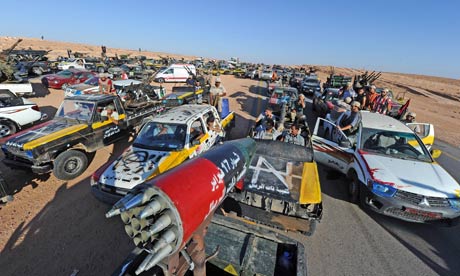
"Libyan rebels gather on armoured vehicles outside Sirte, one of the last strongholds of the fugitive leader Muammar Gaddafi." (Ciro Fusco/ANSA)
Murder and Torture "Carried Out by Both Sides" of Uprising against Libyan Regime
By David Smith
The Guardian, September 12, 2011
"The civil war that brought down Muammar Gaddafi has been marked by widespread atrocities on both sides, according to Amnesty International. In one of the most comprehensive reports yet on the human cost of the six-month conflict, Amnesty offers harrowing testimony of the war crimes, killings of unarmed protesters and arbitrary detentions by Gaddafi's security forces. But it also lifts the lid on a catalogue of reprisal attacks that have gained less international attention during the revolution. 'Opposition fighters and supporters have abducted, arbitrarily detained, tortured and killed former members of the security forces, suspected Gaddafi loyalists, captured soldiers and foreign nationals wrongly suspected of being mercenaries fighting on behalf of Gaddafi forces,' Amnesty says. 'No independent or credible investigations are known to have been carried out by the NTC [opposition National Transitional Council], nor effective measures taken to hold to account those responsible for these abuses.' One chapter of the report, the Battle for Libya: killings, disappearances and torture, focuses on opposition abuses which, though on a 'smaller scale' than those of the regime, are said to have been often ruthless and deadly. The report says that in the first days of the uprising, groups of protesters killed captured soldiers and suspected mercenaries in al-Bayda, Derna and Benghazi. 'Some were beaten to death, at least three were hanged, and others were shot dead after they had been captured or had surrendered,' the report says. Those who tried to distance themselves from Gaddafi's military apparatus were often shown no mercy, Amnesty's researchers found.

Rwanda / France

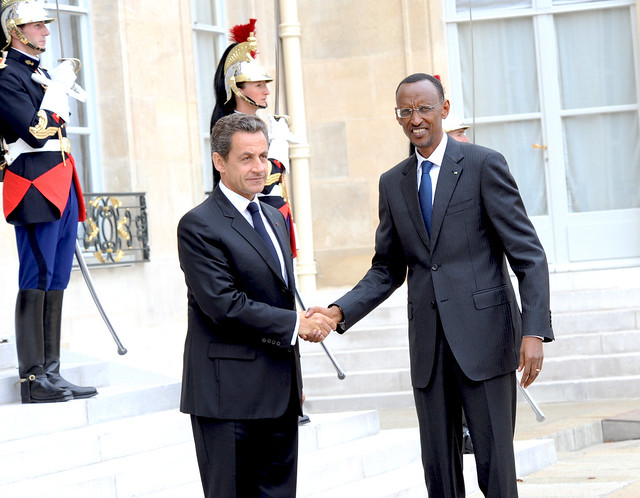
"President Sarkozy receives President Kagame at the Élysée Palace- Paris, 12 September 2011." (Flickr)
Rwandan Leader, in Paris, Seeks to Ease Tensions
By Steven Erlanger
The New York Times, September 12, 2011
"President Paul Kagame of Rwanda met President Nicolas Sarkozy on Monday in a fence-mending exercise on the Rwandan’s first visit to France since the genocide in his country in 1994. Rwanda and Mr. Kagame have accused the French military of aiding the government, then Hutu-dominated, as it massacred up to 800,000 Rwandans, mainly Tutsi. That government was overthrown by Mr. Kagame, a Tutsi, with help from Uganda. Diplomatic relations between Rwanda and France broke off in 1996 after a French judge implicated Mr. Kagame and his alliesin the 1994 downing of a plane carrying the president at the time, a Hutu, which the government used as a pretext for the genocide. Mr. Sarkozy visited Rwanda last year and said that 'a kind of blindness' had prevented France from seeing the 'genocidal aspect' of the Hutu government. Mr. Sarkozy said he regretted 'mistakes,' but gave no apology. Mr. Kagame said Monday that he would not demand an apology from France and had spoken to Mr. Sarkozy of the future. 'The whole purpose is to find ways of overcoming our differences over the past and going forward with a better relationship,' he told Agence France-Presse in an interview. In an address to the French Institute of Foreign Relations, Mr. Kagame dismissed the complaints of human rights advocates who accused him of jailing opponents and limiting press freedom and said he was emphasizing economic progress and development. His visit coincided with accusations made by Robert Bourgi, a onetime aide to former President Jacques Chirac, that Mr. Chirac and former Prime Minister Dominique de Villepin received suitcases of cash from the leaders of former French colonies in Africa to finance French election campaigns. Lawyers for both men deny this. [...]"

South Africa / Violence against Whites

Shoot the Boer: "That's How a Genocide Can Start"
The Mail & Guardian, September 12, 2011
"A South African court on Monday ruled that ANC Youth League leader Julius Malema was guilty of hate speech for singing an apartheid-era song that advocated the killing the white farmers. 'I find the words uttered by Malema constitute hate speech,' said Judge Collin Lamont. Malema was ordered to pay court costs in the civil case that did not carry a criminal penalty. The verdict against Malema, a vocal proponent for the nationalisation of mines, comes as he is fighting for his political survival in a separate disciplinary case brought by the African National Congress, which has charged him with bringing the party into disrepute. The 30-year-old Malema, who is seen as a future leader of the ANC, was not present in court. The case was brought to the South Gauteng High Court by the Afrikaner civil rights group AfriForum Youth, which claimed white farmers felt vulnerable because of the song 'dubul' ibhunu', ('shoot the boer'). In his judgment, Lamont said words were powerful weapons that could lead to disastrous actions and even genocide. 'The words of one person inciting others ... that's how a genocide can start,' he said in his judgment. Lamont said in determining the outcome of the case the court had to analyse the meaning of the words in the song and its effect on society. He said single words and a group of words had 'elastic meanings'. The words Malema sang had not been forgotten as they were derogatory and hurtful. He said the response of the public was relevant to analyse the entirety of its context. Genocide was defined as 'the deliberate and systematic destruction of an ethnic, religious, or national group'. [...]"

Saturday, September 10, 2011

Austria / Holocaust Denial

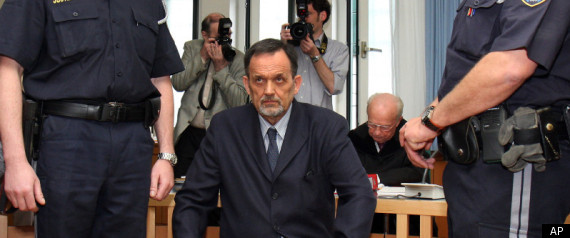
"Gerd Honsik, center, sits in the court room in Vienna's main court, in Austria, on Monday, April 20, 2009." (AP Photo/Ronald Zak)
Austrian Holocaust Denier, Gerd Honsik, Gets Parole
Associated Press dispatch in The Huffington Post, September 8, 2011
"An Austrian court official says a far-right author who has questioned the Holocaust has been paroled after serving three years in prison for glorifying Nazi ideology and backing Nazi-era beliefs. Gerd Honsik was serving concurrent four-year and two-year terms for writing books and in right wing publications that praised the Hitler era and contained anti-Jewish sentiments. He still had over a year left to serve. Court official Gerhard Hinger said Thursday the decision to release the 68-year-old Honsik was reached Monday. He says he does not know when Honsik actually left prison or where he is now. Officials said the parole decision was based on age and the fact that he is well-integrated in Spain, where he lives with his family."
[n.b. This is the complete text of the dispatch.]

Wednesday, September 07, 2011

Iran / Violence against Homosexuals

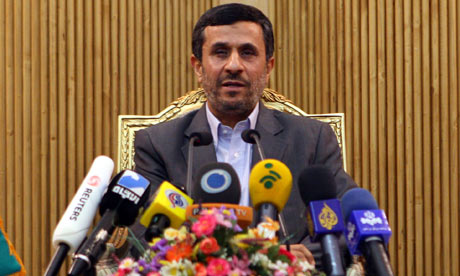
"Iranian president Mahmoud Ahmadinejad told the United Nations 'we don’t have homosexuals'." (Vahid Salemi/AP)
Iran Executes Three Men on Homosexuality Charges
By Saeed Kamali Dehghan
The Guardian, September 7, 2011
"Three Iranian men have been executed after being found guilty of charges related to homosexuality, according to a semi-official news agency. The men, only identified by their initials, were hanged on Sunday in the south-western city of Ahvaz, the capital of Iran's Khuzestan province. 'The three convicts were sentenced to death based on the articles 108 and 110 of Iran's Islamic penal code, for acts against the sharia law and bad deeds,' the Isna agency quoted a judiciary official in Khuzestan as saying. Iran Human Rights, an independent NGO based in Norway, said the men were charged with 'lavat' -- sexual intercourse between two men. It is not clear whether the three men were homosexuals or merely smeared with homosexualityaccused of being gay. Isna said the men were also convicted of robbery and kidnapping. Three other people were also executed on the same day on charges related to drug-dealing, rape and robbery. It is believed that the execution of the three men is the first time for many years that any Iranians have been given death sentences on the basis of their sexuality. In the past, Iran has executed convicts for homosexuality but they were typically simultaneously convicted of other charges that carried the death sentence, such as male rape. 'The executions for sodomy might be among the rare cases where the Iranian authorities admit to having executed men convicted of homosexual acts ... Iranian authorities normally present such cases as rape, but rape has not been mentioned in this case,' said Mahmood Amiry-Moghaddam, a spokesman for IHR.

Srebrenica Massacre / International Tribunals

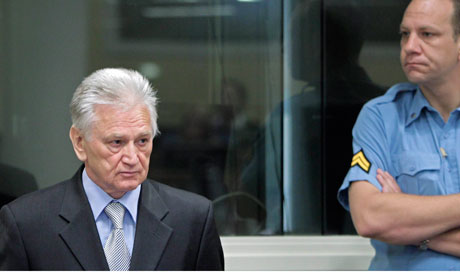
"Momcilo Perisic, former chief of staff of the Yugoslav army, under guard before hearing his sentence at The Hague." (Peter Dejong/Reuters)
War Crimes Tribunal Jails Former Yugoslav Army Chief for 27 Years
Associated Press dispatch in The Guardian, September 6, 2011
"The Yugoslav war crimes tribunal has sentenced the former chief of the Yugoslav army to 27 years in prison for providing military aid to Bosnian Serb forces responsible for the Srebrenica massacre and for a deadly four-year campaign of shelling and sniping in Sarajevo. The verdict on General Momcilo Perisic is the first time the United Nations court has convicted a civilian or military officer from Yugoslavia of war crimes in Bosnia, and underscores the Yugoslav army's support for the Serb rebels in Bosnia and Croatia who committed the worst atrocities of the Balkan conflicts in the 1990s. The link between the disintegrating Yugoslav federation and Serb forces in the breakaway republics has been a matter of dispute and was the keystone of the trial in The Hague of Yugoslav president Slobodan Milosevic. That trial ended without a conclusion when Milosevic died in his cell in 2006 of a heart attack. The former Yugoslavia is now divided into independent states that include Serbia, Bosnia and Croatia. Perisic is a former Milosevic ally who remained Serbia's military chief until 2008 -- three years after the Bosnian and Croatian wars ended. He turned against the dictator after the Bosnian war and warned Milosevic's regime against fomenting conflict in Kosovo, where fighting erupted after he left his post.

Sunday, August 28, 2011

Turkey / Restitution

Turkey to Return Confiscated Property
By Suzan Fraser
AP dispatch in The Guardian, August 28, 2011
"Turkey's government is returning hundreds of properties confiscated from the country's Christian and Jewish minorities over the past 75 years in a gesture to religious groups who complain of discrimination that is also likely to thwart possible court rulings against the country. A government decree published Saturday returns assets that once belonged to Greek, Armenian or Jewish trusts and makes provisions for the government to pay compensation for any confiscated property that has since been sold on. Prime Minister Recep Tayyip Erdogan was scheduled to announce the decision formally later Sunday when he hosts religious leaders and the heads of about 160 minority trusts, at a fast-breaking dinner for the holy Muslim month of Ramadan, officials said. The properties include former hospital, orphanage or school buildings and cemeteries. Their return is a key European Union demand and a series of court cases has also been filed against primarily Muslim Turkey at the European Court of Human Rights. Last year, the court ordered Turkey to return an orphanage to the Greek Orthodox Patriarchate. Some properties were seized when they fell into disuse over the years. Others were confiscated after 1974 when Turkey ruled that non-Muslim trusts could not own new property in addition to those that were already registered in their names in 1936. The 1974 decision came around the time of a Turkish invasion of Cyprus that followed a coup attempt by supporters of union with Greece and relations with that country were at an all time low. Erdogan's Islamic-rooted government seeking to promote religious freedoms has pledged to address the problems of the religious minorities. In the past few years, it amended laws to allow for the return of some of the properties, but restrictions remained and the issue on how to resolve properties that were sold on to third parties was left unsolved. The decree overcomes those restrictions and helps scupper further court rulings.

Thursday, August 25, 2011

Sudan / South Kordofan

"New recruits for the Sudan People's Liberation Army (SPLA) train in a secret camp in the Nuba mountains of South Kordofan in preparation for what they call a long war against Khartoum." (AFP/Getty)
Satellite Images Reveal Signs of Mass Graves in South Sudan
The Telegraph, August 25, 2011
"A US monitoring group says satellite imagery had revealed the existence of two more mass graves in a contested region of Sudan, bringing the total number of mass graves sited there to eight. The Satellite Sentinel Project, a group backed by actor and Sudan activist George Clooney, said that witnesses told the group that a backhoe was used to dig some of the graves at sites in Kadugli, South Kordofan. Workers with the Sudanese Red Crescent Society were present during some of the burials, the group said. The US group has not made any estimates of the number of bodies it believes have been buried in the graves, saying that onsite research would need to be carried out. South Kordofan lies just across the border from newly independent South Sudan and has been the site of clashes between government troops from Sudan's Arab north and black tribesmen aligned with the south's Sudan People's Liberation Movement. Many inhabitants of South Kordofan fought for the south during the country's two decades-plus civil war against the north and are ethnically linked to the south. A report released this month by the UN human rights office in Geneva said Sudanese security forces allegedly carried out indiscriminate aerial bombardments in South Kordofan that killed civilians in the weeks before South Sudan became independent on July 9. It also alleged that Sudanese forces executed prisoners accused of belonging to the south's Sudan Peoples' Liberation Movement before burying them in mass graves. 'The evidence against the Sudanese government continues to compound and has now become impossible to dismiss. It is time for the international community to take serious action and execute its responsibility to protect innocent lives in Sudan,' said John Prendergast, co-founder of the activist group the Enough Project. [...]"

Monday, August 22, 2011

France / Auschwitz / Nazi Holocaust

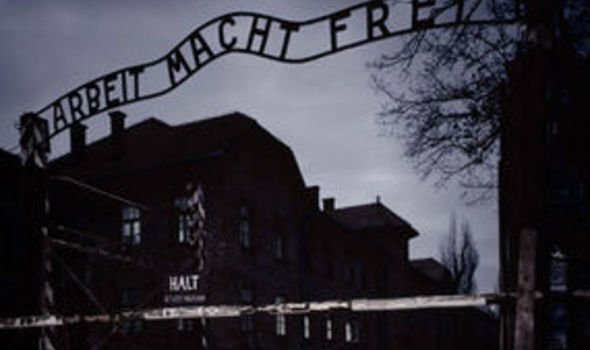
"The hellish entrance at Auschwitz."
The Death Camp Heroines
By Caroline Moorehead
Daily Express, August 21, 2011
"On an icy dawn in January 1943, 230 French women were herded on to four cattle trucks in the station of Compiègne. The eldest was a 68-year-old farmer’s wife, the youngest a 15-year-old schoolgirl. In between were teachers and shopkeepers, factory workers and students.Arrested by French police on the orders of the German occupying forces for resistance activities, acting as liaison officers, hiding weapons or writing anti- German slogans on the walls, they had been selected as a warning to troublemakers. Other resisters arrested like them from all over France were being sent to prison or to labour camps in Germany. This group was going to the death camp of Auschwitz. However, these 230 women had deep bonds of friendship and affection born during the many months they had been held together in the old fort of Romainville on the outskirts of Paris. Though separated by age, class, politics and education, they had listened to each other's stories, comforted those who had left children behind, looked after those who were little more than children themselves. They had shared their meagre rations, fought for better conditions, watched each other's backs.

India / Kashmir

Mass Graves Hold Thousands, Kashmir Inquiry Finds
By Lydia Polgreen
The New York Times August 22, 2011
"Thousands of bullet-riddled bodies are buried in dozens of unmarked graves across Kashmir, a state human rights commission inquiry has concluded, many of them likely to be those of civilians who disappeared more than a decade ago in the brutal insurgency in the troubled region. The inquiry, the result of three years of investigative work by senior police officers working for the Jammu and Kashmir State Human Rights Commission, brings the first official acknowledgment that civilians might have been buried in mass graves in Kashmir, a region claimed by both India and Pakistan where insurgents waged a bloody battle for independence in the early 1990s. The report sheds new light on a grim chapter in the history of the troubled province and confirms a 2008 report by a Kashmiri human rights organization that found hundreds of bodies buried in the Kashmir Valley. Tens of thousands of people died in the insurgency, which began in 1989 and was partly fueled by training, weapons and cash from Pakistan. According to the report, the bodies of hundreds of men described as unidentified militants were buried in unmarked graves. But of the more than 2,000 bodies, 574 were identified as local residents. 'There is every probability that these unidentified dead bodies buried in various unmarked graves at 38 places of North Kashmir may contain the dead bodies of enforced disappearances,' the report said.