Wednesday, February 06, 2013

Rwanda / Genocide Tribunals

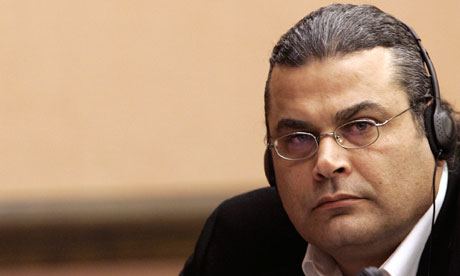
"Appeal judge Theodor Meron overturned convictions against Justin Mugenzi and Prosper Mugiraneza." (Agence France-Presse)
Rwanda Genocide Convictions Overturned
AlJazeera.com, February 5, 2013
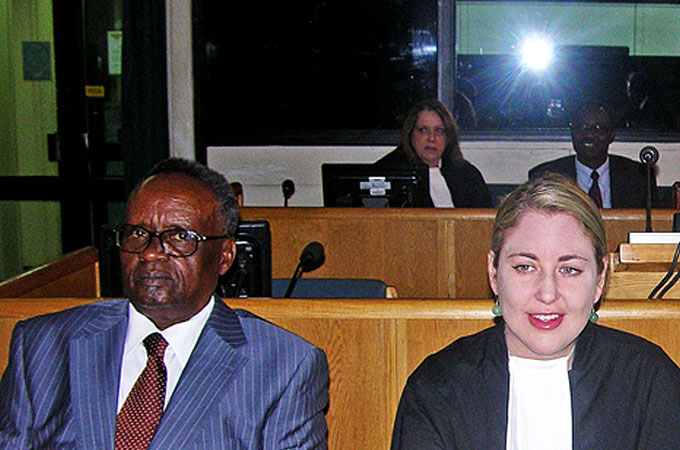
"A UN appeal court has overturned genocide convictions of two Rwandan ex-ministers who were jailed for 30 years in 2011, and ordered their immediate release. Appeal Judge Theodor Meron overturned the convictions on Monday for complicity to commit genocide and incitement to commit genocide against Justin Mugenzi, who was trade minister during the 1994 genocide, and Prosper Mugiraneza, former minister in charge of civil servants. 'The convictions were reversed because the ICTR Appeals Chamber believes strongly that there were errors in the trial chamber's assessment of the evidence,' Roland Amoussouga, International Criminal Tribunal for Rwanda spokesperson, told Reuters news agency by telephone from its base in the Tanzanian city of Arusha. 'The appeals chamber has acquitted the accused persons and ordered their immediate release.' The lower court had convicted the two on the grounds that they attended a council of ministers meeting that decided the then prefect of Butare, a region in southern Rwanda, was to be dismissed on the grounds that he was preventing the massacres from starting in his region. The prefect, Jean-Baptiste Habyarimana, was killed after his dismissal and the massacres promptly started in Butare.

Tuesday, February 05, 2013

Israel / United States / Terrorism

"July 19, 2012: a damaged bus is transported out of Burgas airport, Bulgaria, a day after a deadly suicide attack on a bus full of Israeli vacationers." (STR/AP)
US, Israel Pressure EU over Hezbollah after Bulgaria Says Group behind Bus Attack
By Sheera Frenkel and Roy Gutman
McClatchy Newspapers, February 5, 2013
"Israel and the United States on Tuesday urged the European Union to declare the Lebanese group Hezbollah a terrorist organization after the Bulgarian government announced that Hezbollah militants were behind the bombing of a tour bus last July that killed five Israeli tourists in that country. Israeli Prime Minister Benjamin Netanyahu called on Europe to draw the 'proper conclusions' from the investigation into the blast, which found that a Hezbollah cell that included a Canadian and an Australian had carried out the attack at the airport in the coastal city of Burgas. 'The attack in Burgas was an attack on European land against a member of the European Union. We hope the Europeans learn the proper conclusions from this about the true character of Hezbollah,' Netanyahu said. The White House echoed the Israeli premier’s statements, with President Barak Obama’s top counter-terrorism adviser, John Brennan, calling on European countries to take 'proactive action' to uncover Hezbollah's infrastructure, financing and operational networks in Europe. European officials were more cautious. Catherine Ashton, the European Union’s high representative for foreign policy, issued a statement that said the 'implications of the investigation need to be assessed seriously as they relate to a terrorist attack on EU soil.' There was no immediate reaction from Hezbollah, and the group's spokesman was unavailable for comment. Hezbollah, Lebanon's most powerful political player, previously had denied involvement in the bombing.

Torture / "The War on Terror" / International Tribunals

"US air force planes land at Diego Garcia in support of the 'war on terror' after 9/11 attacks." (Larry A. Simmons/USAF)
CIA Rendition Report Author Believes UK Could Face Human Rights Court
By Ian Cobain
The Guardian, February 5, 2013
"Up to two dozen European countries including the UK could face proceedings before the European Court of Human Rights from their involvement in the CIA's extraordinary rendition operations after 9/11, according to a human rights organisation that has documented worldwide secret support for the programme. At least 54 different governments -- more than a quarter of the world's total -- were covertly engaged with the global kidnap, detention and torture programme, according to a report published on Tuesday by the Open Society Justice Initiative (OSJI), a New York-based NGO. The greatest number -- 25 -- were in Europe, while 14 were in Asia and 13 in Africa. Among the European participants, Macedonia has been found guilty by the European Court of the illegal imprisonment and torture of a German national. Proceedings are being brought against Poland, Lithuania and Romania after they permitted the CIA to operate secret prisons on their territory. Italy is facing proceedings in the European court over the state's involvement in the abduction of a Muslim cleric, who was kidnapped in Milan and flown to Egypt to be tortured. Last week an Italian appeal court upheld the conviction of the CIA's local station chief and two other Americans involved in the kidnap. Amrit Singh, the author of the OSJI report, said she believes that other European countries that were involved in the CIA's rendition could also find themselves before the European Court. 'The moral cost of these programs was borne not just by the US but by the 54 other countries it recruited to help,' she said. So extensive was the participation of governments in Europe and elsewhere across the world that the OSJI believes the CIA could not have operated its programme without their support.

Monday, February 04, 2013

Bangladesh / Genocide Tribunals

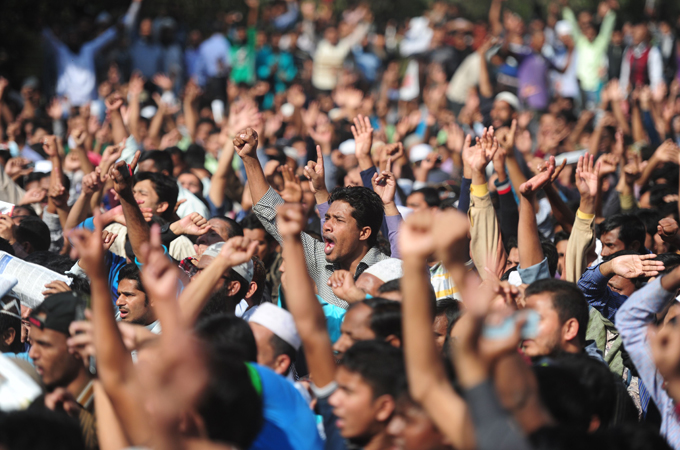
"Riots rocked Dhaka ahead of the verdict as Police clashed with protesters near Old Dhaka." (Agence France-Presse)
Bangladesh Official Gets Life for War Crimes
AlJazeera.com, February 5, 2013
"A Bangladeshi court has sentenced a senior opposition official to life in prison for mass murder and crimes against humanity during the 1971 liberation war against Pakistan. Abdul Kader Mullah, 64, the fourth highest ranked leader of the country's main Jamaat-e-Islami party, is the first politician to be found guilty by the controversial International Crimes Tribunal following charges of rape, genocide and murder. Six leaders of the party are on trial before the much-criticised domestic court based in Dhaka. They too have been accused of committing atrocities during the nine-month war against Pakistan. Mullah has been tried on six counts, including playing a role in the killing of 381 unarmed civilians, the prosecution says. He denies the charges. ... Riots rocked Dhaka before the verdict as Police clashed with protesters early on Tuesday near Old Dhaka after they smashed cars and autorickshaws.

Guatemala / Genocide Tribunals

A Chance at Justice in Guatemala
By Kirsten Weld
The New York Times, February 3, 2013
"Last Monday, a brave Guatemalan judge made history. In greenlighting a public trial for the former dictator Efraín Ríos Montt on charges of genocide, the judge, Miguel Ángel Gálvez, made his country the first in the Americas to prosecute a former head of state, in its own domestic courts, for the ultimate crime. Mr. Ríos Montt, a former cold war general whom Ronald Reagan defended as having gotten a 'bum rap,' will finally face his accusers — three decades after his alleged crimes, and a year after he was indicted. Mr. Ríos Montt seized power by a coup in March 1982, taking charge of a counterinsurgency that was then two decades old. To deny the guerrillas local support, he sent soldiers to wipe out hundreds of Mayan villages. In 1999, after the war’s end, the United Nations-sponsored Historical Clarification Commission tallied thousands of rapes, tortures, disappearances, violations of cultural rights and extrajudicial executions his forces committed while he held power, and concluded that he presided over acts of genocide. The dictator was ousted (in another coup) in August 1983, but this being Guatemala, he was not sent to prison but became a right-wing congressman and a presidential candidate. (He lost.) No other high-ranking Guatemalan Army or police official was brought to justice. Military rule formally ended in 1985, and a peace accord was signed in 1996. But activists seeking to shed light on the past were still threatened and killed. In 2011, Guatemalans elected as president Otto Pérez Molina, a former general who commanded troops in the Ixil region -- the focus of the genocide trial -- during Mr. Ríos Montt's rule. 'There was no genocide,' Mr. Pérez Molina insists.

Mali / Sexual Violence against Women

Azahara Abdou Maiga
Timbuktu: The Women Singled Out for Persecution
By David Blair
The Telegraph, February 3, 2013
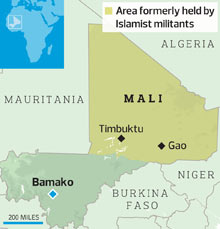
"The harsh reality inflicted on the people of Timbuktu by al-Qaeda and its allies is betrayed by the ordeal of Azahara Abdou Maiga. Five of the Islamists placed a gun to the 20-year-old's head, ordered her to keep silent or be killed, and then raped her one by one. 'I did not cry out,' said Miss Maiga. 'I just cried inside of me.' For 10 months, Timbuktu endured occupation by al-Qaeda in the Islamic Maghreb (AQIM) and other extremists. This isolated city of 60,000 people in the Saharan wastes of northern Mali was compelled to discover what life would be like under al-Qaeda's rule. As such, Timbuktu became the unlikely test bed for the world that Osama bin Laden's followers wish to create. That era, which began with AQIM's capture of the city last March, ended a week ago when French paratroopers and helicopter gunships forced them to flee Timbuktu. In the aftermath, the full story of a brutal occupation is now beginning to emerge. Perhaps inevitably, the women of Timbuktu were singled out for special persecution. Miss Maiga committed two offences in Islamist eyes: she sometimes failed to cover her face when venturing out. Most heinously of all, she carried pictures of Western pop stars, notably Celine Dion, on her mobile phone. The latter crime was discovered by four Islamist gunmen who stopped her in the street last November. When they saw the offending images, they beat her with a whip made from camel skin. 'I did not count how many times they hit me,' she said. From then on, they kept track of her movements and watched the home that she shares with her parents and siblings. In late November, she ventured outside to hang some laundry -- and a gunman noticed she was apparently unveiled. She was immediately arrested and taken to a large sand-coloured building in the city centre which AQIM had commandeered as its security headquarters.

Sunday, February 03, 2013

Mali


Inside Gao Where Arab Jihadis Took Bloody Sharia Retribution on Mali's Black Africans
By Lindsey Hilsum
The Observer, February 2, 2013
"The jihadis carried out amputations in the sandy square where the residents of Gao used to watch basketball. The men who ruled Gao for nine months, until French and Malian troops drove them out last weekend, replaced the words 'Place de l'Indépendence' in the green, red and yellow of the national flag with simple white on black: Place de la Sharia. A thief would lose his right hand. Those accused of burglary would lose both their right hand and left foot. On 21 December last year, people were assembled, as they had been several times before, and told to watch. 'No one was allowed to speak,' said Issa Alzouma. 'Then they cut off my hand with a knife.' Alzouma had been accused of stealing a motorbike, which he denies. At 39, he made a living digging gravel for construction companies. It was enough to support his wife and three children. Now he roams Gao in tattered clothes, the stump of his right arm wrapped in a grubby bandage, a flimsy black plastic bag dangling from his remaining wrist. Inside he keeps a few antibiotics and replacement bandages given by a Red Cross doctor who treated him at Gao hospital a week after his amputation. 'The doctor had to cut in and remove flesh because it was infected,' he said. 'Under the bandage you can see my bones. It hurts and I feel as if my bones are coming out.' Alzouma has no idea how he and his family will survive. 'My wife just cries and cries,' he said. His friend Algalas Yatara, who was also accused of stealing a motorbike, carries a sheaf of papers in Arabic in his remaining hand. He thinks it is the judgment but is not quite sure, as neither man can read Arabic. At least 12 men had hands or feet cut off after MUJAO (Movement for Jihad and Unity), and its allies in AQIM (al-Qaida in the Islamic Maghreb), took control of Gao last April.

Mali

"In this photo taken Jan. 26, 2013, Bawba Mint Baba Ahmed is photographed in Mopti, Mali." (Baba Ahmed/Associated Press)
Arabs, Tuaregs in Mali Face Hostility, Discrimination as Islamists Flee Northern Cities
Associated Press dispatch in The Washington Post, February 1, 2013
"Bawba Mint Baba Ahmed's sewing teacher singled her out in front of the class, telling her: 'You look like a rebel.' Others threatened to slit her throat, she says, drawing a finger across her neck. Now the 29-year-old has dropped out of school and spends her days hiding inside her mud-walled home with her mother and two sisters, fearing retaliation from those who accuse her of being an Islamist simply because she is Arab. 'We are truly afraid,' she says, tugging at the azure-colored scarf that covers her head and hides her light skin as she sat cross-legged in the shade on a woven mat. 'They say "You're the same color as the ones who have attacked us."' As the French and Malian forces oust al-Qaida-linked militants from the towns of Gao, Timbuktu and Kidal, ethnic tensions exacerbated by months of political upheaval are putting Mali's minorities in danger. Most members of the Islamic groups that took over last year are from Tuareg and Arab ethnic groups. Northerners living in the central and southern parts of Mali say they have faced discrimination and fear of reprisals by those who blame the country's problems on anyone who looks Tuareg or Arab. Less than 15 percent of Mali’s population of some 16 million are Tuareg or Arab, and the vast majority live across northern Mali. Activists also fear that as tens of thousands return home to the north, there may be more such attacks against those suspected of links to Ansar Dine or NMLA -- a secular Tuareg rebel group. 'Given its history and this high level of ethnic tension, we're really concerned that as local populations who suffered tremendously under the NMLA and the Islamists return to their towns and villages in the north that the incidents of reprisals could dramatically increase,' said Corinne Dufka, a senior researcher with Human Rights Watch.

Wednesday, January 30, 2013

Germany / Nazism / Jewish Holocaust

"A man walks past a poster advertising the exhibition 'Berlin 1933: The Road to Dictatorship' at the Topography of Terror museum in Berlin. The exhibition coincides with the 80th anniversary of Adolf Hitler's accession to power." (AFP/Getty)
Adolf Hitler's Memory is a "Constant Warning," Merkel Says on 80th Anniversary
Agence France-Presse dispatch in The Telegraph, January 30, 2013
"Chancellor Angela Merkel said on Wednesday that Adolf Hitler's rise to power 80 years ago should go on reminding Germans that democracy and freedom cannot be taken for granted. Mrs. Merkel was speaking at the inauguration of an exhibition in Berlin to commemorate eight decades since Hitler became chancellor on January 30, 1933 -- an anniversary which has aroused much interest in Germany. 'Human rights don't assert themselves. Freedom doesn't preserve itself all alone and democracy doesn't succeed by itself,' Mrs. Merkel said. 'That must be a constant warning for us, Germans,' she added referring to Hitler's arrival at the chancellery. The exhibition, 'Berlin 1933. On the Path to Dictatorship', is on a site charged with history as the former headquarters of the Gestapo, the secret police of the Nazi regime. It now houses The Topography of Terror, an open-air documentation centre whose exhibition traces Hitler's first months in power through photos, newspapers and posters. Mrs. Merkel noted that it only took six months for the dictator to 'wipe out all the diversity' of German society. But she also underscored that a large part of society had supported 'or at least acquiesced' to Hitler's regime.

Tuesday, January 29, 2013

Syria / Gendercide

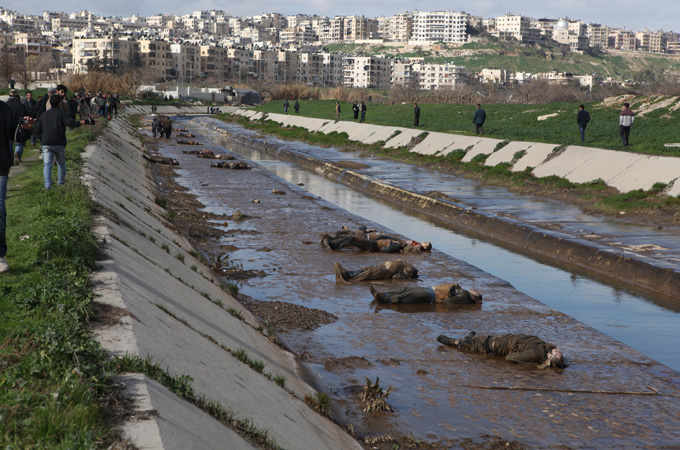
"Free Syrian Army fighters say they are still recovering bodies at the river, where several people were found dead." (EPA)
Aleppo Executions: 65 Bodies Pulled from Syria River
The Telegraph, January 29, 2013
"The bodies of at least 65 young men and boys, all executed with a single gunshot to the head or neck, were found on Tuesday in a river in the Syrian city of Aleppo, a watchdog and rebels said. The Syrian Observatory for Human Rights said 65 bodies were found in the Quweiq River, which separates the Bustan al-Qasr district from Ansari in the southwest of the city, but that the toll could rise significantly. A Free Syrian Army officer at the scene said at least 68 bodies had been recovered and that many more were still being dragged from the water, in a rebel-held area. 'Until now we have recovered 68 bodies, some of them just teens,' said Captain Abu Sada, adding that all of them had been 'executed by the regime.' 'But there must be more than 100. There are still many in the water, and we are trying to recover them.' A senior government security source said many of the victims were from Bustan al-Qasr and had been reported kidnapped earlier. He accused 'terrorists,' the standard regime term for people fighting to overthrow President Bashar al-Assad, of carrying out the executions and spreading propaganda to deflect responsibility. 'They were kidnapped by terrorist groups, who some are accusing of being pro-regime, and executed last night in a park in Bustan al-Qasr under their control,' the source told news agency Agence France-Presse by telephone. ... A volunteer said as he helped load one of the bodies on a truck: 'We don't know who they are because there was no ID on them.' At least 15 bodies could already be seen on the truck, an AFP correspondent said, with other[s] continuing to arrive.

Guatemala / Genocide Tribunals

"Former Guatemalan leader Efrain Rios Montt, in glasses, appears at a court hearing in Guatemala City. A judge ordered that Rios Montt, 86, face trial on genocide charges." (Johan Ordonez/AFP/Getty Images)
Former Guatemalan Dictator to Stand Trial on Genocide Charges
By Richard Fausset
The Los Angeles Times, January 28, 2013
"Former Guatemalan dictator Efrain Rios Montt will stand trial on charges of genocide and crimes against humanity, a Guatemalan judge ruled Monday, in incidents that took place during the height of the Central American nation's brutal civil war in the early 1980s. Judge Miguel Angel Galvez ruled that Rios Montt, who took power in a 1982 coup and ruled for just over a year, must appear at a hearing Thursday, according to the attorney general's office. The 86-year-old former army general had been under house arrest since January, when he was originally charged with the crimes. Before that, he had been immune from prosecution because of his status as a member of congress. Some conservative Guatemalans continue to believe that Rios Montt is a national hero whose 'hard hand' anti-crime strategies and scorched-earth tactics against Marxist rebels and those suspected of supporting them saved the country from ruin. But liberal groups and human rights advocates have long hoped that Rios Montt would be forced to answer in court for the atrocities carried out by security forces during his brief rule. The current charges, which Rios Montt denies, allege that he ordered the killing of more than 1,700 indigenous Mayas in the remote Ixil area.

Monday, January 28, 2013

Jewish Holocaust / Psychology of Genocide / Genocide Prevention

"Dr. Martin Stern believes there is hope humanity can turn away from genocide." (Neville Collins/Redditch Standard)
We Are All Capable of Genocide Says Holocaust Survivor
By Ian Dipple
Redditch Standard, January 28, 2013
"As a five-year-old child, imprisoned in the Nazi prison camp of Westerbork in the Netherlands, Martin Stern watched thousands of people packed like cattle onto trains and rushed to their deaths at Auschwitz or other extermination camps. One thing always bothered him. 'There were a few soldiers and okay they were wearing military uniforms and carrying pistols but I could see their faces and their faces looked ordinary and stupid and ignorant as I was at the age of five, it was a puzzle to me how one set of normal looking people could do that, packing them in like sardines in goods trucks and cattle trucks, to another set of people who I knew were normal.' It is a question that for the last eight years since he retired as an immunologist working in hospitals in Leicester, that has spurred Dr. Stern to talk about his own Holocaust survival story and to look deeper at the reasons why humanity feels the need to inflict such brutality on itself. He vividly recalls the moment he was arrested at his school in Amsterdam because his father was a Jew. 'The door opened at the back of the little hall and two young men walked in. One of them asked is Martin Stern here. And the teacher immediately shot back "No he hasn't come in today" and there I was in the middle of the row with my classmates. I did not understand what was going on and I put my hand up and said "But I am here" and as these two young men were leading me out of that little hall I looked back and I saw her and I will never forget the ashen face of the teacher.' ... Despite having suffered at the hands of the Nazis, Dr. Stern dismisses the theory which became fashionable in the 1950s and 1960s that genocide was something only Germans were capable of or that genocide is the work of a few evil people such as Hitler and Stalin. 'That's absolutely not true. Go out into the street and look around and you will see people capable of it,' he added.

Israel / Prevention of Births within the Group

(Wikipedia)
Israel Admits Ethiopian Jewish Migrants Were Given Birth Control Shots
By Katie McDonough
Salon.com, January 28, 2013
"Israel has admitted that it has been giving Ethiopian Jewish immigrants birth control injections, according to a report in Haaretz. An Israeli investigative journalist also found that a majority of the women given these shots say they were administered without their knowledge or consent. Health Ministry Director General Prof. Ron Gamzu acknowledged the practice -- without directly conceding coercion was involved -- in a letter to Israeli health maintenance organizations, instructing gynecologists in the HMOs 'not to renew prescriptions for Depo-Provera for women of Ethiopian origin if for any reason there is concern that they might not understand the ramifications of the treatment.' Depo-Provera is a hormonal form of birth control that is injected every three months. Gamzu issued the letter in response to a complaint from Sharona Eliahu-Chai of the Association of Civil Rights in Israel. Representing several women's rights and Ethiopian immigrant groups, Eliahu-Chai demanded an immediate end to the injections and that an investigation be launched into the practice. In addition to Eliahu-Chai, Gal Gabbay, an investigative journalist who had interviewed 35 Ethiopian immigrants, found that while the women were still in transit camps in Ethiopia they were sometimes intimidated or threatened into taking the Depo-Provera shot, often being misled about why. 'They told us they are inoculations,' said one of the women interviewed. 'They told us people who frequently give birth suffer. We took it every three months. We said we didn't want to.'

Israel / Palestine

Lobna Hannash, 21, killed by Israeli forces on January 23.
Dead Children and Arrested Babies: Palestinian Life under Israeli Colonialism
By Juan Cole
CommonDreams.org, January 27, 2013
"The Palestinian West Bank has been illegally de facto annexed by Israel. This territory was not awarded to Israel even in the UN General Assembly partition plan of 1947, and indeed Israel’s possession of it is not recognized even by the US, much less the rest of the world. It was conquered by main force in 1967 and has been settled by hundreds of thousands of Israeli colonists, who have encroached on Palestinian orchards and farms, and have diverted Palestinian water. The Palestinians there have been kept stateless and without the rights of citizenship. They are sentenced in Israeli military courts. Israel controls their land, water and air space, and simply takes what land of theirs it wants, at will. Palestinians have been divided by Israeli Apartheid highways, checkpoints and the Apartheid Wall, so that often getting to hospital in an emergency is impossible and a one-hour journey now takes 8 hours. Israel controls the contours of their lives, but they have no vote in Israel. Here are some recent news items about the West Bank Palestinians. It is like this all the time, but Western media almost never report from the West Bank. Since 2000, roughly 6700 Palestinians have been killed by Israelis. About 1100 Israelis have been killed by Palestinians in the same period. Although Israelis have been steadily encroaching on Palestinian territory, Western media almost never categorize Palestinian responses as resistance, using the Israeli propaganda term 'terrorism' instead. Israeli aggression is almost always portrayed as 'retaliation,' even when Israelis initiated the violence. Israelis are depicted as the ones in danger, even though Palestinians are in 7 times more danger.

Italy / Fascism / Jewish Holocaust

"Italy's gaffe-prone former premier Silvio Berlusconi, pictured on January 9, 2013, in Rome, sparked outrage Sunday with remarks praising wartime dictator Benito Mussolini." (AFP)
Outrage as Berlusconi Praises Mussolini on Holocaust Day
By Gildas Le Roux
Agence France-Presse dispatch on Yahoo! News, January 27, 2013
"Italy's gaffe-prone former premier Silvio Berlusconi, pictured on January 9, 2013, in Rome, sparked outrage Sunday with remarks praising wartime dictator Benito Mussolini despite Il Duce's persecution of Jews and allowing thousands to be deported to Auschwitz. 'The racial laws were the worst mistake of a leader, Mussolini, who however did good things in so many other areas,' Berlusconi, who is angling for a return to politics in elections next month, said on the sidelines of a ceremony marking Holocaust Remembrance Day in Milan. Starting in 1938, Mussolini promulgated decrees known collectively as racial laws that barred Jews from the civil service, the armed forces and the National Fascist Party. The laws also banned intermarriage. Mussolini's Italy participated in the deportation of Jews to the Auschwitz death camp, and an estimated 7,500 are estimated to have been victims of the Holocaust. Italy 'does not have the same responsibilities as Germany,' said Berlusconi, a billionaire media tycoon known for ill-considered outbursts. On Saturday, Chancellor Angela Merkel said Germany had 'an everlasting responsibility for the crimes of (the Nazis)'. The head of Italy's Jewish community, Renzo Gattegna, hit out at Berlusconi's remarks, saying they were 'not only superficial and inopportune, but also ... devoid of any moral meaning or historical foundation.' Gattegna, head of the Union of Italian Jewish Communities, added: 'The persecution and the racist anti-Semitic laws of Italy originated well before the war and were applied with full autonomy under the ... fascist regime, later an ally and willing and conscious accomplice of Nazi Germany.' He said the remarks showed 'the extent to which Italy still has trouble seriously accepting its own history and its own responsibilities'. Centre-left politicians also voiced outrage over Berlusconi's comments. [...]"

Argentina / Iran / Terrorism / Anti-Semitism

"Vahidi is understood to have left Bolivia on Tuesday night." (Associated Press)
Iran and Argentina Agree to Commission on 1994 Bombing
The Telegraph, January 27, 2013
"Argentina and Iran have reached an agreement to create an independent commission to investigate the deadly 1994 bombing of a Jewish centre in Buenos Aires. Argentina has long accused Iran of masterminding the deadly attack and has since 2006 sought the extradition of eight Iranians, inc'uding current Defense Minister Ahmad Vahidi and former president Akbar Hashemi Rafsanjani. Iran has always denied any involvement in the bombing, in which 85 people died, and has refused to arrest the suspects. Mrs. Kirchner said the two sides had agreed to create a 'truth commission' with five independent judges -- none of whom can come from either Iran or Argentina. She said the agreement may allow Argentine authorities to finally question those for whom Interpol has issued 'red notices', which alert the international community of arrest warrants. Mrs. Kirchner called the agreement 'historic,' saying 'it guarantees the right to due process of law, a fundamental principle of international criminal law.' The agreement, signed by Argentina's foreign minister and Iranian authorities in Addis Ababa on the sidelines of an African Union summit, must still be ratified by lawmakers in both countries.

Thursday, January 24, 2013

Syria / Canada

"A fighter from the Free Syrian Army, walks on the rubble of a damaged house at the front line in Hich village on Jan. 22, 2013." (Reuters)
Why Has Canada Given Up on Justice in Syria?
By David Petrasek
The Globe and Mail, January 23, 2013
"In the past week, amidst the crisis in Mali and the hostage crisis at the gas plant in southern Algeria, the world's attention shifted away from the continuing bloodshed in Syria. This perhaps explains how the Canadian media missed what appears to be a major, and disturbing, shift in our policy towards Syria. Last week, Canada declined to join with dozens of other countries -- and almost all our major allies -- in supporting a call on the UN Security Council to refer the situation in Syria to the International Criminal Court (ICC). Despite all the energy Foreign Minister John Baird has devoted to denouncing the violence in Syria and the Assad regime's culpability for massacres and the targeting of civilians, Canada refused to endorse a major international effort to hold Mr. Assad and his regime accountable. Only in the past few days, the BBC's Lyse Doucet provided first-hand and gripping evidence of a massacre of up to 100 civilians in Haswiya, on the outskirts of Homs. In recent weeks, the Office of the UN High Commissioner for Human Rights reported that the death toll in the conflict since it began almost two years ago is much higher than previously reported, and that at least 60,000 people have been killed.

Guatemala / Genocide Tribunals

"An indigenous woman passes graffiti depicting former dictator Efrain Rios Montt in Guatemala City." (Daniel Leclair/Reuters)
Ríos Montt Plays a Risky Defense Game
By Natalie Kitroeff
LatIntelligence, January 24, 2013
"Without fanfare, or so much as a public arrest, this weekend Guatemala took another historic step toward justice for a genocidal civil war that took the lives of more than 200,000 innocent, mostly indigenous civilians. Just a week after losing his diplomatic immunity, General (Ret) Efraín Ríos Montt was ordered to testify in court about his role in abuses that occurred between 1982 to 1983, when he was de facto President of Guatemala. If judge Patricia Flores decides there is enough evidence to proceed to trial, Ríos Montt will be prosecuted on charges of genocide and crimes against humanity (including 626 massacres of civilians in Chimaltenango, Quiché, Huehuetenango and Baja Verapaz). Ríos Montt has made his defense quite clear. Over the past month, he has repeatedly said that he can't be tried for any human rights violations because he wasn't in charge of the military's on-the-ground operations as the country's political leader. His lawyer has echoed these claims, telling the press recently, 'We are sure that there is no responsibility, since he was never on the battlefield.' This strategy is a radical new approach in the Guatemalan context. Until now, the military has consistently denied that genocide was ever a part of the civil war. Even the current president, Otto Pérez Molina, said that he doesn't believe the findings of the UN truth commission, and that he could 'prove that [genocide] did not occur,' during the conflict. But Ríos Montt is now arguing not that the atrocities didn’t happen, but that he is not culpable.

Tuesday, January 22, 2013

Guatemala / Genocide Tribunals

Pre-Trial Hearing Starts for Guatemala Ex-Dictator
Associated Press dispatch in Las Vegas Sun, January 22, 2013
"A judge in Guatemala has begun pre-trial hearings in a genocide case against former dictator Efrain Rios Montt. Rios Montt is accused of overseeing hundreds of killings when he ruled Guatemala from 1982 to 1983, at the height of the country's 36-year civil war. The war ended in peace accords in 1996, after 200,000 deaths. The judge is going to use the hearings to determine whether there is enough evidence to order a trial. The 85-year-old Rios Montt attended the hearing Tuesday accompanied by friends, relatives and at least three lawyers. His lawyers have sought to block the trial, arguing that he is protected by an amnesty law. Relatives of the victims of massacres in western Guatemala also attended. The prosecution case includes forensic reports documenting hundreds of deaths."
[n.b. This is the complete text of the dispatch.]

Sunday, January 20, 2013

In Iran: Text & Photos by Adam Jones


In Iran: Text & Photos, the first e-book by Adam Jones, is now published!

Only $5.99. Purchase from Lulu.com, iBookstore, and soon from Amazon.com, BarnesAndNoble.com, etc.

The preliminary materials and first four chapters of In Iran: Text & Photos are now available for preview!

What is it like to travel in the Islamic Republic of Iran? In June 2012, Canadian scholar Adam Jones and his companion Griselda Ramírez made a 26-day, 7,000-kilometer private tour through the western half of the country, accompanied only by their guide, Mahmood, and driver Samad. They visited most of Iran’s major cities along with many smaller towns, and travelled to remote frontier areas of Iranian Azerbaijan and Kurdistan. In Iran guides us from the suburbs and cemeteries of Tehran to the dizzying vistas of the Zagros and Alborz mountain ranges ... from the salt flats of Lake Orumiyeh to the splendors of ancient Persepolis ... from the wastes of the Central Desert to the cosmopolitan charms and classic architecture of Shiraz and Isfahan. Along the way, the reader absorbs much of Iranian history, politics, culture, and geography; gets to know Mahmood and Samad; and encounters an array of Iran’s dynamic, diverse, and ever-welcoming people. Uniquely, the text of In Iran incorporates links to hundreds of vivid images that Jones, a widely-published photojournalist, captured throughout his Iranian journey. The photos provide a constant and colorful accompaniment to this entertaining, original, and up-to-the-minute account of one of the world’s most controversial and misunderstood countries -- and one of its most historic and enduring civilizations. 

Canada / Gendercide

Serial killer William Pickton
How the Horrific Case of Serial Killer William Pickton, Who May Have Killed Up to 50 Women, Shone Light on Plight of Vancouver's First Nation Women
By David Usborne
The Independent, January 18, 2013
"Women vanish from Vancouver’s grimy Downtown Eastside with numbing regularity. But the fact a disproportionate number are of First Nations origin has plunged Canada into a political crisis. Ernie Crey, an aboriginal Canadian, is angry. It is twelve years since his sister, Dawn, vanished from Vancouver's downtown eastside -- an utterly dismal skid row of slum hotels, pimps, prostitutes, drug addicts, pushers and charities that try to help them -- and nine years since he learned that her DNA had been drawn from a pair of bloody women's knickers on the pig farm of convicted serial-killer William Pickton. It is worse when you have nothing to bury. Remains from the some victims were found at the farm, 40 minutes outside the city, and given to the families, including cleaved skulls. But nothing of Dawn was recovered. Mr. Crey might have ignored the stories of Pickton mincing human flesh with pork meat and selling it to neighbours, or having the victims' bones boiled down for pet food, but he didn't. 'I have gone there, yes, thought about it,' he admits quietly. 'Not knowing what really happened to her bothers me the most,' says Mr. Crey, 63, a member of the Cheam First Nation and a fisheries advisor to the Stolo Tribal Council. 'Barring Pickton coming forward and saying that yes, he was the asshole who killed her and the other women I don't think I will ever know'. But Mr. Crey is not despairing, in part because the pig-farm murders have not faded from the headlines. Though Pickton was convicted of the second-degree murder of six women in 2007 (the true number of his victims may have been closer to fifty or even higher), and he is now serving life in a federal prison with no chance of parole for 25 years, the case continues to shed light on Canada's most shameful secret: how its most ignored underclass -- indigenous women -- is preyed upon by men with impunity, and with terrifying consequences.

Wednesday, January 16, 2013

North Korea

Navi Pillay (Denis Balibouse/Reuters)
UN Official Urges Scrutiny of North Korea
By Nick Cumming-Bruce
The New York Times, January 14, 2013
"The chief human rights official at the United Nations, Navi Pillay, called on Monday for an international inquiry into human rights offenses committed by the North Korean government over many decades. Ms. Pillay, the Geneva-based high commissioner for human rights, pointed to North Korea’s 'elaborate network of political prison camps,' believed by human rights organizations to hold 200,000 prisoners. The camps not only punish people for peaceful activities, but also employ 'torture and other forms of cruel and inhumane treatment, summary executions, rape, slave labor and forms of collective punishment that may amount to crimes against humanity,' she said. When Kim Jong-un succeeded his father as the leader of North Korea in December 2011, there was some hope that the change would lead to a relaxation of harsh policies, Ms. Pillay said, but 'we see almost no sign of improvement.' Instead, she said, North Korea's self-imposed isolation had 'allowed the government to mistreat its citizens to a degree that should be unthinkable in the 21st century.'

Sunday, January 13, 2013

Jewish Holocaust

Leon Leyson, Holocaust Survivor on "Schindler's List," Dies at 83
By Kimber Liponi
MSNBC.com, January 13, 2013
"Leon Leyson, who was among the youngest of the refugees to be saved from the Holocaust by German businessman Oskar Schindler, has died. He was 83. Leyson was 10 years old when Poland was invaded by the Nazis and 13 when he started to work for Schindler, the hero in Steven Spielberg's 1993 Oscar-winning movie, 'Schindler's List.' Many of Leyson's family members died in the Holocaust. Leon, his parents, older brother and sister survived. Leyson and his family moved to the United States in 1949. It wasn't long before he was drafted into the US Army. He often spoke about how grateful he was to serve his new country. A counselor at Los Angeles City College helped him get his education, and he became a teacher at Huntington Park High School. He taught students there for 39 years. He lived in Fullerton with his wife, Liz, and raised two children. For a long time, most people didn't know Leon was a Holocaust survivor. It wasn't until 'Schindler's List' came out that Leyson began talking about what happened to him and his family. He began talking at elementary schools, high schools and college campuses. He told students about losing his freedom, how he was hungry and frightened. He talked about losing family members, including a beloved older brother. 'Five of us survived the war, this is the bottom line, out of everyone who was related to me in Poland. And we survived because we were on Schindler's list,' Leon said during an interview in 2008 when he was the subject of a 30-minute profile with NBC4's Fritz Coleman. Leyson spoke at the the Orange County's Chapman University often. In 2011, he was awarded an honorary doctorate. When he heard about that, he joked, 'I'm really speechless. I'll be a doctor, so if you have a headache, come see me.'"
[n.b. This is the complete text of the dispatch.]

Friday, January 11, 2013

India / Gendercide

The "Genocide" of India's Daughters
Inside Story on AlJazeera.com, January 11, 2013
"Supreme Court judges in India have summoned the health secretaries in seven states over a worrying fall in the number of young girls in India. They are demanding details about clinics flouting the Pre-Conception and Pre-Natal Diagnostic Techniques Act -- to determine the sex of unborn babies -- with potentially fatal consequences. The judges are blaming what they call rampant foeticide and infanticide, and they say the mindset of parents and society need to change. The UN children's charity UNICEF says the culture of favouring males in India is costing the lives of millions of young girls. The agency says more than 2,000 illegal abortions are being carried out every single day, and it is dramatically altering the balance of the population. It warns: 'Decades of sex determination tests and female foeticide that has acquired proportions are finally catching up with states in India. This is only the tip if the demographic and social problems confronting India in the coming years.' Speaking in April 2011, Manmohan Singh, the Indian prime minister, called for a crusade against the widespread practice of foeticide and infanticide. 'The falling child sex ratio is an indictment of our social values. Our girls and women have done us proud in classrooms, in boardrooms and on the sports field. It is a national shame for us that despite this, female foeticide and infanticide continues.'

Monday, December 31, 2012

Rwanda / United Nations / United States

Rwanda's Rampaging Rebel Force
By Philippe Bolopion
The New York Times, December 28, 2012
"Few countries dare challenge the Security Council the way Rwanda does; even fewer get away with it. Yet on Tuesday, despite backing an abusive rebel group that has attacked U.N. peacekeepers in the neighboring Democratic Republic of the Congo, Rwanda will take a two-year seat on the council. At the famous horseshoe table, Rwanda will get to make life-and-death decisions on the future of countries in crisis, including the very neighbor it is accused of destabilizing. How could this be? The facts came out in June, when a UN group of experts monitoring sanctions in eastern Congo published a report accusing Rwanda of supporting, as it had done before since the late 1990s, a Congolese rebellion this time named March 23. Even by Congolese standards, M23 has a sinister record: One of its leaders is Bosco Ntaganda, a fugitive from the International Criminal Court accused of war crimes, including murder, rape, sexual slavery and recruitment of child soldiers. As our own research at Human Rights Watch confirmed, Rwandan Army officials were providing M23 with weapons, ammunition and hundreds of young Rwandan recruits, and even sending their troops into Congo to assist them. Despite Rwanda's virulent denials, the diplomatic machinery kicked into gear, with the US government making discreet efforts to encourage its Rwandan ally to use its 'influence' to stop the violence. But throughout the summer Rwandan support continued unabated, enabling M23 to do what its leaders know best: commit widespread crimes, including killing civilians and summarily executing boys who tried to escape recruitment.

United States / Macedonia / Torture / The "War on Terror"

"The European court of human rights has ruled German citizen Khaled el-Masri was tortured by CIA agents, the first time the court has described treatment meted out by the CIA as torture." (Christian Hartmann/AP)
CIA "Tortured and Sodomised" Terror Suspect, Human Rights Court Rules
by Richard Norton-Taylor
The Guardian, December 13, 2012
"CIA agents tortured a German citizen, sodomising, shackling, and beating him, as Macedonian state police looked on, the European court of human rights said in a historic judgment released on Thursday. In a unanimous ruling, it also found Macedonia guilty of torturing, abusing, and secretly imprisoning Khaled el-Masri, a German of Lebanese origin allegedly linked to terrorist organisations. Masri was seized in Macedonia in December 2003 and handed over to a CIA 'rendition team' at Skopje airport and secretly flown to Afghanistan. It is the first time the court has described CIA treatment meted out to terror suspects as torture. 'The grand chamber of the European court of human rights unanimously found that Mr el-Masri was subjected to forced disappearance, unlawful detention, extraordinary rendition outside any judicial process, and inhuman and degrading treatment,' said James Goldston, executive director of the Open Society Justice Initiative. He described the judgment as 'an authoritative condemnation of some of the most objectionable tactics employed in the post-9/11 war on terror'. It should be a wake-up call for the Obama administration and US courts, he told the Guardian. For them to continue to avoid serious scrutiny of CIA activities was "simply unacceptable", he said. Jamil Dakwar, of the American Civil Liberties Union, described the ruling as 'a huge victory for justice and the rule of law'.

Syria / Gendercide

Dozens of Tortured Bodies Found in Damascus
Agence France-Presse dispatch on Yahoo! News, December 31, 2012
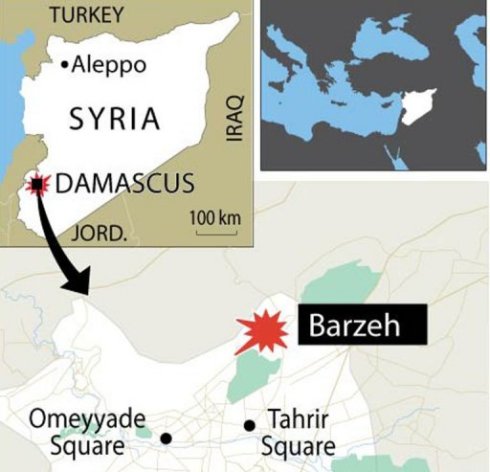
"Dozens of tortured bodies have been found in a flashpoint district of Damascus, a watchdog reported on Monday, in one of the worst atrocities in Syria's 21-month conflict. The report from the Syrian Observatory for Human Rights came as a gruesome video emerged on the Internet of a separate slaying of three children who had their throats slashed, also in the capital. 'Thirty bodies were found in the Barzeh district. They bore signs of torture and have so far not been identified,' said the Britain-based Observatory. The Syrian Revolution General Commission, a grassroots network of anti-regime activists, estimated there were 50 bodies, and added that 'their heads were cut and disfigured to the point that it was no longer possible to identify' them. The video posted online by activists showed the bodies of three young boys with their throats slit open and hands bound behind their backs. Their bodies were discovered on Monday in Jubar. The Observatory also reported the killing of the boys, who opposition activists said had been kidnapped the day before at a checkpoint on their way home from school. These reports could not be verified independently because of media restrictions by the Syrian authorities. Regime warplanes, meanwhile, bombarded rebel positions on the northeastern and southwestern outskirts of Damascus, leaving eight civilians dead including two children, said the Observatory. [...]"
[n.b. When you read "dozens of tortured bodies," translate as follows: "dozens of tortured males." Can you imagine dozens of murdered females being described in this fashion?]

Sunday, December 30, 2012

Nigeria / Gendercide

In Nigeria, Trapped between Islamist Radicals and Security Forces
By Sudarsan Raghavan
The Washington Post, December 30, 2012
"The armed men dragged Musa Muhammad out of his house and ordered him to lie face down on the ground. Then they grabbed his son. After asking his name, the men issued their judgment. 'I heard three gunshots -- pop, pop, pop,' Muhammad recalled, his voice trembling, his fingers in the shape of a pistol. 'My son was dead, killed in front of me.' His assailants were not the radical Islamists who have brutalized this town. They were government security forces sent to protect the residents. In the epicenter of one of Africa's most violent religious extremist movements, civilians are caught in a guerrilla conflict that has shattered families and communal relationships. The Boko Haram, a homegrown group with suspected ties to al-Qaeda, is assassinating people nearly every day, targeting Christians, soldiers, police, even astrologers as it seeks to weaken the Western-allied government and install Islamic sharia law in this nation. But the security forces have also carried out extrajudicial killings, imprisoned hundreds on flimsy grounds, looted and burned shops and houses, according to victims, local officials and human rights activists. ... 'In a guerrilla war, you need the help of the local population. But the security forces are alienating the people,' said Muhammad Abdullahi, the provincial director of religious affairs. 'They are making their jobs more difficult for themselves.'

Saturday, December 29, 2012

India / Rape as Crime against Humanity

"Protesters shield themselves as Indian police beat them with sticks during a violent demonstration near the India Gate against a gang rape and brutal beating of a 23-year-old student on a bus last week, in New Delhi, India." (AP/Kevin Frayer)
India's Culture of Rape is Endemic
By Jason Overdorf
Global Post on Salon.com, December 29, 2012
"As angry protesters marched on India's symbolic seat of power last week, the nation's august members of parliament raged against the government's failure to stop violence against women. They blasted the Delhi police for incompetence and insensitivity. And they cried out for the death penalty for six men accused of brutally gang-raping a 23-year-old woman aboard a private bus on Dec. 16. The woman succumbed to her injuries on Friday in Singapore, where she was being treated at a hospital, according to media reports. In the story of India’s battle against sexual assault, the honorable members ignored one important footnote: Every major political party has fielded and continues to field candidates facing criminal charges for rape, harassment and other crimes against women. 'We found that all these parties had given tickets to people of dubious backgrounds, involved in crimes against women,' said Anil Bairwal, national coordinator of the watchdog group National Election Watch. 'It's the highest order of hypocrisy.' According to mandatory self-declarations filed by candidates with the Election Commission and tabulated by National Election Watch, India’s leading political parties have offered tickets to 27 candidates accused of rape and a whopping 260 candidates facing charges for crimes against women ranging from assault to harassment over the past five years. As a result, two members of the current parliament and six members of the various state legislative assemblies are facing rape charges, while 36 others face charges for lesser crimes against women. Not one of India's major parties is innocent of the charge, and by some measure the two largest, national parties, the Congress and the Bharatiya Janata Party (BJP) are the worst offenders, according to National Election Watch.

Chile / National Tribunals

(Victor Jara Foundation / via Reuters)
Eight Are Charged With Chilean Singer's 1973 Murder After Military Coup
By Pascale Bonnefoy
The New York Times, December 28, 2012
"Eight retired army officers were charged on Friday with the murder of a popular songwriter and theater director, Víctor Jara, who was tortured and killed days after the 1973 military coup in a stadium that had been turned into a detention center. Judge Miguel Vásquez charged two of the former officers, Pedro Barrientos and Hugo Sánchez, with committing the murder and six others as accomplices. Mr. Sánchez, a lieutenant colonel, was second in command at the stadium. Mr. Barrientos, a lieutenant from a Tejas Verdes army unit, currently lives in Deltona, a city southwest of Daytona Beach, Fla., and was interrogated by the FBI earlier this year at the request of a Chilean court. Attempts to reach Mr. Barrientos for comment were unsuccessful; his two listed telephone numbers had been disconnected. Judge Vásquez issued an international arrest warrant against Mr. Barrientos through Interpol Santiago and ordered the arrest of the other seven, who were in Chile. Those charged as accomplices are Roberto Souper, Raúl Jofré, Edwin Dimter, Nelson Hasse, Luis Bethke and Jorge Smith.

Friday, December 28, 2012

France / Algeria / Colonialism

"French President François Hollande delivers a speech at a university in Tlemcen on the last day of his two-day official visit to Algeria, on Dec. 20, 2012." (Bertrand Langlois/AFP/Getty Images)
France's Colonial Hangover: Apologizing Abroad, Ignoring Injustice at Home
By Bruce Crumley
Time, December 28, 2012
"The recent visit of French President François Hollande to Algeria received praise for addressing the painful historical wounds that continue plaguing relations between the two countries. In doing so, Hollande acknowledged the 'brutal and unjust' manner in which France treated its former Algerian colony -- a sober recognition that pointedly stopped short of the full apology officials in Algiers have long demanded. Still, coming a full 50 years after Algeria won its independence with a long and gruesome war, Hollande’s words drew a thundering ovation from the Algerian parliament during his Dec. 20 address. 'Over 132 years, Algeria was subjected to a profoundly unjust and brutal system,' Hollande said during his two-day visit. 'This system has a name: it is colonialism, and I recognize the suffering that colonialism inflicted on the Algerian people.' But despite the praise -- and protest -- Hollande’s comments generated on both sides of the Mediterranean, he failed to touch on two terrible, living consequences of France's legacy in Algeria. First among those is the historical background in which the continuing discrimination and ghettoization of millions of French Arabs are rooted -- much like the increasingly open expression of Islamophobia within French society. Second is his failure to acknowledge the deeply corrupt, brutal and military-supported Algerian power structure that has dominated the country since independence -- one that Paris has preferred to placate and patronize, even as it presses for democracy elsewhere.

Wednesday, December 26, 2012

Bahrain / United States

Bahrain, A Brutal Ally
By Zainab al-Khawaja
The New York Times, December 25, 2012
"Earlier this month, Aqeel Abdul Mohsen, 19, was shot in the face for protesting against Bahrain's government. He was covered in blood, with the lower side of his face blown open, his jaw shattered, and a broken hand hanging awkwardly from his wrist. It's one of those images that you wish you had never seen, and can never forget. After more than 10 hours of surgery, and before Mr. Abdul Mohsen regained consciousness, his hospital room was already under guard by the police. Had he been able to speak, he might even have been interrogated before going into surgery. Others have lain bleeding without medical attention while government security agents asked questions like: 'Were you participating in a protest? Who else was with you?' Bahrain, a small island nation off the coast of Saudi Arabia, has been ruled by the Khalifa family for more than 200 years. It is also home to the headquarters of the United States Navy’s Fifth Fleet, which patrols regional shipping lanes, assists with missions in Iraq and Afghanistan and monitors Iran as tensions in the region mount. The oppressed people of Bahrain joined the Arab Spring soon after the fall of President Hosni Mubarak in Egypt. With newfound hope, Bahrainis took to the streets on Feb. 14, 2011. Rich and poor, Shiite and Sunni, liberal and religious, they felt what it was like to speak freely for the first time in the capital, Manama, at a traffic circle with a pearl monument at its center. The Pearl Roundabout came to symbolize the Bahraini revolution. But this newfound freedom didn’t last long. The government's security forces attacked the peaceful protesters, then tore down the Pearl monument. And in March 2011, troops from neighboring Saudi Arabia and the United Arab Emirates intervened to suppress our pro-democracy protests. Going out on the streets, carrying nothing but a flag and calling for democracy could cost you your life here. Chanting 'down with the dictator' could lead to your being subjected to electric shocks. Giving a speech about human rights and democracy can lead to life imprisonment. Infants have died after suffocating from toxic gases used by riot police. And teenage protesters have been shot and killed.

Monday, December 24, 2012

Burma-Myanmar / Rohingya / United Nations

"A Muslim woman, displaced by recent violence in Kyukphyu township, cries after arriving at the Thaechaung refugee camp outside of Sittwe in this October 28, 2012 file photo." (Reuters/Soe Zeya Tun/Files)
UN General Assembly Voices Concern for Myanmar's Muslims
Reuters dispatch, December 24, 2012
"The UN General Assembly expressed serious concern on Monday over violence between Rohingya Muslims and Buddhists in Myanmar and called upon its government to address reports of human rights abuses by some authorities. The 193-nation General Assembly approved by consensus a non-binding resolution, which Myanmar said last month contained a 'litany of sweeping allegations, accuracies of which have yet to be verified.' Outbreaks of violence between ethnic Rakhine Buddhists and the Rohingyas have killed dozens and displaced thousands since June. Rights groups also have accused Myanmar security forces of killing, raping and arresting Rohingyas after the riots. Myanmar said it exercised 'maximum restraint' to quell the violence. The unanimously adopted UN resolution 'expressing particular concern about the situation of the Rohingya minority in Rakhine state, urges the government to take action to bring about an improvement in their situation and to protect all their human rights, including their right to a nationality.' At least 800,000 Muslim Rohingyas live in Rakhine State along the western coast of Myanmar, also known as Burma. But Buddhist Rakhines and other Burmese view them as illegal immigrants from neighboring Bangladesh who deserve neither rights nor sympathy. The resolution adopted on Monday is identical to one approved last month by the General Assembly's Third Committee, which focuses on human rights. After that vote, Myanmar's mission to the United Nations said that it accepted the resolution but objected to the Rohingyas being referred to as a minority. 'There has been no such ethnic group as Rohingya among the ethnic groups of Myanmar,' a representative of Myanmar said at the time. 'Despite this fact, the right to citizenship for any member or community has been and will never be denied if they are in line with the law of the land.'"
[n.b. This is the complete text of the dispatch.]

Sunday, December 23, 2012

Canada / Indigenous Peoples / Apartheid

"Chief Theresa Spence has been on hunger strike in a teepee across from parliament since 11 December." (Chris Wattie/Reuters)
Rising Anger of Canada's First Nations over Living Conditions
By Isabeau Doucet
The Guardian, December 21, 2012
"When images of Canada's First Nations people living in mouldy shacks and frosty tents, without toilets or running water, emerged last year, Canadians were shocked. It was Canada's 'Katrina moment' says Charlie Angus, New Democratic party member for Timmins-James Bay in north Ontario. Fast forward a year, and progress has been excruciatingly slow. The indigenous community only received 22 trailer homes to deal with the housing crisis. A construction trailer with three bathrooms and a kitchen still caters for around 50 people, according to Angus. As a result, the chief of the Attawapiskat, Theresa Spence, has been on a hunger strike living in a teepee across from parliament since 11 December as winter descends on Canada's capital, Ottawa. She says she is willing to die for her people if the Queen and the prime minister, Stephen Harper, don't meet Canada's indigenous chiefs to discuss the treaty rights they signed with the crown. Many of Canada's aborigines live in what can only be described as developing world conditions. Chronic underfunding of essential social services and complete collapse of infrastructure on reserves results in high mortality, unemployment, substance abuse, suicide and incarceration. Early development is obstructed for children on reserves by a bureaucratic financial hole that gives 30% to 50% less educational funding than to other Canadian youngsters. Unrest is growing among Canada's First Nations as the conservative government makes sweeping changes to environmental protections and the Indian Act which many fear will fast-track the absolute surrender of indigenous territory, terminate treaty rights and endanger land and water in favour of economic gain. The past two weeks has seen the largest series of nationwide protests in two decades, and on Friday a grassroots-led campaign under the Twitter hashtag #IdleNoMore will see thousands in over a dozen cities across Canada, the US and UK take to the streets and call on Harper and Governor General David Johnston to enter negotiations with Spence.

Kenya / United Kingdom / Torture

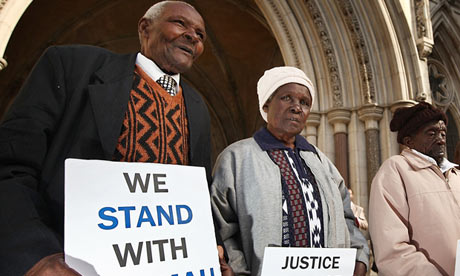
"From left: Wambugu Wa Nyingi, Jane Muthoni Mara and Paulo Muoka Nzili outside the high court in London." (Peter Macdiarmid/Getty)
Fury as Britain Fights Ruling on Kenya Torture Victims
By Mark Townsend
The Observer, December 23, 2012
"The British government has provoked outrage by contesting a high court ruling that gave three elderly Kenyans the right to claim damages for abuses suffered during the Mau Mau insurgency of 1952-1960. Despite Foreign Office lawyers admitting all three were tortured by British colonial authorities, the government has decided to pursue a route that could deny compensation to torture victims. Lawyers have accused the Foreign Office of a 'morally repugnant' move that exposes the government to allegations of hypocrisy over its denouncing of regimes such as Syria and Zimbabwe that use torture. Dan Leader of Leigh Day & Co, which is representing the three Kenyans, said: 'This gives succour to brutal dictators, the fact that one of the principal western democracies is not willing to give redress to acknowledged and admitted victims of British torture.' Archbishop Desmond Tutu has written to David Cameron accusing him of failing to offer elderly torture victims who suffered beatings, castration and sexual assaults 'the dignity they deserve'. Many hoped the high court victory for the torture victims two months ago -- greeted with celebrations in Nairobi -- would lead the Foreign Office to drop any appeal in favour of offering redress. The government argues that too few key witnesses remain alive to show the involvement of the British government in the torture of detainees. However, an archive of once secret documents, incorporating some 8,800 files, offers an intricate record of decision-making in the Kenyan colony during the Mau Mau uprising, as well as in London. The documents suggest there was systematic torture of detainees and include details such as how the Kenyan authorities wrote to the British government during the insurgency asking it to authorise torture methods.

Saturday, December 22, 2012

Indonesia / Genocide and Memory

Indonesia's Killing Fields
AlJazeera.com, December 21, 2012
"It was one of the bloodiest massacres of the 20th century, well hidden from the outside world -- the systematic killing of communists or alleged communists in Indonesia in 1965 and 1966. Researchers estimate that between one and three million people died. Never before have the executioners spoken out in as much detail as in the recently-released documentary The Act of Killing. In this film, killers in North Sumatra give horrifying accounts of their executions, and even re-enact them. The killers have always considered themselves heroes because their acts were supported by the government and large parts of society. Many executions were directly committed by the military. In the years that followed, Indonesians were bombarded with anti-communist propaganda and, until today, most people do not know what really happened. The film, and a recent report by the Indonesian national human rights commission that called the killings crimes against humanity, have launched a new debate on how the country should deal with this very traumatic past. Mass graves have yet to be exhumed and victims are yet to see some kind of justice. In many villages, killers and victims' relatives are still living with the awkward reality that 'our neighbour has killed my father'. Al Jazeera's Step Vaessen talks to former executioners and finds out why so many people - mostly Muslim youths - turned into cold-blooded killers, and why this dark episode in Indonesian history is still very sensitive and alive today. [...]"
See also Kim Segupta, "Indonesia's Killers Escape Justice, But Feature on the Silver Screen", The Independent, December 23, 2012.

Friday, December 21, 2012

Syria / United Nations / Genocide Prevention

"Syrian rebels stand in position near to road blocks and obstacles along a main though fare in Tel Abyad, Syria, Friday, Oct. 5, 2012." (AP Photo)
UN Anti-Genocide Envoy: Syrian Alawites, Other Minorities Face Reprisal Risk
Reuters dispatch in Haaretz, December 21, 2012
"The UN anti-genocide envoy warned on Thursday that minority groups in Syria, including Syrian President Bashar al-Assad's fellow Alawites, are at risk of major reprisal attacks as the 21-month-old conflict escalates and sectarian violence increases. 'I am deeply concerned that entire communities risk paying the price for crimes committed by the Syrian government,' Adama Dieng, UN special adviser on the prevention of genocide, said in a statement. The statement said Alawites and other minorities in Syria were increasingly under threat of large-scale reprisal attacks because they are widely associated with the government and allied militia. Rebels began to push into a strategic town in Syria's central Hama province on Thursday and laid siege to at least one town dominated by Alawites, activists said. Opposition sources said rebels had won some territory in the strategic southern town of Morek and were surrounding the Alawite town of al-Tleisia. The rebel operation risks inflaming already raw sectarian tensions as the revolt against four decades of Assad family rule -- during which the president's Alawite sect has dominated leadership of the Sunni Muslim majority -- rumbles on. 'I urge all parties to the conflict to adhere to international humanitarian and human rights law, which prohibits the targeting of individuals or groups based on religious or ethnic identity as well as attacks against civilians not taking direct part in hostilities,' Dieng said. 'I also call on all actors to condemn hate speech that could constitute incitement to violence against communities based on their religious affiliation,' said Dieng.

Rwanda / Genocide Tribunals

"Former Rwandan Planning Minister Augustin Ngirabatware, right, sits next to his lawyer Cecil John Maruma during his first appearance before the International Criminal Tribunal for Rwanda in Arusha, Tanzania." (Ephrem Ruguririza/AFP/Getty Images)
Former Rwandan Minister Sentenced to 35 Years on Genocide Charges
By Emily Alpert
The Los Angeles Times, December 20, 2012
"A former Rwandan minister was sentenced Thursday to 35 years in jail for crimes tied to the nation's brutal genocide, including handing out machetes to a Hutu militia and spurring them to kill Tutsis. Witnesses described Augustin Ngirabatware as being tantamount to a god in the stretches of Rwanda where he exhorted members of a Hutu militia to wipe out Tutsis, the International Criminal Tribunal for Rwanda said in its judgment. He was Rwanda's planning minister during the 1994 genocide, when hundreds of thousands of Tutsis and sympathetic Hutus were slain. On one April day in 1994, Ngirabatware unloaded machetes and other weapons at roadblocks, explaining 'he did not want to see any Tutsis alive' in the area, the tribunal found. In another, earlier speech, he 'unambiguously called for genocide,' exhorting a crowd of 150 to 200 people to kill Tutsis. As the Tutsis came under attack, two Hutu militiamen abducted and repeatedly raped a Tutsi woman at nearby banana plantations, according to the tribunal judgment. Ngirabatware was found guilty of the rape, a crime against humanity, because he was part of 'a joint criminal enterprise' with the men and it was 'foreseeable' that some would resort to rape, the court said. The former minister denied the accusations and claimed he was out of the country during the attacks, but failed to convince the tribunal that he was gone the entire time.

Kenya

"Kenyan medics treat a woman and child injured in violence between the Pokomo tribe and the semi-nomadic Orma people." (Joseph Okanga/Reuters)
Dozens Killed in Raid on Village in Kenya
Associated Press dispatch in The Guardian, December 21, 2012
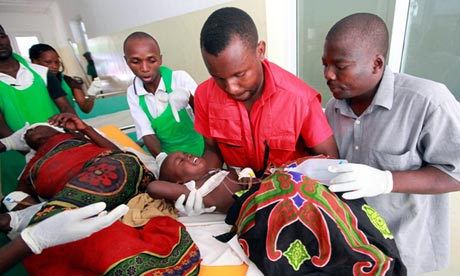
"At least 39 people were killed when farmers raided a village of herders in south-eastern Kenya early on Friday in renewed fighting between two communities with a history of violent animosity, a police official said. Thirteen children, six women, 11 men and nine attackers were killed, said the police official Anthony Kamitu. Forty-five houses were set on fire during the attack, the Kenya Red Cross spokeswoman Nelly Muluka said. Kamitu, who is leading police operations to prevent attacks in the region, said the Pokomo tribe of farmers had raided a village of the semi-nomadic Orma herding community at dawn in the Tana river delta. He said the raiders were armed with spears and AK-47 rifles. At least 110 people were killed in clashes between the Pokomo and Orma in August and September. The tit-for-tat cycle of killings may be related to a redrawing of political boundaries and next year's general elections, the UN humanitarian co-ordinator for Kenya, Aeneas C. Chuma, said in late August. However, on the surface the violence seems driven by competition for water, pasture and other resources, he said.

Thursday, December 20, 2012

Algeria / France / Colonialism

"France's President Francois Hollande gives a speech at the Palais des Nations in Algiers on the second day of a two-day official visit, December 20, 2012." (Louafi Larbi/Reuters)
French Colonization of Algeria "Brutal": Hollande
By Julien Ponthus and John Irish
Reuters dispatch, December 20, 2012
"President Francois Hollande acknowledged on Thursday that France's colonization of Algeria had been 'brutal and unfair' but stopped short of making an apology to the oil-rich North African state which Paris sees as a major trading partner. With France's own economy spluttering, Hollande had hoped his visit would not only strengthen trade ties but improve security cooperation, as Paris pushes for intervention against Islamists who have seized control of northern Mali. [...] Hollande's comments on the 1954-1962 Algerian war, which ended in Algerian independence and France's withdrawal, are likely to be carefully analyzed for signs they could help remove lingering resentment about the conflict in both countries, a legacy that has held back a trading partnership which Paris hopes could revive the Mediterranean basin's economic fortunes. 'For 132 years, Algeria was subjected to a brutal and unfair system: colonization. I acknowledge the suffering it caused,' Hollande told the Algerian parliament on the second day of his visit. Seeking to strike a more conciliatory stance than his conservative predecessor Nicolas Sarkozy whom Algerians viewed as overly hostile towards their country because of what they regarded as his tough immigration policies, Hollande tried to take a nuanced approach. 'We respect the act of memory, of all the memories. There is a duty of truth on the violence, the injustices, the massacres and the torture,' he said. But the 58-year-old Hollande had limited room for maneuver.